
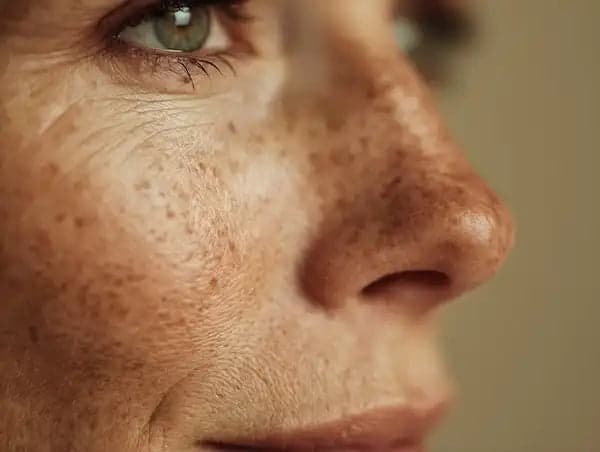
Melasma is a chronic pigmentation condition, so the goal is usually control rather than a one-off cure. The brown or grey-brown patches on the face are driven by UV exposure, visible light, hormones and inflammation, which is why a single brightening cream often disappoints.
The evidence supports supervised combination treatment. Options such as hydroquinone, tranexamic acid, azelaic acid, tretinoin and strict daily sunscreen can each play different roles depending on your skin tone, pregnancy status, irritation risk and treatment history.[1] This guide explains what melasma creams can realistically do, what needs medical supervision, and how Prescription Skin doctors build a longer-term plan.
Key takeaways
- A meta-analysis of 45 studies confirmed that hydroquinone, cysteamine, tranexamic acid, azelaic acid and kojic acid all reduce melasma severity. Tranexamic acid had the lowest irritation rate (0.8%) while hydroquinone combinations had the highest (50.9%).[1]
- Triple combination cream (hydroquinone 4% plus tretinoin 0.05% plus fluocinolone 0.01%) has strong evidence for moderate to severe melasma, but it needs medical supervision and is not suitable for everyone.[2]
- A December 2025 meta-analysis confirmed that topical treatments significantly decrease both MASI scores and quality-of-life impact scores in melasma patients.[3]
- Topical tranexamic acid (2 to 5%) is emerging as a safe complement or alternative to hydroquinone, with growing evidence for both melasma and post-inflammatory hyperpigmentation.[4]
- Melasma requires ongoing management, not just treatment. Sun protection is non-negotiable, and maintenance therapy prevents the relapse that occurs in most patients who stop treatment.
What causes melasma and why it is hard to treat
Melasma is a chronic pigmentary disorder caused by overactive melanocytes in the epidermis and dermis. Unlike a simple dark spot from sun damage, melasma involves a feedback loop: UV exposure triggers melanin production, hormonal factors (pregnancy, oral contraceptives) amplify it, and inflammation sustains it. The blood vessels beneath melasma patches are also abnormally increased, which contributes to the persistence of the condition.[5]
This multi-pathway nature is precisely why single-ingredient creams rarely clear melasma on their own. An over-the-counter vitamin C serum or a low-concentration azelaic acid product can help at the margins, but it is not addressing enough of the melanin production cascade to produce a meaningful clinical result. Effective melasma treatment requires multiple depigmenting agents working through different mechanisms simultaneously.[6]
The evidence for melasma treatments
Triple combination cream: the gold standard
The strongest topical evidence for melasma is for supervised triple combination treatment: hydroquinone, tretinoin and a low-potency corticosteroid. A comprehensive review reported substantial improvement in clinical trials, and evidence-based guidance continues to support triple combination cream as a first-line topical option for appropriate patients.[2][7]
Each ingredient serves a specific role. Hydroquinone inhibits tyrosinase (the enzyme that produces melanin). Tretinoin accelerates epidermal turnover, dispersing melanin granules and enhancing hydroquinone penetration. The low-potency steroid reduces inflammation and minimises irritation from the other two actives. Used together, they target the melanin pathway at three different points.
Australian GPs and dermatologists commonly prescribe this combination for moderate-to-severe melasma. Practical guidance from the RACGP confirms it as a standard first-line approach in primary care, with monitoring for side effects during treatment.[8]
Hydroquinone: effective but requires supervision
Hydroquinone at 2 to 4 per cent is the single most studied depigmenting agent for melasma. The meta-analysis of 45 studies confirmed its efficacy, but also noted that hydroquinone combinations had the highest irritation rate at 50.9 per cent.[1] Long-term unsupervised use carries a risk of exogenous ochronosis (a paradoxical darkening of the skin), which is why hydroquinone is best used in supervised treatment cycles rather than continuously. For more detail on hydroquinone safety, see our skin bleaching cream guide.
Tranexamic acid: the emerging alternative
Tranexamic acid (TXA) is one of the most promising newer agents for melasma. A 2026 comprehensive review confirmed that topical TXA at 2 to 5 per cent reduces melanin synthesis through a different pathway to hydroquinone, making it an effective complement or alternative.[4] A focused review of 46 articles found that oral TXA was most effective for refractory melasma, while topical TXA was better tolerated than hydroquinone but less effective as a sole agent.[9]
The meta-analysis data showed TXA had the lowest irritation rate of any melasma treatment at just 0.8 per cent, compared to 50.9 per cent for hydroquinone combinations.[1] This makes it particularly valuable for patients with sensitive skin or those who cannot tolerate hydroquinone.
Azelaic acid
Azelaic acid at prescription strength (15 to 20%) inhibits tyrosinase and has anti-inflammatory properties that help with melasma. It is pregnancy-safe (Category B), which makes it one of the few active depigmenting options for pregnancy-related melasma. It works well as a maintenance agent or in combination with other actives. See our prescription skincare during pregnancy guide.
Vitamin C and niacinamide
Vitamin C inhibits tyrosinase and provides antioxidant protection against UV-driven melanin production. Niacinamide blocks melanosome transfer from melanocytes to keratinocytes. Neither is strong enough to clear melasma alone, but both add value as supporting ingredients in a multi-active prescription formula or as part of a morning antioxidant routine alongside sunscreen.[6]
Melasma treatment comparison
| Treatment | Mechanism | Evidence | Why prescription matters |
|---|---|---|---|
| Triple combination cream | HQ + tretinoin + steroid targets three melanin pathways | 80% resolution at 12 months in 569 subjects[2] | Prescription only. Gold standard first-line for moderate-to-severe melasma |
| Hydroquinone (2-4%) | Tyrosinase inhibition | Strong: most studied depigmenting agent[7] | Requires medical supervision due to ochronosis risk with unsupervised long-term use |
| Tranexamic acid (topical) | Inhibits plasminogen-melanocyte interaction | Growing: lowest irritation rate (0.8%)[1] | Prescription compounding allows optimal concentration and combination with other actives |
| Azelaic acid (15-20%) | Tyrosinase inhibition, anti-inflammatory | Moderate: effective and pregnancy-safe | Prescription strength (15-20%) significantly outperforms OTC (10%) |
| Tretinoin (alone) | Accelerates epidermal turnover, disperses melanin | Moderate as monotherapy for melasma[7] | Prescription only. Most effective as part of combination therapy |
How Prescription Skin treats melasma
Prescription Skin is an Australian telehealth skincare service. When clinically appropriate, our doctors can prescribe custom-compounded formulas for melasma that combine prescription-strength pigment ingredients with barrier-supporting ingredients in a single cream. The formula is selected around your melasma pattern, skin tone, sensitivity and treatment history.
Complete an online skin assessment, have your case reviewed by an Australian registered doctor, and use the plan exactly as prescribed. Melasma often needs maintenance and sun protection as much as an initial treatment course.
Frequently asked questions
What is the best cream for melasma?
Triple combination cream (hydroquinone plus tretinoin plus a low-potency steroid) has the strongest evidence, with 80 per cent resolution in clinical trials.[2] It is prescription-only and should be used under medical supervision.
Can melasma be cured permanently?
Melasma is a chronic condition. It can be significantly reduced and controlled, but most patients need ongoing maintenance treatment and strict sun protection to prevent relapse. Stopping treatment without a maintenance plan usually leads to recurrence.
Is tranexamic acid good for melasma?
Yes. A comprehensive review confirmed topical tranexamic acid at 2 to 5 per cent reduces melasma with the lowest irritation rate of any studied agent (0.8%).[1] It is particularly useful for patients who cannot tolerate hydroquinone.
Is melasma treatment safe during pregnancy?
Hydroquinone and tretinoin are not recommended during pregnancy. Azelaic acid (Category B) is one of the few active options. Sun protection remains the most important step. See our prescription skincare during pregnancy guide.
References
- Chang YF, et al. Efficacy and safety of topical agents in the treatment of melasma: a systematic review and meta-analysis. Journal of Cosmetic Dermatology. 2023;22(4):online. ↩︎
- Different therapeutic approaches in melasma. Frontiers in Medicine. 2024;11:online. ↩︎
- Ribeiro MM, et al. Systematic review and meta-analysis of treatments on melasma. Journal of Cosmetic Dermatology. 2025;24(12):online. ↩︎
- Hollinger JC, et al. Tranexamic acid for hyperpigmentation disorders: a comprehensive review. Dermatology and Therapy. 2026;16(1):online. ↩︎
- Kumar D, et al. Melasma management: unveiling recent breakthroughs. Pigment International. 2025;12(1):online. ↩︎
- Castanedo-Cazares JP, et al. An update on new and existing treatments for melasma. Dermatology and Therapy. 2024;14(8):online. ↩︎
- McKesey J, et al. Melasma treatment: an evidence-based review. American Journal of Clinical Dermatology. 2020;21(2):173-225. ↩︎
- Aung T, et al. Melasma management in primary care. AJGP (RACGP). 2024;53(Suppl Dec):online. ↩︎
- Tranexamic acid in melasma: a focused review on drug administration routes. Journal of Cosmetic Dermatology. 2023;22(5):online. ↩︎
Medically Reviewed Content
- Written by: The Prescription Skin Editorial Team
- Medically Reviewed by: Dr Mitch Bishop AHPRA Registered Practitioner (MED0002309948)
- Last Updated: February 2026
This content is for informational purposes only and does not constitute medical advice. Treatment is subject to consultation and approval by our Australian-registered doctors.