Key takeaways
Ceramides are lipid molecules that make up roughly 50 percent of the lipids in the outermost layer of your skin. They act like mortar between skin cells, holding the structure together and stopping water from escaping. Without an adequate ceramide level, the skin becomes dry, reactive, and more vulnerable to irritants. Find out how a personalised prescription formula could work for your skin at Prescription Skin. Research from the Australasian Journal of Dermatology highlights the role of phytosphingosine ceramide pathways in maintaining barrier integrity across a range of skin conditions, including atopic presentations [1].
Ceramides are barrier-supporting lipids that help reduce water loss, improve comfort, and make active routines easier to tolerate.
- Ceramides work by reinforcing the skin barrier, reducing water loss, and supporting a healthy moisture balance.
- People with acne-prone, dry, or sensitive skin are among those who benefit most from ceramide-containing products.
- Ceramides pair well with active ingredients such as niacinamide, hyaluronic acid, retinol, and prescription tretinoin.
- Ceramides are generally well tolerated across skin types, including during pregnancy and breastfeeding, though your doctor should always review your full routine.
- A personalised Prescription Skin formula can be built around your specific concerns, combining ceramides with clinically appropriate actives after an online assessment.
What Are Ceramides?
Ceramides are a family of waxy lipid molecules found naturally in the outermost layer of the skin, where they form a large part of what holds the structure together. When ceramide concentrations fall, the skin's ability to retain moisture and resist external irritants declines noticeably [1].
Ceramide types at a glance
| Ceramide type | Common label on products | Key function | Typical use |
|---|---|---|---|
| Ceramide NP (3) | Ceramide 3 | Barrier reinforcement, moisture retention | Dry and sensitive skin |
| Ceramide AP (6-II) | Ceramide 6 | Supports desquamation and renewal | Anti-ageing, texture concerns |
| Ceramide EOP (1) | Ceramide 1 | Lamellar body structure, water barrier | Atopic and compromised skin |
| Phytosphingosine-derived | Phytosphingosine | Anti-inflammatory ceramide precursor | Acne-prone and rosacea-prone skin |
| Synthetic ceramide analogues | Pseudoceramide | Mimics natural ceramide structure | OTC formulas and emollients |
Over-the-counter products typically list ceramides by their nomenclature number rather than their chemical name. This makes comparing formulas straightforward once you know which lipid type matches your skin concern.
What Is The Skin Barrier?
The skin barrier is the outermost defensive layer of the skin, made up of dead skin cells embedded in a lipid matrix that includes ceramides, cholesterol, and fatty acids. According to research in the Australasian Journal of Dermatology, disruption of this lipid matrix is a consistent feature of chronic inflammatory skin conditions [1]. A functioning skin barrier regulates hydration, blocks environmental pollutants, and reduces the risk of infection.
Skin ceramide concentrations decline with age, cold weather exposure, harsh cleansers, and over-exfoliation. Replenishing them helps restore healthy skin function, particularly in people who have been using active ingredients that temporarily alter the barrier. Clinical evidence indicates that applying ceramide-containing formulas consistently can measurably improve transepidermal water loss readings over several weeks.
Why Does Skin Type Matter?
Skin type affects how quickly the skin loses moisture, how reactive it is to actives, and how well it tolerates different lipid formulas. People with dry or compromised skin tend to see the most pronounced improvement from lipid use, but oily and combination types still benefit from lighter lipid-based moisturisers that support the barrier without clogging pores. Knowing your skin type helps a doctor recommend the right vehicle, whether that is a cream, lotion, gel-cream, or serum.
Benefits Of Using Ceramides With Acne-Prone Skin
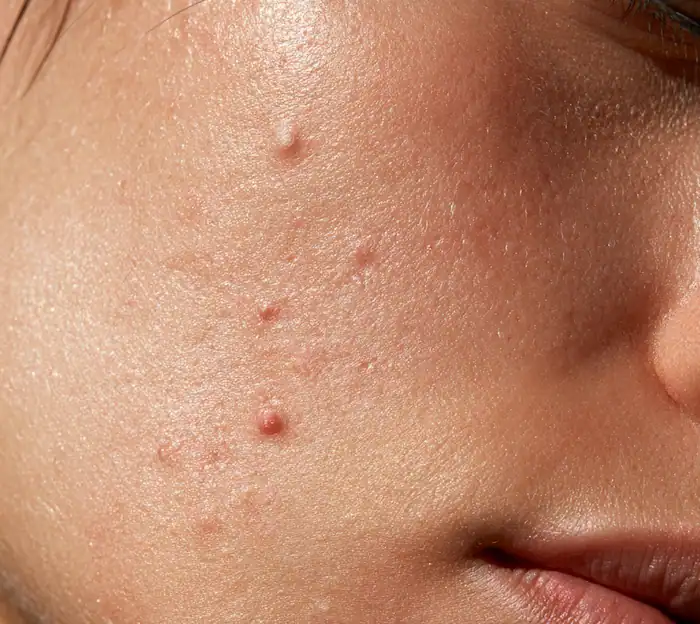
Ceramides are especially useful for acne-prone skin because breakouts and the skincare actives used to treat them can both compromise the barrier. Prescription acne treatments, including topical retinoids, often cause dryness and peeling in the early weeks, and a ceramide-rich moisturiser can reduce that discomfort without blocking pores or interfering with the active's efficacy. Research shows that ceramide-containing formulations applied alongside acne treatment reduce transepidermal water loss and improve tolerability without worsening sebum output.
Beyond tolerability, the benefit of ceramide use in acne-prone skin extends to post-breakout repair. Active lesions and picking trauma disrupt the barrier locally, and studies suggest that restoring skin ceramide concentrations in affected areas accelerates the normalisation of the local skin environment [1]. For people managing acne, this means ceramide moisturisers are a practical, low-risk addition to a treatment routine rather than a luxury step. People managing dry or dehydrated acne-prone skin often find that ceramide formulas reduce the tight, flaky sensation between active breakouts, making the overall skincare routine more comfortable to maintain.
Regarding side effects, ceramides are well tolerated across most skin types. Reactions are uncommon and, when they do occur, are usually mild temporary redness or a sensation of heaviness in richer cream formats. Genuinely allergic responses are rare. People with known sensitivity to specific lipid-based ingredients should check the full formula list with their doctor rather than avoiding ceramides altogether. Pairing ceramide skincare with evidence-backed prescription actives is considered a safe and supported approach for most people with acne-prone or sensitive skin.
Why Ceramides Are Amazing For Your Skin Barrier
The core benefit of ceramide use is structural: these lipids slot into the lamellar layers between skin cells and recreate the mortar-like matrix that holds the barrier together. Studies suggest that a physiologic ratio of ceramides, cholesterol, and fatty acids is necessary for optimal barrier function, and that ceramide-dominant products can partially restore this balance when natural levels are low.
Ceramides support the skin barrier in several interconnected ways. They reduce transepidermal water loss, which keeps skin plump and less prone to flaking. They also limit the penetration of irritants and allergens, which is why ceramide use is frequently recommended alongside rosacea management and eczema treatment. Research from the British Journal of Dermatology confirms that barrier-focused formulas significantly reduce flare frequency in barrier-compromised patients. Clinical evidence indicates that people with fine lines and wrinkles also benefit, since an intact skin barrier retains the hydration that keeps fine lines less visible.
Ceramide products work best when applied to slightly damp skin immediately after cleansing, allowing the lipid matrix to seal in surface moisture. Their effect is cumulative rather than immediate, so consistent use over several weeks yields more noticeable changes in texture and hydration.
How to Get Ceramides in Australia
A doctor's review can help when symptoms persist on an already gentle routine, or before you change active ingredients.
Ceramide-containing moisturisers and serums are widely available over the counter in Australia and do not require a prescription. However, if you're looking to address a specific skin concern such as barrier disruption from prescription actives, persistent dryness linked to a skin condition, or depletion caused by acne treatment, a doctor can assess your skin in the context of your full routine and recommend a more targeted approach. At Prescription Skin, Australian-registered doctors review your skin online and, where clinically appropriate, compound a personalised formula that may combine ceramide-supporting ingredients with prescription actives suited to your concern. The process begins with a straightforward online skin assessment.
Side effects and safety
Ceramides are considered very low risk in skincare and carry no known systemic side effects when applied topically. Mild reactions such as temporary warmth or congestion are occasionally reported with very rich cream formats on oily skin. If ceramides are part of a formula that also contains retinol or a prescription retinoid such as tretinoin, note that tretinoin is a Schedule 4 medicine available only via prescription in Australia and should be used under medical supervision. For people who are pregnant or breastfeeding, ceramide-only products are generally regarded as safe, but any formula containing prescription actives requires review by a doctor before use. If you're currently pregnant or trying to conceive, contact your doctor before making any changes to a prescription formula.
Who Should Use Ceramides
Most people benefit from adding ceramides to their routine, particularly those with dry, sensitive, barrier-compromised, or acne-prone skin, and those using prescription actives that increase skin sensitivity. People with already very oily skin may prefer lighter ceramide serums over heavier creams. Those managing inflammatory skin conditions such as eczema, psoriasis, or rosacea should confirm with a doctor that their chosen ceramide product is compatible with any other treatments they're using. Ceramide products on their own are appropriate across most age groups, including teenagers, provided the formula suits the skin type.
Summary
Ceramides are a foundational ingredient for barrier health, hydration, and tolerability across a wide range of skin types and concerns. According to peer-reviewed evidence, both topical ceramide formulas and physiologically balanced lipid systems reliably improve skin barrier function over time. Prescription Skin's model allows Australian-registered doctors to assess your skin online and build a personalised prescription formula that accounts for ceramide support alongside any actives your skin needs.
Frequently asked questions
How do I layer ceramides with retinol or tretinoin?
Apply retinol or tretinoin first on clean skin, wait for it to absorb, then apply a ceramide moisturiser on top. This sequence helps offset the dryness and irritation that retinoids can cause while allowing the active to work as intended. Note that tretinoin is a Schedule 4 medicine available in Australia only via prescription from a registered doctor. See our comparison of retinol vs tretinoin for more detail on how these actives differ [1].
Are ceramides safe during pregnancy and breastfeeding?
Ceramide-only topical products are generally considered safe during pregnancy and breastfeeding, as ceramides are naturally occurring lipids with no known systemic absorption risk. Any formula that combines ceramides with prescription actives such as tretinoin or hydroquinone requires medical review before use, as those ingredients carry specific pregnancy restrictions. Hydroquinone above 2% and tretinoin are Schedule 4 medicines available in Australia by prescription only. Our journal post on prescription skincare during pregnancy covers this in more detail.
Can Prescription Skin help me decide where ceramides should fit in my routine?
Yes. During an online skin assessment, a Prescription Skin doctor reviews your current routine, skin concerns, and any prescription actives you're using, then advises how ceramide support should be integrated. Where a compounded formula is clinically appropriate, ceramide-compatible ingredients can be included alongside prescription actives suited to your needs. Visit the FAQ page for more information about how the assessment works.
When should I consider a Prescription Skin assessment for dryness or barrier concerns?
Consider a skin assessment if you're using prescription-strength actives and experiencing persistent dryness or irritation, if your barrier hasn't responded to over-the-counter ceramide products, or if you're managing a condition such as acne, melasma, or rosacea and need a formula that addresses multiple concerns. The first eight weeks on prescription skincare article explains what to expect after starting a personalised formula.
When should I speak with a doctor about ceramides?
Speak with a doctor if skin dryness or barrier disruption is severe and not improving with standard moisturisers, if you develop a reaction to a ceramide-containing product, or if you are pregnant and unsure whether your current formula is safe. A doctor can also advise on ceramide use in the context of conditions such as hyperpigmentation or melasma, where prescription actives are often part of the treatment plan.
How do ceramides work in skincare formulas?
Ceramides work in skincare formulas by integrating into the lipid matrix of the stratum corneum, the outermost skin layer, where they physically fill gaps between skin cells. This reduces water evaporation, limits irritant penetration, and improves the overall structural integrity of the barrier. Formulas that combine ceramide NP, AP, and EOP alongside niacinamide or hyaluronic acid are common because these ingredients support hydration through complementary mechanisms [1].
Medically Reviewed Content
- Written by: The Prescription Skin Editorial Team
- Medically Reviewed by: Dr Mitch Bishop - AHPRA Registered Practitioner (MED0002309948)
- Last Updated: May 2026
This content is for informational purposes only and does not constitute medical advice. Treatment is subject to consultation and approval by our Australian-registered doctors.
References
- Mijaljica D, Townley JP, Hondros A, et al. Considering Phytosphingosine-Based Ceramide Formulations for Atopic Skin Care. Dermato. 2024;4(1):5-22. ↩︎