- Key takeaways
- What Is Eczema Around Eyes? The Key Facts
- Comparing Your Options
- What Triggers Eczema on the Skin Around Your Eyes?
- Which Types of Eczema Affect the Eye Area?
- How Do You Treat Eyelid Eczema Safely?
- How to Avoid Rubbing and Prevent Atopic Dermatitis Flares
- When Should You See an Eye Doctor About Eczema?
- Side effects and safety
- Summary
- Frequently asked questions
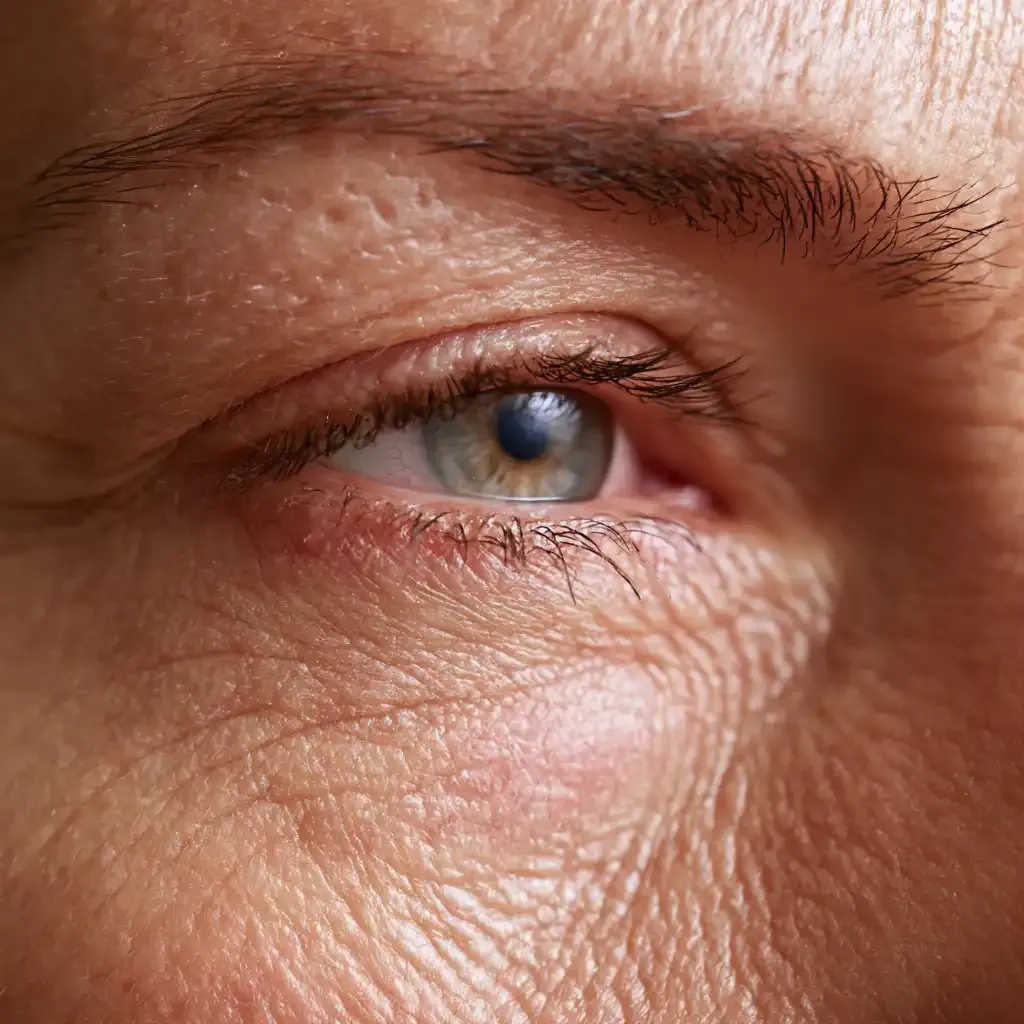
Eczema around eyes refers to dry, itchy, inflamed patches on the eyelids and the thin skin surrounding them. According to clinical guidance, eczema (atopic dermatitis) is a chronic inflammatory skin condition marked by dry, itchy, and inflamed skin, and the eye area is one of the more frustrating places for it to settle.[1] Eyelid skin is the thinnest on your body, which is why it flares fast and stings when you use the wrong product. Eczema around eyes can look red, scaly, or puffy, and it often gets worse with rubbing. The good news is that with the right approach it usually settles, and a doctor can help you work out which type you're actually dealing with.
You may also find these related guides helpful: prescription skincare during pregnancy, first 8 weeks on prescription skincare, fine lines and wrinkles, and mens skincare.
Key takeaways
- Eczema around eyes is common because eyelid skin is the thinnest on the body, so it reacts quickly to allergens, irritants, and friction.
- The most frequent culprits are atopic eczema, irritant or allergic contact dermatitis, and seborrheic dermatitis, and the treatment differs for each.
- The eye area needs gentler, lower-strength treatment than the rest of the face, and strong steroid creams should not be used near the eyes without medical advice.
- Persistent redness, weeping, swelling, eye pain, or vision changes warrant prompt review by a doctor.
- Australian-registered doctors can assess your skin online and, where clinically appropriate, build a personalised prescription formula suited to the delicate eye area.
What Is Eczema Around Eyes? The Key Facts
Eczema around eyes is a broad term covering several distinct conditions that all cause inflammation and itching on the eyelid and surrounding skin. Atopic eczema is the most common form and affects roughly one in 10 people during their lifetime.[2] It shows up as red, itchy, often weeping or scaly skin.[3] Telling the types apart matters because the treatment differs.[4]
Comparing Your Options
The table below compares the common patterns you might see around the eyes.
| Type | Typical signs | Common trigger | First-line approach |
|---|---|---|---|
| Atopic eczema | Itchy, dry, scaly eyelid skin | Genetic barrier defect, allergens | Moisturiser, low-strength topical steroid under guidance |
| Contact dermatitis | Redness, stinging after a product | Cosmetics, fragrance | Remove the trigger |
| Seborrheic dermatitis | Greasy, flaky lid margins | Yeast overgrowth, oil | Antifungal, gentle cleansing |
| Secondary infection | Crusting, oozing, pain | Scratching broken skin | See a doctor promptly |
What Triggers Eczema on the Skin Around Your Eyes?
Eczema around eyes is usually triggered by something touching the delicate eyelid skin or by an underlying tendency to inflammation. Atopic eczema reflects a skin barrier deficit combined with an overactive immune response, which leaves the area primed to react.[5] Layered on top of that, the skin microbiome around the eyes can shift and worsen flares.[6]
Day to day, the usual offenders are cosmetics, fragrances, and transferred residue from nail polish or shampoo, which can irritate the skin or cause an allergic reaction.[3] An irritant reaction stings soon after contact, while allergic contact dermatitis builds over days. Eye rubbing during hay fever season also drives flares. Because atopic eczema is the most prevalent chronic inflammatory skin condition, even a small trigger can tip sensitive lids over the edge.[7]
Spotting your pattern matters. If a new skincare item or a flare of rosacea on the cheeks coincides with eyelid trouble, that's a useful clue to bring to a doctor.[2] Reviewing what you apply near your eyes is often the single most helpful step.[1]
Which Types of Eczema Affect the Eye Area?
Several types of eczema can affect the eye area, and the symptoms overlap enough that they're easy to confuse. Atopic eczema gives itchy, scaly eyelid skin and often appears alongside hay fever or asthma.[1] Contact dermatitis splits into irritant and allergic forms, both sparked by something you've applied near the eyes. Seborrheic dermatitis tends to settle on the lid margins as greasy flakes rather than dry patches.
That distinction shapes which skincare and prescription steps make sense. The same gentle barrier care that helps eczema elsewhere on the face often helps here, though the eye area needs lower strengths. If you also manage acne or pigment concerns, mention it, because some active ingredients are too harsh for eyelids.
How Do You Treat Eyelid Eczema Safely?
Eyelid eczema is treated by calming inflammation while protecting the thin skin around the eyes from harm. The signs of eyelid eczema include redness, dryness, fine scaling, and persistent itch, and these guide how you treat eyelid skin.[1] The first step in any eyelid eczema plan is a bland, fragrance-free moisturiser applied often to rebuild the barrier.
For active eyelid eczema flares, doctors usually reserve only the mildest topical steroids for short bursts, because stronger ones can thin eyelid skin or raise eye pressure. Steroid-free options such as topical calcineurin inhibitors are often preferred for ongoing eyelid use. To manage eyelid eczema well, you also remove the trigger and resist rubbing. Because eyelid eczema sits so close to the eye, anything you put on the eyelid should be cleared by a doctor first. A personalised prescription formula can be matched to the gentler needs of eyelid skin where clinically appropriate.
How to Avoid Rubbing and Prevent Atopic Dermatitis Flares
Preventing an eczema flare around the eyes comes down to reducing friction and keeping the barrier strong. Atopic dermatitis is a chronic, relapsing and remitting condition, so the goal is fewer and milder flares rather than a one-off fix.[2] Rubbing is the main driver doctors see, because mechanical irritation feeds the cycle of dermatitis that defines atopic skin.[4]
Cool compresses, short nails, and treating the underlying itch all cut the urge to rub. Since atopic dermatitis flares track with allergens, stress, and dryness, daily moisturising and managing hay fever help prevent atopic flares before they start.[3] Consistent barrier care keeps the dermatitis quieter between flares.[1]
When Should You See an Eye Doctor About Eczema?
You should see a doctor about eczema near the eyes when symptoms are severe, spreading, or affecting the eye itself. Persistent inflammation, a rash that weeps or crusts, or an itchy area that won't settle with gentle care all deserve review.[2] Eye pain, swelling, or vision changes need prompt medical attention rather than another ointment.[3]
It's also worth a visit if you can't tell whether you're dealing with an irritant reaction, seborrheic dermatitis, or sensitive skin reacting to a product, since each needs a different plan.[4] A doctor can examine the eyelid and check for any infection or other cause hiding behind the rash.
Side effects and safety
Treatments for eczema near the eyes carry real safety considerations, which is why eyelid care should be doctor-led. Strong topical steroid creams used on the eyelid can thin the skin, cause redness, or raise eye pressure with prolonged use, so a dermatologist or doctor keeps strength and duration in check.[2] Some products themselves trigger allergic contact dermatitis, which makes the original problem worse.[3]
Scratching broken eyelid skin invites infection, and greasy ointments can occasionally aggravate seborrheic dermatitis.[4] If you're pregnant or breastfeeding, raise it before starting anything, since some prescription actives aren't suitable.
Summary
Eczema around eyes usually reflects atopic, contact, or seborrheic dermatitis on very thin skin, so gentle care and the right diagnosis matter.[2][3] Prescription Skin's Australian-registered doctors can assess your skin online and, where clinically appropriate, build a personalised prescription formula through the prescription skincare model.
Frequently asked questions
How do you get rid of eczema around the eyes?
You get rid of eczema around the eyes by removing the trigger, moisturising the area daily, and using a doctor-approved treatment for short flares. Avoid strong steroid creams near the eyes unless a doctor directs it, and resist rubbing, since that keeps the cycle going.
Why have I suddenly got eczema around my eyes?
A sudden flare usually means new contact with an irritant or allergen, such as a cosmetic, fragrance, or transferred residue, or a seasonal spike in hay fever. A change in weather, stress, or skin dryness can also tip sensitive eyelid skin into eczema.
Can a doctor help with eczema around eyes?
Yes, a doctor can help with eczema around the eyes by confirming the type, ruling out infection, and prescribing suitable treatment. Australian-registered doctors at Prescription Skin can review your skin online and, where appropriate, create a personalised prescription formula for the delicate eye area.
What is the 3 minute rule for eczema?
The 3 minute rule means applying moisturiser within about three minutes of bathing, while skin is still damp, to lock in hydration and support the barrier. It's a simple way to reduce dryness that drives flares.[1]
What triggers eyelid eczema?
Eyelid eczema is most often triggered by cosmetics, fragrances, eye drops, nail products, and eye rubbing, plus underlying atopic tendency. Identifying and removing the specific offender on the eyelid is usually the most effective single step.
Which skin care routine should you adopt?
A good routine is short, gentle, and fragrance-free: a mild cleanser, regular moisturiser, daily sunscreen, and only doctor-cleared actives near the eyes. Keeping the routine simple lowers the chance of a fresh reaction and makes flares easier to trace.
References
- Chu DK, Koplin JJ, Ahmed T, Islam N, Chang CL, Lowe AJ. How to Prevent Atopic Dermatitis (Eczema) in 2024: Theory and Evidence. The journal of allergy and clinical immunology. In practice. 2024. doi:10.1016/j.jaip.2024.04.048. PubMed ↩︎
- Frazier W, Bhardwaj N. Atopic Dermatitis: Diagnosis and Treatment. American family physician. 2020. PMID:32412211. PubMed ↩︎
- Afshari M, Kolackova M, Rosecka M, Čelakovská J, Krejsek J. Unraveling the skin; a comprehensive review of atopic dermatitis, current understanding, and approaches. Frontiers in immunology. 2024. doi:10.3389/fimmu.2024.1361005. PubMed ↩︎
- Napolitano M, Fabbrocini G, Martora F, Genco L, Noto M, Patruno C. Children atopic dermatitis: Diagnosis, mimics, overlaps, and therapeutic implication. Dermatologic therapy. 2022. doi:10.1111/dth.15901. PubMed ↩︎
- Criado PR, Miot HA, Bueno-Filho R, Ianhez M, Criado RFJ, de Castro CCS. Update on the pathogenesis of atopic dermatitis. Anais brasileiros de dermatologia. 2024. doi:10.1016/j.abd.2024.06.001. PubMed ↩︎
- Hülpüsch C, Rohayem R, Reiger M, Traidl-Hoffmann C. Exploring the skin microbiome in atopic dermatitis pathogenesis and disease modification. The Journal of allergy and clinical immunology. 2024. doi:10.1016/j.jaci.2024.04.029. PubMed ↩︎
- Ali F, Vyas J, Finlay AY. Counting the Burden: Atopic Dermatitis and Health-related Quality of Life. Acta dermato-venereologica. 2020. doi:10.2340/00015555-3511. PubMed ↩︎
Medically Reviewed Content
- Written by: Prescription Skin Editorial Team
- Medically Reviewed by: Dr Mitch Bishop - AHPRA Registered Practitioner (MED0002309948)
- Last Updated: June 2026
This content is for informational purposes only and does not constitute medical advice. Treatment is subject to consultation and approval by our Australian-registered doctors.