- Key takeaways
- What Do Blackheads on Your Nose Look Like?
- Comparing Your Options
- What Causes Blackheads to Form on the Nose?
- What Are the Different Types of Nose Blackheads?
- Which Blackhead Treatment Options Actually Clear Your Nose?
- How Do You Prevent Blackheads Coming Back After?
- When Should You See a Doctor About Blackheads?
- Summary
- Frequently asked questions
Working out how to get rid of blackheads on nose skin starts with knowing what you are actually looking at. A blackhead is an open pore plugged with sebum and dead skin cells, and the dark colour comes from the plug oxidising in the air, not from grime. Your nose collects them because it carries denser oil glands than most of the face. They respond well to the right ingredients used consistently, but no single squeeze or strip fixes them for long. Learning how to get rid of blackheads on nose pores for good means treating the cause, not just buffing the surface.
Key takeaways
- Blackheads on the nose are open, clogged pores where trapped sebum and dead skin oxidise and turn dark; they are a mild form of acne, not trapped dirt.
- Gentle salicylic acid and a nightly retinoid clear and prevent them more reliably than scrubs or squeezing, which usually cause irritation.
- A pore strip or manual extraction gives a quick visual result but does not change why blackheads form, so they return.
- Persistent or widespread blackheads, or ones mixed with painful spots, are worth reviewing with a doctor who can prescribe stronger options.
- Prescription Skin's doctors assess your skin online and build a prescription formula when it is clinically appropriate.
What Do Blackheads on Your Nose Look Like?
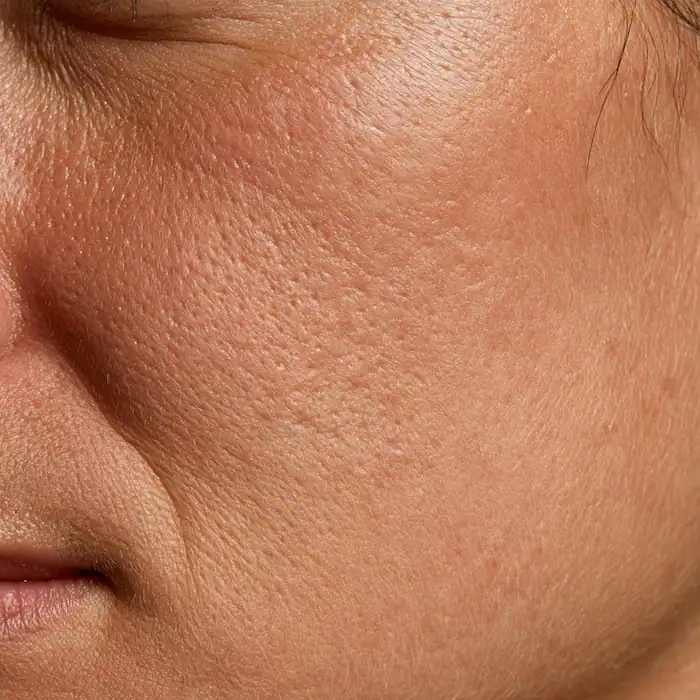
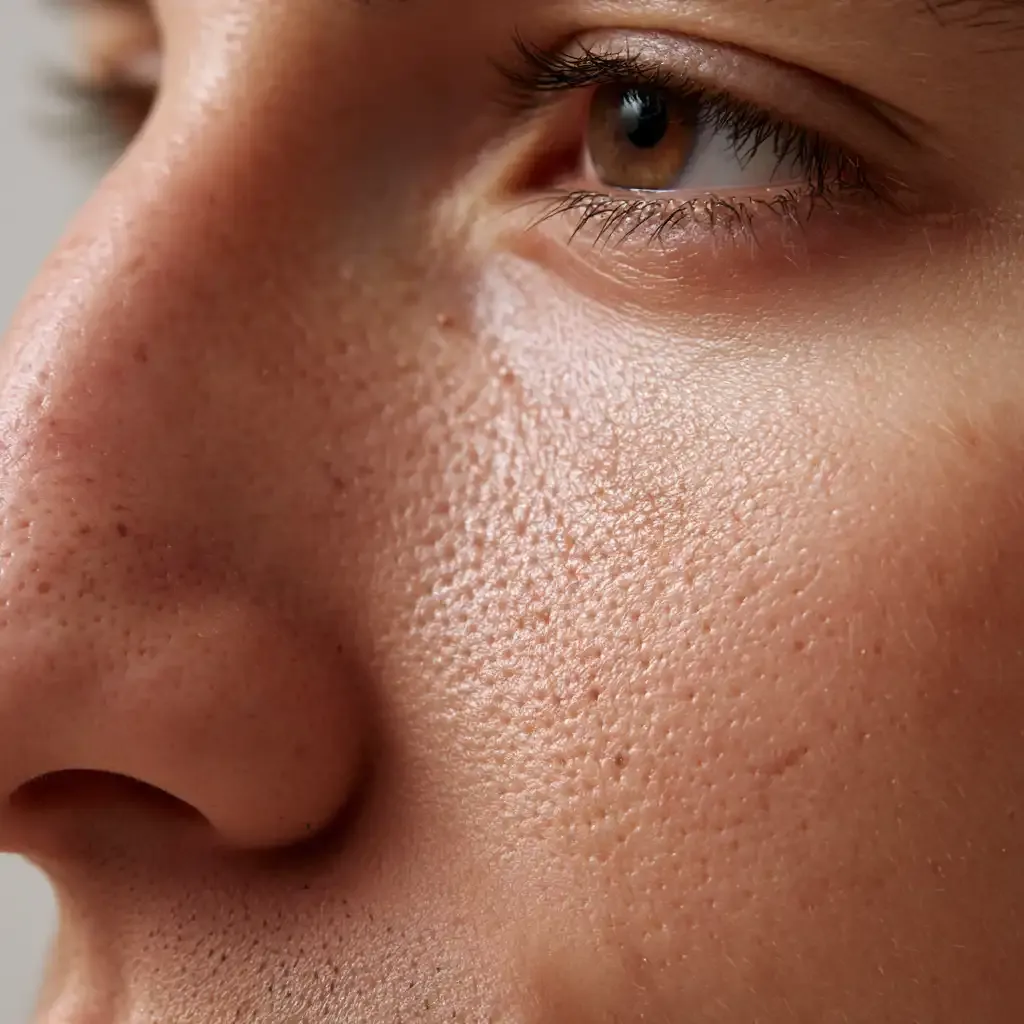
Blackheads look like small dark or grey dots scattered across the nose, sitting flush with the skin rather than raised. They are a type of acne, specifically open comedones, and a blackhead form develops once a pore stays clogged and the plug oxidises at the surface. Telling them apart from look-alikes helps you pick the right home remedy and the right skincare step instead of a harsh scrub. Knowing how to get rid of blackheads on nose skin begins with that distinction, and gentle cleansing matters more than aggressive buffing.
Comparative reviews of acne care confirm topical actives outperform manual removal [1][2][3].
Comparing Your Options
Here is how the three common look-alikes compare.
| Feature | Blackhead | Whitehead | Sebaceous filament |
|---|---|---|---|
| Appearance | Open dark dot, visible | Closed white bump | Faint grey thread |
| Pore | Open and oxidised | Closed over | Normal lining |
| Best skincare step | Salicylic acid | Retinoid | Gentle niacinamide |
What Causes Blackheads to Form on the Nose?
Blackheads form when a pore fills with excess sebum and dead skin cells, and the clogged plug oxidises at the surface. The nose holds dense oil glands, so it blocks faster than the cheeks. Hormones, genetics, and heavy occlusive products all push oil production up, which is the same mechanism driving broader acne [1]. Sweat and friction on facial skin worsen things, and the same congestion can also edge into inflamed acne over time. A hard scrub does not help and often inflames the pore further. What works is to exfoliate chemically so cells shed before they block the pore, which is why a steady skincare routine beats any one-off remedy [2][3]. Inflammation around the plug is what later turns some blackheads into raised spots and, in stubborn cases, scarring [4]. Understanding the cause is the real starting point for how to get rid of blackheads on nose skin.
What Are the Different Types of Nose Blackheads?
Not every dark dot on the nose is the same, and the type shapes how you treat it. Surface blackheads sit shallow and clear quickly once you exfoliate the cells blocking them. Deeper, older blackheads are stubborn because the plug is denser and the pore is stretched, common on oily skin [1]. Mixed cases sit beside small inflamed bumps and shade into milder acne [2]. A leave-on salicylic acid handles most, while cleansing or a grainy scrub rarely does enough on its own [3]. Resisting the urge to pick and remove blackhead plugs by force matters, since a doctor or dermatologist can advise where extraction is genuinely worth it for a deep pore.
Which Blackhead Treatment Options Actually Clear Your Nose?
The blackhead treatment that clears the nose most reliably combines chemical exfoliation with a nightly retinoid. Salicylic acid is oil-soluble, so it reaches into the pore and the hair follicle to dissolve the sebum plug. Apply retinol or a stronger prescription retinoid at night, because retinoids speed cell turnover and stop oily pores reclogging [2]. A pore strip lifts the visible top of a plug but leaves oil production untouched, so results fade fast [3]. For inflamed acne, in-clinic light-based options add another route to remove blackhead-prone congestion [5]. Prescription-strength retinoids such as tretinoin need a doctor's prescription in Australia and are not sold over the counter [1].
How Do You Prevent Blackheads Coming Back?
Preventing blackheads after you have cleared them comes down to controlling excess oil and keeping pores from reclogging. Use a gentle cleanser twice daily and a leave-on exfoliant a few nights a week to keep sebum moving rather than settling in the pore. A nightly retinoid is the most effective way to prevent blackhead recurrence and treat blackhead-prone skin long term [5]. A pore strip can tidy the surface but will not change the cause, so it cannot remove blackhead plugs for good. Emerging microbiome work suggests balancing skin bacteria may support clearer pores over time [6].
When Should You See a Doctor About Blackheads?
See a doctor when a blackhead at home routine stops working or where blackheads sit alongside painful, deeper spots. If a home remedy and over-the-counter skincare run for a couple of months with little change, it is time to escalate. Persistent excess oil across the oily, pore-dense centre of the nose, scarring, or product irritation all warrant a proper review. A doctor can prescribe stronger retinoids or combination formulas to treat blackhead-prone oiliness and remove blackhead plugs that surface steps miss. Prescription Skin's doctors assess your skin online and build a prescription formula when it is clinically appropriate.
Summary
Blackheads on the nose are clogged, oxidised pores best cleared with salicylic acid and a nightly retinoid, not squeezing or strips [1]. If they persist, a Prescription Skin doctor can assess your skin online and prescribe a formula through the prescription skincare model when it is clinically appropriate [2].
Frequently asked questions
How do you remove blackheads from your nose?
Remove blackheads from your nose with a leave-on salicylic acid and a nightly retinoid rather than squeezing. Cleanse twice daily, exfoliate chemically a few nights a week, and give it several weeks. Forcing them out by hand usually inflames the pore and can scar.
Chemical exfoliation dissolving the plug pulls blackheads out, supported by a retinoid stopping pores reclogging. A pore strip lifts only the visible top, so the dark dots return within days while the cause stays put.
What actually pulls out blackheads?
A doctor can help with how to get rid of blackheads on nose skin by prescribing stronger retinoids or combination formulas after assessing your skin. Prescription Skin's doctors review your skin online and create a prescription formula when it is clinically appropriate. You can read about the first 8 weeks on prescription skincare.
Can a doctor help with how to get rid of blackheads on nose?
Naturally clearing blackheads means gentle cleansing, a salicylic acid product, and avoiding heavy occlusive creams. There is no good evidence lemon, baking soda, or toothpaste clear blackheads, and they often cause irritation, so keep the routine simple.
How to remove blackheads naturally?
Big blackheads on the nose develop once an open pore stays clogged with sebum and dead skin for a long time and stretches. Oily skin, genetics, and hormones make the plug denser and more visible.
What causes big blackheads on the nose?
To extract a blackhead on the nose with minimal skin damage, soften the skin first, use clean fingers wrapped in tissue or a sanitised loop, and apply gentle even pressure once. Stop if it does not release; repeated forcing damages the pore wall and can leave marks [7].
How to Extract Blackheads on the Nose to Minimise Skin Damage?
Blackheads mostly affect teenagers and adults with oilier skin, though anyone with active oil glands can get them. They progress to deeper acne and scarring where inflammation builds, which can need treatment, and resurfacing options like fractional laser may be considered under clinical care [8][9][10]. They are not contagious, and a doctor diagnoses them on sight, flagging where the pattern points to fuller acne or scarring that needs acne scar treatment.
References
- Batool A, Abbas MS, Ali Akbar M, Murtaza M, Mahin FE, Ali U. Comparative efficacy and safety of oral azithromycin versus doxycycline in moderate-to-severe Acne vulgaris: a systematic review and meta-analysis. The Journal of dermatological treatment. 2026. doi:10.1080/09546634.2026.2648406. PubMed ↩︎
- Alrubaiaan MT, Bajamaan R, Altuwaijri AM, Alsenidi R, Almarzoq MS, Alashgar TM. 'Oral isotretinoin plus desloratadine for acne vulgaris: an updated global meta-analysis of efficacy, safety, and patient-centered outcomes'. The Journal of dermatological treatment. 2026. doi:10.1080/09546634.2026.2644003. PubMed ↩︎
- Gong J, Zhang J, Li Y, Jiang H, Chen S, Cheng J. Traditional Chinese medicine in acne treatment: From classical formulas to bioactive phytoconstituents and mechanisms. Journal of ethnopharmacology. 2026. doi:10.1016/j.jep.2026.121786. PubMed ↩︎
- Zhou S, Guo C, Zhai J, Zhang Y. Efficacy and safety of recombinant human epidermal growth factor combined with fractional carbon dioxide laser for facial atrophic acne scars: a systematic review and meta-analysis of randomized trials. Lasers in medical science. 2026. doi:10.1007/s10103-026-04881-w. PubMed ↩︎
- Ren X, Ge L, Song Z. Phototherapy for Acne Vulgaris: Strategies and Clinical Applications in Sebum Modulation, Inflammation Control, and Scar Management. Photobiomodulation, photomedicine, and laser surgery. 2026. doi:10.1177/25785478261438102. PubMed ↩︎
- Abedin ZU, Shah A, Mazhar S, Khan SM, Aamir AB, Yousaf S. Lactobacillus-Based Microbiome Therapy for Acne Vulgaris: A GRADE Systematic Review and Meta-Analysis of Randomized Controlled Trials. Journal of cosmetic dermatology. 2026. doi:10.1111/jocd.70792. PubMed ↩︎
- Igiede J, Sulejmani P, Vassiliev N, Cruz JB. Treating Acne Vulgaris and Scarring With Botulinum Toxin: A Systematic Review. Journal of drugs in dermatology : JDD. 2026. doi:10.36849/JDD.9562. PubMed ↩︎
- Wang X, Gao C, Yang D, Sui Z, Jiang R. Toward Intelligent and Personalized Skin Healing: Responsive Natural Hydrogels Bridging Sensing and Therapy. Macromolecular rapid communications. 2026. doi:10.1002/marc.202500907. PubMed ↩︎
- Xiang X, Shuai W, Mu Y. Comparative Efficacy and Safety of Fractional CO2 Laser and Gold Microneedling Radiofrequency for Atrophic Acne Scars: A Systematic Review. Skin research and technology : official journal of International Society for Bioengineering and the Skin (ISBS) [and] International Society for Digital Imaging of Skin (ISDIS) [and] International Society for Skin Imaging (ISSI). 2026. doi:10.1111/srt.70345. PubMed ↩︎
- Xue D, Yu Y, Li X, Ma G, Xie J, Xue Y. Efficacy and Safety of Er:Glass versus CO2 Lasers in the Treatment of Atrophic Acne Scars: A Systematic Review and Meta-Analysis. Aesthetic plastic surgery. 2025. doi:10.1007/s00266-025-05502-7. PubMed ↩︎
Medically Reviewed Content
- Written by: Prescription Skin Editorial Team
- Medically Reviewed by: Dr Mitch Bishop - AHPRA Registered Practitioner (MED0002309948)
- Last Updated: June 2026
This content is for informational purposes only and does not constitute medical advice. Treatment is subject to consultation and approval by our Australian-registered doctors.