- Key takeaways
- What Are Marionette Lines?
- Why Are Mouth-to-Chin Lines So Common With Age?
- What Causes Marionette Lines to Form?
- How Do Cosmetic Procedures Smooth Mouth-to-Chin Folds?
- What Treatments Are Available for Marionette Lines?
- Preventing Mouth-to-Chin Lines Before They Deepen
- How Do Mouth Corner Lines Affect How You Look and Feel?
- Do Genetics, Age and Face Shape Make Chin Folds Deeper?
- Which Daily Habits Help Keep Mouth Lines From Deepening?
- Summary
- Frequently asked questions
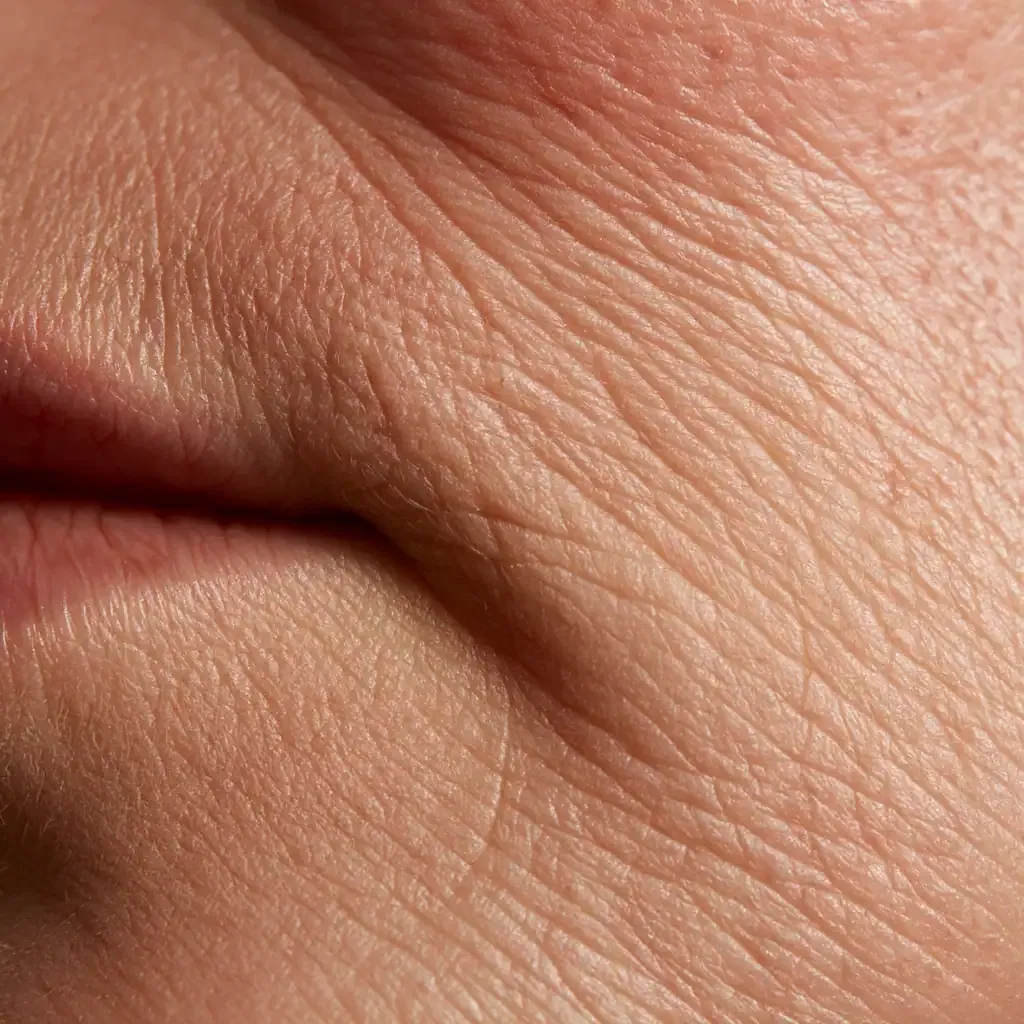
Marionette lines are the creases that run down from the corners of your mouth towards your chin. They're named after the hinged jaw of a puppet. Most people first notice them in midlife, often in a photo or under harsh bathroom lighting. They can make a relaxed face look sad or annoyed when you feel perfectly fine.
Here's the honest starting point a doctor would give you: marionette lines are mostly a structural fold, not just a surface wrinkle. Your skin loses collagen and bounce, the fat pads in your cheeks and jaw shift downwards, and a small muscle at each mouth corner keeps tugging down. A cream only reaches the top layer of all that. It can make the skin over the fold smoother and firmer, but it can't put back volume that's gone from underneath.
That's why the useful question isn't which product will erase them. It's which layer is causing your lines, and which mix of prescription skincare, in-clinic procedures and daily habits suits that layer, your budget and how much downtime you can manage.
Key takeaways
- Marionette lines are folds running from the corners of the mouth towards the chin. They're driven mostly by volume loss, ligament tethering and muscle pull, not just surface creasing.
- Prescription topicals such as tretinoin can improve texture and fine creasing over the fold, but they can't replace lost volume or lift sagging tissue.
- Dermal fillers and anti-wrinkle injections work on deeper layers. In Australia, botulinum toxin is a prescription-only medicine and you need a consultation first.
- The most practical ways to prevent them are daily sun protection, not smoking, and starting a retinoid before lines set in.
- Tretinoin isn't used during pregnancy or breastfeeding, so a doctor checks this before prescribing it.
What Are Marionette Lines?
Marionette lines are vertical folds where the lower cheek meets the chin. They usually start at the corners of the mouth and run down towards the jawline. Unlike fine wrinkles, they involve several layers at once: surface skin texture, dermal elasticity, the fat underneath and the muscles around the mouth. Different treatments work on different layers, as the table below shows.
| Approach | Layer it mainly targets | Common side effects | Access in Australia |
|---|---|---|---|
| Over-the-counter skincare | Surface hydration and texture (retinol, peptides, hyaluronic acid serums) | Mild dryness or stinging with retinol | Sold without a prescription |
| Prescription retinoid (tretinoin) | Fine creasing, texture and collagen in the upper skin (see retinoids) | Dryness, peeling and redness early on, plus more sun sensitivity; not used in pregnancy or breastfeeding | Needs a doctor's prescription |
| Dermal filler | Lost volume beneath the fold | Swelling, bruising, lumps; rarely, a blocked blood vessel | Injected in a clinic after a consultation |
| Anti-wrinkle injections (botulinum toxin) | The muscle that pulls the mouth corners down | Bruising, a temporarily uneven smile | Prescription-only medicine; consultation required |
| Microneedling and radiofrequency microneedling | Collagen remodelling, texture and mild laxity | Redness and swelling for a few days; pigment changes in some skin types | Performed in a clinic |
Most people get a better result by combining approaches than by relying on just one.
Why Are Mouth-to-Chin Lines So Common With Age?
Mouth-to-chin lines are so common with age because the lower face loses support at every level at once. Your skin makes less collagen and elastin, so it thins and springs back less after each smile. The fat pads in your cheeks deflate and slide down, but small ligaments along the jaw stay anchored, so the tissue above them folds over that fixed point.
Bone matters too. The jaw and the area around the chin slowly lose bone, which leaves the skin and fat less scaffolding to drape over. What was a smooth, youthful contour in your twenties can become a shadowed groove later in life.
That means lines are rarely just about wrinkles. Correcting a deep fold usually involves in-clinic treatments such as filler, which Prescription Skin doesn't perform. A topical prescription improves the quality of the skin's surface, and a doctor can explain where each option fits.
What Causes Marionette Lines to Form?
Lines form from a mix of structural ageing, muscle pull and skin damage, and your genetics set the starting point. A small muscle at each mouth corner, the depressor anguli oris, pulls the corners down every time you frown or talk. Over decades, that repeated pull etches a crease into skin that's losing its spring.
Sun exposure is a major outside factor, and Australia's high UV levels make it a big one here. Ultraviolet light breaks down collagen and elastin, which is why people who spend a lot of time outdoors tend to get deeper wrinkles around the mouth and chin earlier. Smoking adds to the damage, through both chemical injury and the repeated pursing of the lips. Large or rapid weight loss can also reveal a fold that fuller cheeks used to hide.
Repairing sun damage over the fold usually involves more than one strategy. Over months, a prescription retinoid can enhance the quality of the skin's surface, and some people with heavier sun damage choose laser resurfacing in a clinic. Neither one replaces volume, though, so wrinkles caused mainly by sagging need a different approach. For the bigger picture of why lines appear across the face, see our page on fine lines and skin texture.
How Do Cosmetic Procedures Smooth Mouth-to-Chin Folds?
Cosmetic procedures smooth mouth-to-chin folds in three ways: replacing lost volume, relaxing the muscle that pulls down, or triggering collagen remodelling. Dermal filler, usually a hyaluronic acid gel, is injected beneath the fold to prop it up from below. That's why it's the most common way clinics address marionette lines directly. The main serious risk is filler getting into a blood vessel, so the injector's technique and knowledge of anatomy matter more than the price.
Anti-wrinkle injections of botulinum toxin weaken the downward-pulling muscle so the mouth corners sit a little higher. In Australia, botulinum toxin is a prescription-only medicine, and medical guidelines require a consultation with a doctor or nurse practitioner before prescription cosmetic injectables are used. Energy-based devices are covered in our guide to Skin Tightening Treatment: What Works Without Surgery. They help with static wrinkles and laxity more than with a deep fold.
What Treatments Are Available for Marionette Lines?
Treatments for marionette lines fall into three groups. Prescription topicals work on the skin's surface, injectables address volume and muscle pull, and needling or energy devices target collagen remodelling. No single option gets rid of a deep fold on its own, so the realistic goal is to soften the appearance of lines, not erase them.
Tretinoin is the prescription retinoid doctors most often use for sun-damaged skin, and our guide to tretinoin in Australia explains how to get it. Other ingredients play supporting roles. Niacinamide helps with barrier function and even tone, hyaluronic acid draws water into the surface so fine creases look softer, and vitamin C adds antioxidant protection. For a closer look at how these actives compare, see the Best Anti Wrinkle Cream: What Actually Works on Lines guide.
How well these treatments work depends on how deep the fold is, how thick your skin is, how much sun damage you have and how much maintenance you're prepared to do. Results also last for different lengths of time:
- Prescription topicals: early changes in texture often show within 4 to 8 weeks, with fuller results at 12 to 24 weeks. They only last as long as you keep applying them.
- Dermal filler: commonly 6 to 18 months, depending on the product, the area and how quickly your body breaks it down.
- Botulinum toxin: usually around three to four months, until the muscle gets its full strength back.
- Microneedling and radiofrequency microneedling: usually a course of sessions several weeks apart, with collagen changes building over the following months.
Non-surgical treatments can't restore a jawline that has dropped a lot. At that stage, a facelift with a plastic surgeon may come up. For most people, though, a nightly retinoid plus occasional in-clinic treatments keeps wrinkles and surface texture over the fold under control.
Preventing Mouth-to-Chin Lines Before They Deepen
Preventing mouth-to-chin lines from deepening comes down to protecting the collagen you still have and limiting sun damage. Under Australian UV, the habit with the biggest payoff is daily broad-spectrum SPF 50+ on the lower face, including the chin and jawline, which people often miss.
A retinoid at night can stimulate collagen renewal before lines are well established, and starting in your 30s gives it years to work. Tretinoin isn't used if you're pregnant, trying to conceive or breastfeeding, so check our guide to pregnancy-safe skincare if that applies to you.
Don't try to hold back your facial expressions. Repeated movements do contribute to creasing, but a frozen face isn't realistic or necessary. Not smoking and avoiding crash diets matter more, because they protect the collagen and fat that stop early wrinkles from becoming fixed folds.
How Do Mouth Corner Lines Affect How You Look and Feel?
Lines change how your face looks at rest, often making you seem sad, tired or irritated when you're not. The mouth corners carry a lot of emotional signal, so even a shallow downturn can change how other people read your facial expressions. Many patients say that mismatch bothers them more than the line itself.
Several in-clinic options aim to improve the skin around the fold. According to a 2025 systematic review, microneedling for facial rejuvenation has been studied across 21 articles covering 723 patients [1]. Research on platelet-rich plasma is thinner: a 2025 systematic review found only nine clinical trials and two observational studies [2]. Clinical evidence indicates radiofrequency microneedling consistently improved texture and tightening across 20 studies with 558 participants [3].
None of these is a lifting procedure, though. They can make the skin over the fold look smoother, but they don't reverse how the fold formed. The volume loss and muscle movements that contribute most still need separate attention.
Do Genetics, Age and Face Shape Make Chin Folds Deeper?
Genetics, age and face shape all affect how deep chin folds become, which is why two people of the same age can look so different. You inherit your skin thickness, the strength of the ligaments that hold facial fat in place, and the shape of your jaw and chin. A small or receding chin, or naturally heavy lower cheeks, tends to give tissue more room to fold at the mouth corners.
Age then works on that foundation. Lifestyle factors such as sun exposure, smoking and big swings in weight can speed it up, and thin, fair skin that burns easily often creases deeper and sooner.
A cream can't change your bone structure, and no topical will restore support that's missing at that level. Knowing your pattern still helps, because it tells a doctor whether skin quality, volume or muscle pull is the main thing to target for the lines on your face.
Which Daily Habits Help Keep Mouth Lines From Deepening?
The daily habits that help most are simple ones done consistently: gentle skincare, protection from damage and a steady lifestyle. Use a mild cleanser that doesn't strip your skin, and moisturise morning and night, because dehydrated skin makes any crease around the mouth look sharper. A morning antioxidant such as ascorbic acid (vitamin C) adds protection against environmental damage, which helps preserve collagen and elasticity over time.
Sleeping on your back instead of face-down in the pillow reduces nightly pressure on the lower face. Drinking alcohol in moderation, not smoking and avoiding rapid weight loss all slow the formation of lines. These habits won't restore lost volume, but they protect texture and delay the point where in-clinic options become worth considering.
Summary
Lines come from volume loss, ligament tethering, muscle pull and sun damage, so no single cream or procedure fixes them on its own. According to recent systematic reviews, procedures such as microneedling and platelet-rich plasma have been studied for facial rejuvenation [1][2], but they work on skin quality, not the fold itself. With Prescription Skin's prescription skincare, Australian-registered doctors assess your skin and, where clinically appropriate, create a personalised prescription formula to improve the skin over marionette lines alongside any procedures you choose.
You may also find these related guides helpful: What Glycolic Acid and Vitamin C Each Do for Your Skin.
Frequently asked questions
How much does it cost to fill in marionette lines?
The cost of filling lines in Australia depends on how much filler you need, which product is used and how experienced the injector is. Medicare doesn't cover it because it's a cosmetic procedure. Deeper folds need more product, and most people need top-ups as the filler breaks down. Ask for an itemised quote that covers the consultation, the product and any review visit. Choosing on price alone is risky, because the biggest safety factor is the injector's knowledge of anatomy.
How to get rid of lines around the mouth?
Lines around the mouth soften best with a combined approach, because fine surface creases and deeper folds respond to different treatments. A nightly prescription retinoid such as tretinoin improves texture and fine lines over months, while daily sun protection limits further damage. According to a 2026 systematic review of 20 studies, radiofrequency microneedling consistently improved texture and tightening [3]. For volume loss, hyaluronic acid filler is the usual option, and a meta-analysis of 11 studies has assessed amino acid-enriched versions [4].
Can Botox be used to treat marionette lines?
Botulinum toxin can help lines in some people, but only indirectly, by relaxing the depressor anguli oris muscle that pulls the mouth corners down. It's usually combined with filler instead of being used alone, because it doesn't replace lost volume. Doses in this area are small, since the muscle sits close to the ones that control your smile and speech. If it spreads, it can cause a temporarily uneven smile or trouble drinking. The effects usually wear off in about three to four months.
References
- Foppiani JA, Fanning JE, Beltran K, Raska O, Hernandez Alvarez A, Taritsa I. Microneedling for Facial Rejuvenation: A Systematic Review. Aesthetic plastic surgery. 2025. doi:10.1007/s00266-025-04972-z. PubMed ↩︎
- Rodríguez-Castro MJ, Cortés-Rodríguez AE. Efficacy of platelet-rich plasma in facial rejuvenation: A systematic review. Enfermeria clinica. 2025. doi:10.1016/j.enfcle.2025.502161. PubMed ↩︎
- Kumar N, Suh DH, Lee SJ, Kasif SA, Carruthers JDA. Radiofrequency Microneedling for Facial Rejuvenation: A Systematic Review. Journal of cosmetic dermatology. 2026. doi:10.1111/jocd.70845. PubMed ↩︎
- Mosteirin M, Ardila AG, Calomarde RG, Mariscal G. Efficacy and Safety of Amino Acid-Enriched Hyaluronic Acid in Facial Rejuvenation: A Systematic Review and Meta-Analysis. Journal of cosmetic dermatology. 2026. doi:10.1111/jocd.70741. PubMed ↩︎
Medically Reviewed Content
- Written by: Prescription Skin Editorial Team
- Medically Reviewed by: Dr Mitch Bishop - AHPRA Registered Practitioner (MED0002309948)
- Last Updated: November 2026
This content is for informational purposes only and does not constitute medical advice. Treatment is subject to consultation and approval by our Australian-registered doctors.