- Key takeaways
- What Is Perioral Dermatitis, Exactly?
- What Causes This Rash And What Triggers Flare-Ups
- The Main Types Of Perioral Dermatitis
- Spotting The Symptoms And Getting A Diagnosis
- Your Perioral Dermatitis Treatment Options Explained
- Practical Ways To Prevent Future Breakouts
- When To See A Doctor About Your Skin
- Safety, Risk Factors And Possible Side Effects
- Summary
- Frequently asked questions
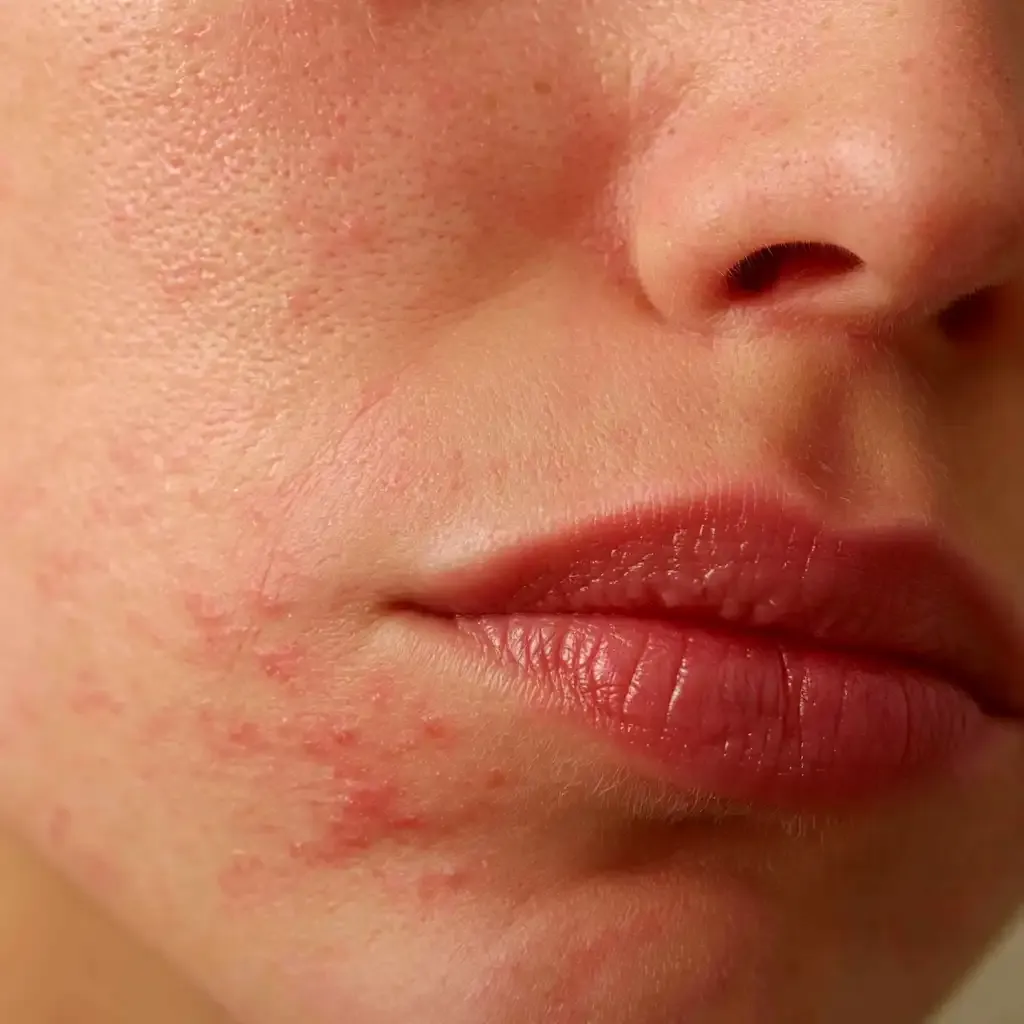
Perioral dermatitis treatment begins with understanding what the rash actually is: an inflammatory eruption of small red papules and pustules clustered around the mouth, and sometimes the nose or eyes. It tends to spare the skin right next to the lips, which is a useful clue. Although it looks a bit like acne or rosacea, it behaves differently and often traces back to a topical steroid. According to recent dermatology literature, facial inflammatory conditions are common and well studied, with large reviews shaping how doctors approach them [1][2]. Getting the cause right matters more than chasing each spot, and a sound perioral dermatitis treatment plan reflects that [3].
Key takeaways
- Perioral dermatitis is a red, bumpy rash around the mouth, nose, or eyes that often flares after using a topical steroid on the face.
- The first and most important step is usually stopping any steroid cream, even though the rash can briefly worsen first.
- Doctors commonly treat it with topical agents like metronidazole or azelaic acid, and oral antibiotics such as doxycycline for stubborn cases.
- Harsh cleansers, heavy occlusive products, and fluoridated toothpaste can keep a flare going, so a low-irritant routine matters.
- If the rash spreads, recurs, or affects the eyes, a doctor should review it rather than treating it as ordinary acne.
What Is Perioral Dermatitis, Exactly?
Perioral dermatitis is a benign but persistent facial rash, also called periorificial dermatitis when it appears around the eyes or nose. Knowing what separates it from look-alikes helps a doctor pick the right perioral dermatitis treatment, and a dermatologist may classify it before any cream starts. Research shows careful classification of inflammatory skin conditions drives better outcomes [2][3].
| Feature | Perioral dermatitis | Common look-alikes |
|---|---|---|
| Typical site | Around mouth, spares lip border; periorificial spread possible | Acne on whole face; rosacea on cheeks and nose |
| Common trigger | Topical steroid use | Hormones, irritant exposure |
| First-line topicals | Metronidazole, azelaic acid | Retinoids, benzoyl peroxide |
| Oral options | Tetracycline class, erythromycin | Varies by condition |
A low-irritant routine matters from day one, since aggressive products often act as an irritant and prolong things.
What Causes This Rash And What Triggers Flare-Ups
The single most recognised cause of this rash is topical steroid use on the face, whether prescribed or borrowed from a relative. According to inflammatory skin research, steroid exposure can drive a flare that worsens once the cream stops [1]. Other triggers feeding the rash include heavy or occlusive topical products, fluoride toothpaste, and harsh cleansing. Each flare tends to follow a pattern, so spotting your own trigger is part of effective perioral dermatitis treatment, and environmental exposures matter too [4]. Removing the offending topical agent is usually where progress begins.
The Main Types Of Perioral Dermatitis
Doctors broadly recognise classic perioral, periorificial, and granulomatous types, the last more common in children and near the eyes. Treatment overlaps across them, with a topical antibiotic such as metronidazole or topical azelaic acid used first and oral options like minocycline reserved for stubborn cases [2]. A steroid-induced pattern is the one most likely to bounce back if the cream isn't stopped. Choosing the right perioral dermatitis treatment depends on which type you have and how the skin near the mouth or eyes responds [3].
Spotting The Symptoms And Getting A Diagnosis
POD usually presents as clusters of small inflammatory papules and pustules, sometimes with light scaling and a burning feel rather than itch. A doctor often diagnoses it clinically, asking about any topical steroid or corticosteroid use that could worsen the picture. No biopsy is needed in most situations, though dermatology review helps when the diagnosis is unclear [5]. Recent population data on inflammatory skin disease underline how common facial rashes are and why a careful history matters before starting any medication [6].
Your Perioral Dermatitis Treatment Options Explained
Perioral dermatitis presents as a cluster of small red bumps and pustules around the mouth or other facial openings, and the cornerstone of managing POD is stopping any topical steroid or corticosteroid first, then adding a targeted anti-inflammatory medication. For mild POD, a topical agent such as metronidazole or azelaic acid often clears the rash over several weeks [1]. The treatment for periorificial dermatitis follows the same staged logic: when POD is widespread or resistant, an oral tetracycline-class antibiotic is the usual next step, and reviews of inflammatory skin therapy support this approach [7]. Expect POD to flare briefly after steroid withdrawal before it settles. POD that keeps returning deserves a proper plan, and our doctors can build a personalised prescription formula around concerns like rosacea and POD where clinically appropriate. Patience helps, because POD rarely resolves overnight [2].
Practical Ways To Prevent Future Breakouts
Preventing recurrence comes down to a calm, low-irritant routine. Swap to a soft non-foaming cleanser, drop heavy occlusive creams, and avoid fluoridated toothpaste if it seems to irritate the area. Don't reach for a steroid to settle redness, since that restarts the cycle. People also managing acne at the same time should coordinate any medication like doxycycline rather than stacking products. A simple topical plan from your doctor keeps things steady, supported by niacinamide in a light moisturiser.
When To See A Doctor About Your Skin
See a doctor if the rash spreads, keeps coming back, involves the eyes, or hasn't budged after a few weeks of a soft cleanser and a simpler routine. Persistent flares often need a prescription topical or an oral antibiotic, and a doctor can confirm it isn't acne or something else. Calcineurin inhibitors such as tacrolimus or pimecrolimus are sometimes used when standard options aren't suitable, and a dermatologist may help with difficult presentations. Rapid worsening or eye involvement warrants prompt review rather than waiting it out.
Safety, Risk Factors And Possible Side Effects
Most treatments are well tolerated, but every option carries trade-offs that a dermatologist weighs against your history. Oral antibiotics can cause stomach upset and sun sensitivity, while a strong topical or an oral erythromycin course may act as an irritant on already inflamed skin. According to dermatology research, treatment response varies between individuals, so a plan that suits one person may not suit another [5]. Side effects that occur should be reported, and a steroid should never be used to mask them. Population evidence supports staged, monitored care from a dermatologist or your doctor [6].
Summary
Perioral dermatitis usually settles once steroids stop and a calm, doctor-guided plan begins with topical metronidazole, azelaic acid, or oral antibiotics where needed [1][2]. Prescription Skin can assess your skin online and, where appropriate, build a personalised prescription formula for ongoing treatment.
Frequently asked questions
What is the fastest way to heal perioral dermatitis?
The fastest path is stopping any topical steroid and starting a targeted treatment your doctor recommends. Even so, the rash often flares for a week or two before improving. Most people see clear progress over four to eight weeks with metronidazole or azelaic acid, and oral antibiotics shorten resistant flares [1].
Sudden onset usually traces to a fresh trigger, and the main causes of perioral dermatitis are a steroid cream, a heavy moisturiser, fluoride toothpaste, or a change in cleansing. Hormonal shifts and inhaled or nasal steroids can also trigger it [2].
Why am I suddenly getting perioral dermatitis?
An Australian-registered doctor can prescribe treatment for perioral dermatitis online. After an online skin assessment, a doctor can review your skin and, where clinically appropriate, prescribe a topical or oral treatment without an in-person visit.
Can a doctor prescribe treatment for perioral dermatitis treatment online?
There's no single best cream for everyone, but topical metronidazole and azelaic acid are common first-line choices. The right one depends on your skin, severity, and the trigger behind the flare [3].
What is the best cream for perioral dermatitis?
Moisturise gently rather than drying the skin out. A light fragrance-free moisturiser with hyaluronic acid supports the barrier, while harsh drying products tend to prolong the rash. A good skin care routine if you're prone to flares is short and low-irritant: a soft cleanser, a simple moisturiser, sunscreen, and no occlusive layers.
Should I moisturise or dry out perioral dermatitis?
There are no proven natural cures, and steroid-induced rosacea-like rashes still need the steroid stopped. A doctor is the right person to see if you have issues that overlap with acne, since the two are treated differently. Current research keeps confirming that prescribed care outperforms home remedies, and reviews across inflammatory skin disease tell us evidence for natural fixes is limited [8][9][10].
What are natural remedies for perioral dermatitis / steroid induced rosacea?
You may also find these guides helpful: first 8 weeks on prescription skincare.
References
- Xiong M, Gao Q, Duan X. Comparative efficacy of targeted systemic therapies for moderate-to-severe atopic dermatitis: a network meta-analysis of phase 3-4 randomized trials. The Journal of dermatological treatment. 2026. doi:10.1080/09546634.2026.2650070. PubMed ↩︎
- Liu H, Ru H, Yu P, Wei W, Wang S. Atopic dermatitis and the risk of osteoporosis and fractures: a meta-analysis of cohort studies. Annals of medicine. 2026. doi:10.1080/07853890.2025.2607193. PubMed ↩︎
- Shanshal M, Uthayakumar A. Nemolizumab for chronic pruritus beyond atopic dermatitis and prurigo nodularis: a systematic review and synthesis of emerging evidence. The Journal of dermatological treatment. 2026. doi:10.1080/09546634.2026.2612882. PubMed ↩︎
- Chen S, Zhang S, Jiang W, Zhou R, Gu Q. Environmental exposures and atopic dermatitis: an umbrella review of systematic reviews and meta-analyses. Frontiers in public health. 2026. doi:10.3389/fpubh.2026.1834261. PubMed ↩︎
- Babul A, Mehta D, Soliman Y, Hussain M, Babul N. Upadacitinib Leads in Efficacy: A Bayesian Network Meta-Analysis of Four JAK Inhibitors in Moderate-To-Severe Atopic Dermatitis. International journal of dermatology. 2026. doi:10.1111/ijd.70228. PubMed ↩︎
- Liu Y, Ge J, Xu G, Cai C, Chen D, Tian J. Burden and risk of asthma and rhinitis in people with atopic dermatitis: global estimates from a hierarchical Bayesian model. The British journal of dermatology. 2026. doi:10.1093/bjd/ljag025. PubMed ↩︎
- Boesjes C, Bruin-Weller M, Zuithoff NPA, Bouhaddani SE, Haeck I, Kamsteeg M. A Real-world Meta-analysis Study of Disease Severity in European Patients Who Received Baricitinib for Atopic Dermatitis: Data from BioDay, SCRATCH and TREATgermany. Acta dermato-venereologica. 2026. doi:10.2340/actadv.v106.adv-2025-0231. PubMed ↩︎
- Wang Y, Richmond JM, Almela RM. Comparison of human and canine atopic dermatitis transcriptome: A meta-analysis and review from a one health perspective. Research in veterinary science. 2026. doi:10.1016/j.rvsc.2026.106194. PubMed ↩︎
- Yu Q, Lan L, Li Y, He Y, Hu J, Fang K. Association between asthma, allergic rhinitis, atopic dermatitis, and dental caries: evidence from systematic review with meta-analysis and Mendelian randomisation investigation. Journal of global health. 2026. doi:10.7189/jogh.16.04223. PubMed ↩︎
- Nørreslet LB, Agner T, Mortz CG. Pregnancy in Women with Atopic Dermatitis: A Systematic Review of Concerns and Challenges. Acta dermato-venereologica. 2026. doi:10.2340/actadv.v106.adv-2026-0608. PubMed ↩︎
Medically Reviewed Content
- Written by: Prescription Skin Editorial Team
- Medically Reviewed by: Dr Mitch Bishop - AHPRA Registered Practitioner (MED0002309948)
- Last Updated: June 2026
This content is for informational purposes only and does not constitute medical advice. Treatment is subject to consultation and approval by our Australian-registered doctors.