- Key takeaways
- What Pimples on the Forehead Actually Are
- Comparing Your Options
- What Causes Forehead Breakouts and Key Things to Know
- The Different Types of Forehead Pimples Explained
- Acne Treatment Options That Clear Forehead Pimples
- Prevention Tips That Keep Forehead Pimples Away
- Getting Prescription Help and What It Costs
- When to See a Doctor About Forehead Pimples
- Side effects and safety
- Who is and is not a candidate
- Summary
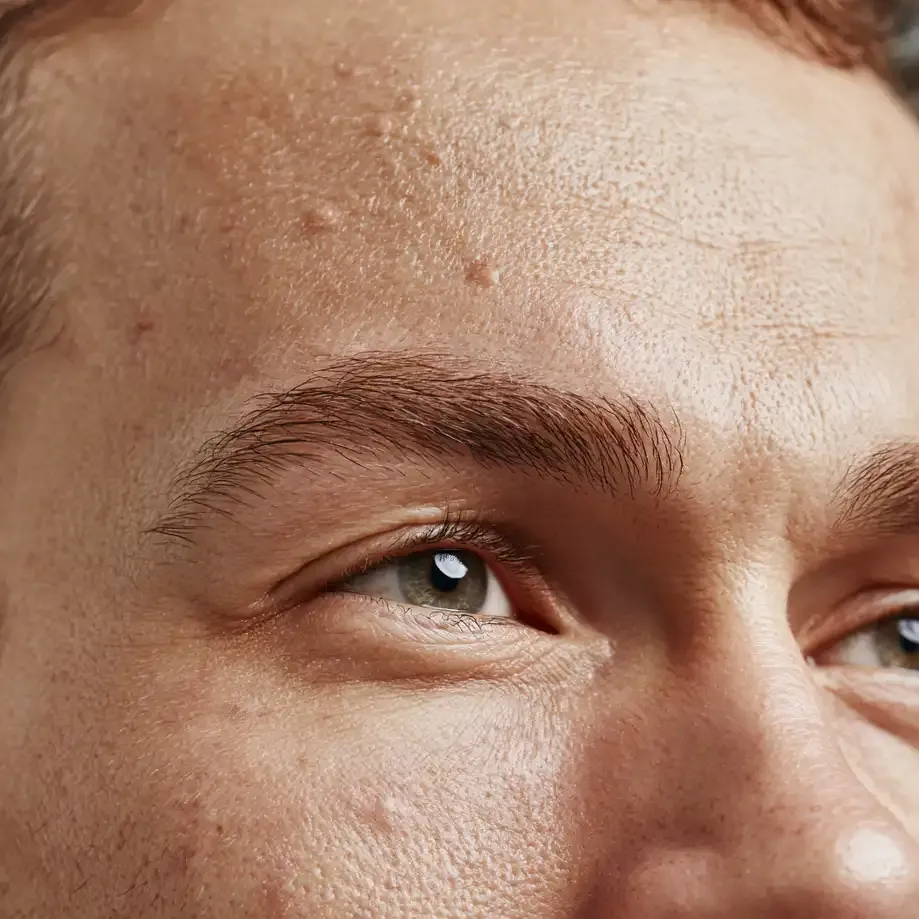
Pimples on the forehead are a common form of acne that appears across the upper face, where the skin carries a high density of oil glands. According to clinical evidence, acne vulgaris is a chronic inflammatory disease of the hair follicle-sebaceous gland unit and the most common skin disorder worldwide.[1] The forehead tends to flare early because it sits in the T-zone, where sebum production is naturally higher.
Most forehead breakouts start the same way. Oil and dead skin cells block a follicle, bacteria multiply inside it, and the area becomes inflamed.[2] What you see on the surface, whether that's a small whitehead or a deeper, sore lump, depends on how far down the blockage sits and how much inflammation builds around it.
The good news is that pimples on the forehead usually respond well to treatment. Simple changes to your routine clear many cases, and where they don't, options like medicated creams and chemical exfoliation can help.[3] Below we'll cover what these pimples actually are, why the forehead is such a frequent site, the main treatment paths, and the signs that it's time to see a doctor.
You may also find these related guides helpful: first 8 weeks on prescription skincare, hyaluronic acid, and ascorbic acid.
Key takeaways
- Pimples on the forehead are usually ordinary acne, caused when oil and dead skin cells block the pores in the hair follicle-sebaceous gland unit.
- The forehead has a high density of oil glands and sits under hair products and headwear, so it's a common spot for breakouts.
- Most cases respond to consistent topical treatment; gentle cleansing, non-comedogenic products and daily sunscreen do a lot of the work.
- Persistent, painful or scarring forehead acne is worth a doctor's review, since prescription options like topical retinoids and azelaic acid often help where over-the-counter products stall.
- Prescription skincare in Australia is only available after an online skin assessment and approval by Australian-registered doctors.
What Pimples on the Forehead Actually Are
Pimples on forehead are blocked, inflamed pores within the pilosebaceous unit, which is the follicle and its attached sebaceous gland. When the gland produces more sebum and the pore lining sheds cells too quickly, the channel clogs and a lesion forms. Research shows that resident skin bacteria, particularly Cutibacterium acnes, play a central role in driving the inflammation that follows.[4] Studies suggest that the balance of the skin microbiome, rather than the mere presence of one organism, shapes how inflamed a breakout becomes.[5]
Comparing Your Options
It helps to know which lesion you're looking at, because that guides treatment. The table below compares the common types.
| Lesion type | What it looks like | Usual approach |
|---|---|---|
| Open comedone (blackhead) | Open pore with dark plug | Non-comedogenic routine, topical exfoliation |
| Closed comedone (whitehead) | Small skin-coloured bump | A topical retinoid to normalise shedding |
| Papule | Small red, tender spot | Anti-inflammatory topicals |
| Pustule | Red spot with white centre | Treat early to limit a scar |
| Nodule | Deep, painful lump | Prescription review, often by a clinician with dermatology training |
Antibiotic-resistance concerns mean a dermatologist will often favour non-antibiotic actives where they can.[6]
What Causes Forehead Breakouts and Key Things to Know
Forehead acne is caused by the same core process as acne anywhere else: excess oil, blocked pores, bacteria and inflammation working together.[1] The forehead just happens to be a hotspot because it carries a lot of oil glands and sits in close contact with things that irritate or block pores.
Hair and hair products are a frequent trigger. Oils, waxes and styling residue migrate from the hairline onto the skin and clog follicles, which is why some forehead acne hugs the edge of the hair. Hats, helmets and headbands add friction and trap sweat, and that combination feeds breakouts too.
Hormonal shifts also raise sebum output, so acne often worsens during puberty, around periods or with stress.[2] Picking at spots spreads inflammation and increases the chance of marks. Knowing what's driving your forehead acne matters, because the fix for product-related breakouts differs from the fix for hormonal acne, and clinical evidence supports matching treatment to the underlying cause.[3] If your forehead acne keeps returning despite a clean routine, that pattern is worth investigating rather than ignoring.
The Different Types of Forehead Pimples Explained
The different types of forehead acne range from tiny clogged pores to deep, painful lumps, and they sit on a single spectrum of severity.[1] Recognising the type you have is the first step, because mild and severe acne need different treatment intensities.
Comedonal acne is the mildest form. Blackheads and whiteheads scatter across the forehead without much redness, and they reflect blocked follicles rather than heavy inflammation. Many people see this kind first.
Inflammatory acne is the next step up. Papules and pustules appear as red, tender spots, and they signal that bacteria and the immune response are now active in the follicle.[2] Left untreated, repeated inflammation can leave marks or scarring.
Nodular and cystic acne is the most severe. These deep lumps sit below the surface, hurt, and carry the highest scarring risk, so they usually need prescription treatment rather than over-the-counter products.[3] Forehead acne can mix types at once, with a few comedones alongside an angry papule or two. That mix is normal, and it's part of why a single product rarely clears everything on its own.
Acne Treatment Options That Clear Forehead Pimples
Getting rid of forehead acne usually means combining a consistent topical routine with treatments matched to your acne type.[2] There's no overnight fix, but most people see real improvement over six to twelve weeks.
People often ask why they only get acne on the forehead. The honest answer is that the forehead's oil-gland density, plus contact with hair products, hats and sweat, concentrates the triggers there while drier areas stay clear. So yes, forehead bumps are usually acne, though not every bump is; some are harmless keratosis or, when itchy and scaly along the hairline, a sign of seborrhoeic dermatitis irritating the skin rather than true acne.
For over-the-counter care, gentle cleansing with a salicylic acid product helps unblock pores, and benzoyl peroxide targets bacteria. Where these stall, a doctor may consider a topical retinoid or azelaic acid, both of which address comedones and inflammation.[1] Chemical peels are another option for stubborn comedonal acne.[3] If you want to understand the medical pathway, our guide on acne treatment walks through it in more detail. Whatever you use, give it time and resist squeezing, since picking deepens inflammation and risks marks. Acne treatment works best when it's steady, simple and sun-protected.
Prevention Tips That Keep Forehead Pimples Away
Preventing forehead breakouts comes down to reducing the things that block and irritate pores on the upper face. Choose non-comedogenic moisturisers and sunscreens, which are formulated not to clog pores and trigger a new whitehead or papule.
Keep hair products away from the hairline where you can, and wash your face after sweating, since sweat and dead skin sitting on the skin gives breakouts a head start. Clean anything that touches your forehead, including hats, helmet padding and pillowcases. These habits matter most through puberty, when oil output peaks, but they help at any age. If breakouts persist despite a careful routine, that often signals the cause forehead acne needs a closer look rather than another product swap. Our piece on clogged pores on the face covers the prevention side in more depth.
Getting Prescription Help and What It Costs
Prescription treatment becomes the sensible next step when over-the-counter products haven't cleared persistent forehead acne. In Australia, medicines like topical retinoids and azelaic acid are prescription-only, so you can't buy the stronger formulas off the shelf; they need a doctor's prescription after a proper review.
Prescription Skin uses an online skin assessment that Australian-registered doctors review, and where it's clinically appropriate, they can create a personalised prescription formula built around your skin. The cost reflects the consultation and the made-up formula rather than a single chemist item, and a formula is only issued when a doctor approves it. Stronger actives carry a real benefit because they target the hair follicle and the bacteria within it more directly than basic cleansers can.[6] Research into the skin microbiome supports moving beyond broad antibiotics toward treatments that restore balance in the follicle.[4] If your spots are deep, leave marks, or look more like infection or inflamed pores than ordinary blackheads, a clinician with dermatology training should guide what goes on your skin.[5]
When to See a Doctor About Forehead Pimples
See a doctor about forehead pimples when they're painful, persistent, scarring, or not improving after a couple of months of consistent care. Those are the signals that the inflammation around your sebaceous glands needs more than an over-the-counter routine.
Deep nodules and cysts are worth reviewing early, because acting before scarring sets in protects the skin long term. Sudden flares, spreading redness, or spots that look like infection rather than ordinary acne also deserve assessment. If the bumps are itchy and scaly along the hairline, that points more towards irritation from seborrhoeic dermatitis than acne, and treatment differs. A doctor can confirm what's blocking your pores and rule out look-alikes, drawing on dermatology principles and the growing understanding of how skin bacteria drive inflammation.[4] Recurrent acne that keeps returning across the face despite good habits is another reason to get a structured plan rather than guesswork.[6] Studies suggest matching treatment to the microbial and inflammatory picture gives better results than reaching for the same product repeatedly.[5] When in doubt, a review is the safer call.
Side effects and safety
Most acne treatments are well tolerated, but the common side effect is irritation, especially in the first few weeks. Retinoids and exfoliating acids can cause dryness, redness and mild peeling as the skin adjusts, and starting slowly reduces this.
Stronger actives work by speeding cell turnover in the follicle and clearing the clogged pore, which is exactly why they can sting sensitive skin early on. Build up frequency gradually, keep the rest of the routine plain, and use a non-comedogenic moisturiser to protect the barrier. Daily sunscreen matters more on these treatments, since several actives make skin more sun-sensitive. If you get persistent burning, swelling, or signs that look like more than ordinary inflammation around the sebaceous glands and sebum-rich areas, stop and check with a doctor. A dermatologist or your treating clinician can adjust strength so the formula stays effective without overwhelming the skin.
Who is and is not a candidate
Good candidates for prescription forehead acne treatment are adults with persistent or inflammatory acne that over-the-counter products haven't controlled. If your breakouts are mild and comedonal, a simple non-comedogenic routine may be enough before you consider stronger options.
Some people aren't suitable for certain prescription actives. If you're pregnant, trying to conceive, or breastfeeding, several acne ingredients including topical retinoids aren't appropriate, and our note on prescription skincare during pregnancy explains why a doctor reviews this carefully. People with very reactive skin may find that strong actives irritate the follicle and worsen redness, so gentler choices come first. A doctor weighs your skin type, how much sebum your sebaceous glands produce, your history and any allergies before suggesting a formula. That's the value of a proper assessment grounded in dermatology rather than a generic product: clinical evidence shows treatment works best when matched to the individual picture.[5] Prescription Skin only issues a formula where Australian-registered doctors judge it clinically appropriate.[4] Suitability is always a clinical decision, not a guarantee.[6]
Summary
Pimples on the forehead are ordinary acne driven by blocked, inflamed pores in an oil-rich part of the face.[1] Simple habits clear many cases, and consistent topical treatment handles most of the rest.[2] When forehead acne is persistent or scarring, Prescription Skin's online assessment lets Australian-registered doctors decide whether a personalised prescription formula is appropriate for your skin.
Frequently asked questions
What is the cause of forehead pimples?
Pimples on the forehead are caused when oil and dead skin cells block the follicles, bacteria multiply, and the area becomes inflamed. The forehead breaks out often because it has many oil glands and sits in contact with hair products, hats and sweat, all of which clog or irritate pores.[1]
How do I stop getting acne on my forehead?
Stop forehead pimples by keeping the routine simple: cleanse gently twice daily, use non-comedogenic moisturisers and sunscreen, keep hair products off the hairline, and avoid picking. If breakouts persist despite this, a medicated topical may be needed.[2]
Can a doctor help with pimples on forehead?
Yes, a doctor can help with pimples on the forehead, especially when over-the-counter products haven't worked. Australian-registered doctors can review your skin online and, where appropriate, prescribe stronger actives like a topical retinoid or azelaic acid that aren't available off the shelf.
Do forehead pimples indicate health issues?
Forehead pimples usually reflect normal oil and pore activity rather than serious illness, but persistent or severe acne is worth a check. Sudden, widespread flares can occasionally point to hormonal changes that a doctor can assess.[3]
How do I remove pimples from my forehead?
Remove forehead pimples by treating them rather than squeezing them, since picking spreads inflammation and risks scarring. Topical exfoliants, benzoyl peroxide and, where needed, prescription creams clear lesions and prevent new ones over several weeks.
Is forehead acne related to gut health?
Forehead acne may be linked to gut health through the gut-skin connection, though the evidence is still developing. According to research on diet and the microbiome, a balanced gut microbiome can reduce skin inflammation, while poor dietary patterns may worsen outcomes, so general healthy eating is a reasonable support alongside skincare.[7]
References
- Deng Y, Wang F, He L. Skin Barrier Dysfunction in Acne Vulgaris: Pathogenesis and Therapeutic Approaches. Medical science monitor : international medical journal of experimental and clinical research. 2024. doi:10.12659/MSM.945336. PubMed ↩︎
- Fox L, Csongradi C, Aucamp M, du Plessis J, Gerber M. Treatment Modalities for Acne. Molecules (Basel, Switzerland). 2016. doi:10.3390/molecules21081063. PubMed ↩︎
- Conforti C, Zalaudek I, Vezzoni R, Retrosi C, Fai A, Fadda S. Chemical peeling for acne and melasma: current knowledge and innovations. Giornale italiano di dermatologia e venereologia : organo ufficiale, Societa italiana di dermatologia e sifilografia. 2019. doi:10.23736/S0392-0488.19.06425-3. PubMed ↩︎
- Dréno B, Dagnelie MA, Khammari A, Corvec S. The Skin Microbiome: A New Actor in Inflammatory Acne. American journal of clinical dermatology. 2020. doi:10.1007/s40257-020-00531-1. PubMed ↩︎
- Podwojniak A, Tan IJ, Sauer J, Neubauer Z, Rothenberg H, Ghani H. Acne and the cutaneous microbiome: A systematic review of mechanisms and implications for treatments. Journal of the European Academy of Dermatology and Venereology : JEADV. 2024. doi:10.1111/jdv.20332. PubMed ↩︎
- Xu H, Li H. Acne, the Skin Microbiome, and Antibiotic Treatment. American journal of clinical dermatology. 2019. doi:10.1007/s40257-018-00417-3. PubMed ↩︎
- Borrego-Ruiz A, Borrego JJ. Nutritional and Microbial Strategies for Treating Acne, Alopecia, and Atopic Dermatitis. Nutrients. 2024. doi:10.3390/nu16203559. PubMed ↩︎
Medically Reviewed Content
- Written by: Prescription Skin Editorial Team
- Medically Reviewed by: Dr Mitch Bishop - AHPRA Registered Practitioner (MED0002309948)
- Last Updated: June 2026
This content is for informational purposes only and does not constitute medical advice. Treatment is subject to consultation and approval by our Australian-registered doctors.