
- Key takeaways
- How Doctors Diagnose Melasma
- Causes and Triggers Behind Melasma Pigmentation
- Benefits of a Melasma Cream for Dark Patches
- How Retinol Fades Skin Pigmentation
- Melasma Treatment Options and Approaches That Work
- How to Apply and Use Your Melasma Cream
- Choosing a Melasma Cream for Your Skin Type
- How it works
- How to get it in Australia
- A Simple Anti-Pigmentation Routine Built Around Retinol
- Melasma Cream Compared
A melasma cream is a topical treatment designed to fade the brown or grey-brown facial patches caused by overactive pigment cells, and the effective versions almost always combine several active ingredients. Melasma is a chronic condition driven by UV exposure, visible light, hormones and inflammation, so a single brightening product from a shelf often disappoints.[1]
The evidence supports supervised combination treatment over one hero ingredient. According to a systematic review and meta-analysis, agents such as hydroquinone, tranexamic acid, azelaic acid and kojic acid each reduce severity through different mechanisms, and daily sunscreen underpins all of them.[2] The combination best suited to you depends on your skin tone, pregnancy status, irritation risk and treatment history.[3]
This guide explains what a melasma cream can realistically do, where medical supervision matters, and how the melasma care model at Prescription Skin works. Studies suggest well-chosen topical therapy meaningfully improves both pigmentation and how patients feel about their skin.[4][5]
You may also find these related guides helpful: first 8 weeks on prescription skincare.
Key takeaways
- Melasma is a chronic pigmentation condition, so the realistic goal is control and maintenance rather than a one-off cure.
- A meta-analysis of 45 studies confirmed hydroquinone, cysteamine, tranexamic acid, azelaic acid and kojic acid all reduce melasma severity. Tranexamic acid had the lowest irritation rate at 0.8% while hydroquinone combinations had the highest at 50.9%.[2]
- Triple combination cream (hydroquinone plus tretinoin plus a low-potency steroid) has the strongest topical evidence for moderate to severe melasma, but it is prescription-only and needs medical supervision.[4]
- A December 2025 meta-analysis found topical treatments significantly reduce both MASI severity scores and quality-of-life impact.[5]
- Daily broad-spectrum sunscreen is non-negotiable, and maintenance therapy prevents the relapse seen in most patients who stop treatment.
How Doctors Diagnose Melasma
Dermatologists diagnose melasma mostly by looking, because the pattern is fairly distinctive on the face. According to clinical reviews, diagnosis is usually clinical, sometimes aided by a Wood's lamp to gauge whether pigment sits mainly in the upper or deeper layers of the skin, and doctors use this to predict how a melasma cream is likely to respond.[2]
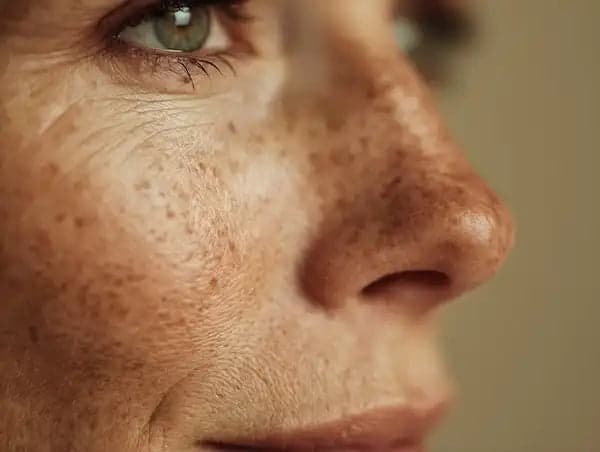
What you tend to see is consistent with melasma when the marks appear as:
- Symmetrical brown or grey-brown patches, usually on the cheeks, forehead, upper lip and bridge of the nose.
- Larger blotchy areas rather than small discrete spots, often with a lacy or map-like border.
- Darkening worsened by sun exposure and after pregnancy or starting hormonal contraception.
Melasma is not the only cause of facial darkening, and a dermatologist will rule out look-alikes before settling on a diagnosis. This skin condition is commonly confused with post-inflammatory hyperpigmentation left behind by acne, with sun-driven lentigines, and occasionally with a photosensitive drug reaction. Research shows getting the diagnosis right matters, because each cause responds to different treatment.[5] Itchy, raised or quickly changing patches are not typical of melasma and warrant an in-person review.[4]
Causes and Triggers Behind Melasma Pigmentation
Melasma pigmentation is driven by overactive melanocytes, the cells producing pigment, responding to a mix of light, hormones and inflammation. According to reviews of the condition, ultraviolet and even visible light switch on melanin production, hormonal factors such as pregnancy and the oral contraceptive pill amplify it, and low-grade inflammation keeps the loop running.[1]
This multi-pathway biology is exactly why a single-agent melasma cream rarely clears the patches alone. Research shows the blood vessels beneath affected skin are also increased, feeding the melanocytes and helping the pigment persist, so relapse is common once treatment stops.[2]
The common triggers are practical ones. Sun and heat are the biggest, so unprotected time outdoors, hot kitchens and even strong device screens can nudge things along. Hormonal shifts matter too, and people with dark skin tones tend to be affected more often and more stubbornly. Clinical evidence indicates friction from aggressive scrubbing or harsh procedures can worsen the picture by adding inflammation.[5] Studies suggest tackling these triggers alongside active treatment gives the pigment its best chance of settling.[4]
Benefits of a Melasma Cream for Dark Patches
A well-formulated melasma cream can visibly lighten dark patches, but the size of the benefit depends heavily on the actives it contains and the strength of the evidence behind them. According to a meta-analysis of 45 studies, hydroquinone, tranexamic acid, azelaic acid and kojic acid all reduce melasma severity, though effect sizes and side-effect profiles differ considerably.[2]
The strongest topical evidence sits with supervised triple combination cream, where clinical trials report high rates of meaningful improvement in a patch of moderate to severe melasma.[4] Tranexamic acid has a growing evidence base and stands out for tolerability, making it a useful complement for people who react to stronger agents.[6] A focused review found topical tranexamic acid is better tolerated but works less well as a sole agent, so it is often combined.[7]
Kojic acid earns moderate evidence and, like azelaic acid, has a role where a gentler option is needed. A December 2025 meta-analysis confirmed topical treatment lowers both severity scores and quality-of-life impact.[5] What a cream cannot reliably do is match a chemical peel or laser overnight, and no topical is a permanent fix, so a treated patch needs ongoing maintenance to stay clear.
How Retinol Fades Skin Pigmentation
Retinoids fade skin pigmentation by speeding up how quickly the outer skin cells turn over, which disperses clustered melanin and clears pigmented cells faster. According to melasma reviews, the prescription retinoid tretinoin also improves how well other depigmenting agents penetrate, so it rarely works alone and usually sits inside a combination.[1]
Over-the-counter retinol is a weaker cousin of tretinoin, so it nudges pigment slowly at best. Prescription-strength tretinoin is the more reliable option to treat melasma, and in Australia it is prescription-only, meaning a doctor must assess your skin before it can be supplied. You can read our comparison of retinol versus tretinoin, and about the ingredient class on our retinoids page.
The Prescription Skin pathway keeps this supervised. You complete an online skin assessment, an Australian-registered doctor reviews your case and confirms the diagnosis, and where clinically appropriate they build a custom prescription formula. Research shows retinoids work best when paired with a tyrosinase inhibitor and daily sunscreen, because pigmentation being cleared will return without light protection.[2] Studies suggest combination formulas outperform any single ingredient for pigmentation.[4]
Melasma Treatment Options and Approaches That Work
Melasma treatment works best when grouped by class of active and layered under strict sun protection, because no single approach suits everyone. According to evidence-based reviews of melasma diagnosis and treatment, there is no one best treatment for melasma, and the honest answer is a doctor matches the class of agent to your skin and history.[4][8]
The main topical classes are tyrosinase inhibitors (hydroquinone, kojic acid, azelaic acid), retinoids (tretinoin), and vessel or plasmin-targeting agents such as tranexamic acid. A low-potency steroid is sometimes added to calm the inflammatory contribution and reduce irritation from the other actives. Vitamin-based antioxidants like ascorbic acid support the routine without carrying it alone. Research shows tranexamic acid, given orally or applied to the skin, is a genuine advance for stubborn hyperpigmentation.[6]
Melasma can affect how you feel about yourself, and studies suggest effective treatment improves quality of life as well as the patches themselves.[5] Several agents, including tretinoin, are prescription-only in Australia. The Prescription Skin model handles that through an online assessment and doctor review, and where appropriate a doctor can prescribe a custom-compounded formula combining actives from different classes in one cream. The combination approach is what the evidence favours.[2]
How to Apply and Use Your Melasma Cream
Most melasma creams are applied once daily at night, starting slowly and building up as your skin adjusts. According to dermatology guidance, a retinoid-containing topical formula is best introduced two or three nights a week for the first fortnight, then increased toward nightly use as tolerated, which limits the peeling and redness that put people off.[4]
A practical evening routine looks like this: cleanse, wait until skin is dry, apply a pea-sized amount across the affected area, then follow with a plain moisturiser to buffer irritation. In the morning, vitamin C sits well before a broad-spectrum SPF 50 sunscreen, which protects your progress.[2]
Avoid stacking exfoliating acids, scrubs or strong at-home peels on the same nights, because added inflammatory stress can worsen hyperpigmentation.[5] If you use a hydroquinone-based formula to treat melasma, research shows it is best run in supervised cycles rather than continuously, so follow your doctor's schedule.[6] Prescription-strength ingredients like tretinoin are prescription-only in Australia, so the concentration and duration should be set by your doctor.
Choosing a Melasma Cream for Your Skin Type
The right melasma cream depends on your skin type, your situation and your tolerance for irritation, not just the strongest available active. According to dermatology reviews, patients with sensitive skin or a history of reacting to hydroquinone often do better with a gentler topical option such as azelaic acid or tranexamic acid, which are better tolerated while still reducing pigment.[2][9]
Pregnancy and breastfeeding change the picture entirely. Hydroquinone and tretinoin are avoided, so a doctor will usually favour azelaic acid and diligent sun protection, as we cover in our guide to prescription skincare during pregnancy.[4]
Darker skin tones need particular care to treat melasma, because aggressive treatment can trigger post-inflammatory hyperpigmentation and make things worse. Research shows starting low and slow, and leaning on well-tolerated actives, protects these patients from paradoxical darkening.[5] Vitamin C and niacinamide are reasonable supporting ingredients across most skin types. Clinical evidence indicates the safest, most effective choice comes from matching the formula to your skin under medical review.[6]
How it works
A melasma cream works by interrupting the pigment pathway at several points in the skin at once. According to comprehensive reviews, tyrosinase inhibitors such as hydroquinone block the key enzyme making melanin, while a topical retinoid thins the sticky upper cell layer and helps clear pigment already formed.[2]
Tranexamic acid takes a different route, calming the interaction between blood vessels, plasmin and melanocytes that keeps hyperpigmentation topped up, so it complements the older agents rather than repeating them. Adding a low-potency steroid in a supervised formula reduces inflammation that would otherwise drive fresh pigment.
Because hormone activity, sun and inflammation all feed the same loop, hitting one target usually is not enough. Research shows combination therapy targeting multiple steps outperforms any single ingredient, which is the logic behind a compounded prescription cream.[6] None of this removes the underlying tendency, so the mechanism explains why melasma is controlled rather than permanently erased, and why a post-acne scar-type mark may respond differently to true melasma.
How to get it in Australia
In Australia, the effective melasma actives are prescription-only, so you cannot simply buy them off a shelf. Prescription-strength ingredients such as hydroquinone and the retinoid tretinoin require a doctor's assessment and prescription before a pharmacy or compounding chemist can supply them.
Prescription Skin handles this online. You complete a skin assessment with photos, an Australian-registered doctor reviews your case, and where clinically appropriate they create a custom-compounded formula that can layer several actives in one cream. That saves juggling separate products and lets the doctor set the right concentration for your skin.
Alongside the cream, budget for a daily broad-spectrum sunscreen, since more sun protection does the most to hold your results. If a stronger step such as an in-clinic peel is ever needed, your doctor can advise whether adding it is worthwhile. For most people, a supervised topical routine plus disciplined sun protection is the sensible starting point.
A Simple Anti-Pigmentation Routine Built Around Retinol
A simple anti-pigmentation routine pairs a nightly retinoid-based cream with morning antioxidants and sunscreen, broadly the approach dermatologists like Dr Davin Lim describe when discussing retinol for melasma: useful, but only as part of a combination and never without sun protection.[1] Retinoids help clear pigment, yet unprotected UV simply refills it, so the routine below keeps both sides of that balance in view.[2]
Melasma Cream Compared
The table sets out a straightforward weekly structure. Adjust the pace if your skin gets irritated, and follow any specific schedule your doctor gives you for a hydroquinone or tretinoin course.[4]
| Step | Morning | Evening | Why it helps pigmentation |
|---|---|---|---|
| Cleanse | Gentle cleanser | Gentle cleanser | Removes buildup without adding inflammation driving pigment |
| Treat | Vitamin C antioxidant | Retinoid or combination cream (hydroquinone where prescribed) | Blocks and disperses melanin through different pathways |
| Support | Soft moisturiser | Moisturiser to buffer irritation | Protects the barrier so actives stay tolerable |
| Protect | Broad-spectrum SPF 50 sunscreen | - | Prevents relapse of hyperpigmentation from UV and visible light |
Research shows this class-based structure, a retinoid plus a tyrosinase inhibitor plus daily sun protection, outperforms any single product for pigment.[5] Consistency over months, not days, is what shifts stubborn patches of pigmentation.
Safety, Side Effects and Use in Pregnancy
Most melasma creams are well tolerated, but side effects are common enough to plan for. According to a comprehensive review, the usual complaints are redness, dryness, mild peeling and stinging, which tend to settle as skin adjusts, while hydroquinone combinations carry the highest irritation rate of the options.[6] A rarer concern with long unsupervised hydroquinone use is exogenous ochronosis, a paradoxical darkening, so supervised cycles matter.
A retinoid also makes skin more sensitive to light, so daily sunscreen is both a treatment step and a safety step. Vitamin C and gentle moisturiser help offset irritation without adding new hyperpigmentation risk.
In pregnancy and breastfeeding, hydroquinone and retinoids are avoided, and azelaic acid plus rigorous sun protection is the conservative approach. If you develop swelling, blistering or a spreading rash, stop and seek medical review rather than pushing through, and also avoid stacking a strong peel on the same days. Your doctor should confirm which actives suit you, since contraindications depend on your history and skin type.
Summary
Melasma is a chronic, multi-driver pigmentation condition, so the most effective cream is usually a supervised combination of actives worn under daily sunscreen, not a single brightening product. According to the evidence, hydroquinone, tretinoin, tranexamic acid and azelaic acid each help through different mechanisms, and results depend on control and maintenance.[2][4] Prescription Skin works through an online assessment and doctor review, and where clinically appropriate a doctor can prescribe a custom formula built around your skin.
Frequently asked questions
What is the best cream to remove melasma?
The cream with the strongest evidence for removing melasma is a supervised triple combination cream pairing hydroquinone with tretinoin and a low-potency steroid. According to clinical trials, this combination produces high rates of clearance in moderate to severe melasma, but it is prescription-only and should be used in supervised cycles.[4]
What cream is good for melasma?
The best cream for you depends on your skin and history, since there is no one best treatment for melasma. Options with good evidence include hydroquinone, azelaic acid and tranexamic acid, with the gentler agents often chosen for sensitive or darker skin.[2] Dermatologists treat melasma by matching these actives to your case rather than reaching for one default product.
Can a doctor prescribe treatment for melasma cream online?
Yes, a doctor can prescribe melasma treatment online in Australia through a telehealth service. You complete a photo-based skin assessment, an Australian-registered doctor reviews it, and where clinically appropriate they issue a custom-compounded prescription formula suited to your skin. Read our frequently asked questions for how the process runs.
What is the fastest way to remove melasma?
There is no genuinely fast way to remove melasma, and quick fixes tend to backfire. Studies suggest steady combination topical therapy plus strict sun protection over several months gives the most reliable improvement, while overly aggressive treatment can worsen pigment.[5]
What is the best melasma cream for Australia?
The best melasma cream in Australia is a doctor-prescribed combination formula rather than an over-the-counter product, because the effective actives are prescription-only here. A compounded cream lets a doctor combine agents like hydroquinone and tretinoin at the right strengths for your skin. Retinol will not reliably help melasma the way prescription tretinoin does, and used carelessly a retinoid can make melasma worse by irritating the skin and triggering more pigment, though it does not by itself cause melasma.
Can I use retinol in pregnancy?
Retinol and prescription retinoids are generally avoided during pregnancy, so most doctors recommend stopping them while pregnant or breastfeeding. Azelaic acid and diligent sun protection are the usual conservative choices instead; confirm your routine with your doctor before continuing any active treatment.
References
- Kumar D, et al. Melasma management: unveiling recent breakthroughs. Pigment International. 2025;12(1):online. 2025. ↩︎
- Chang YF, et al. Efficacy and safety of topical agents in the treatment of melasma: a systematic review and meta-analysis. Journal of Cosmetic Dermatology. 2023;22(4):online. 2023. ↩︎
- Castanedo-Cazares JP, et al. An update on new and existing treatments for melasma. Dermatology and Therapy. 2024;14(8):online. 2024. ↩︎
- Different therapeutic approaches in melasma. Frontiers in Medicine. 2024;11:online. 2024. ↩︎
- Ribeiro MM, et al. Systematic review and meta-analysis of treatments on melasma. Journal of Cosmetic Dermatology. 2025;24(12):online. 2025. ↩︎
- Hollinger JC, et al. Tranexamic acid for hyperpigmentation disorders: a comprehensive review. Dermatology and Therapy. 2026;16(1):online. 2026. ↩︎
- Tranexamic acid in melasma: a focused review on drug administration routes. Journal of Cosmetic Dermatology. 2023;22(5):online. 2023. ↩︎
- McKesey J, et al. Melasma treatment: an evidence-based review. American Journal of Clinical Dermatology. 2020;21(2):173-225. 2020. ↩︎
- Aung T, et al. Melasma management in primary care. AJGP (RACGP). 2024;53(Suppl Dec):online. 2024. ↩︎
Medically Reviewed Content
- Written by: Prescription Skin Editorial Team
- Medically Reviewed by: Dr Mitch Bishop - AHPRA Registered Practitioner (MED0002309948)
- Last Updated: August 2026
This content is for informational purposes only and does not constitute medical advice. Treatment is subject to consultation and approval by our Australian-registered doctors.
Part of our condition guide
Melasma→

