- Key takeaways
- Expert Advice for Managing Severe Nodular Acne
- Symptoms of Acne and What the Bumps Feel Like
- What Causes Nodular Acne
- The Types of Acne That Turn Nodular
- The Fastest Ways to Treat Nodular Breakouts
- Practical Steps to Prevent Nodular Acne
- When to See a Doctor About Nodular Breakouts
- Summary
- Frequently asked questions
Nodular acne is a severe form of inflammatory acne where blocked, inflamed follicles form firm lumps deep beneath the skin, rather than the small surface spots most people picture. According to a review of acne management, acne vulgaris is an inflammatory disease of the pilosebaceous unit that affects around 9% of people worldwide and up to 85% of those aged 12 to 24 [1]. Nodules sit at the more serious end of that spectrum.
These lumps can feel hard, tender, and sometimes hot, and they tend to last far longer than an ordinary pimple. Research describes acne as a chronic disorder of hair follicles and sebaceous glands, which explains why deep lesions keep recurring in the same areas [2]. Because the inflammation reaches deep into the skin, topical drugs used alone often are not enough [3]. Understanding what you are dealing with is the first step toward the right treatment.
You may also find these related guides helpful: salicylic acid bha, first 8 weeks on prescription skincare, prescription skincare during pregnancy, retinoids, hyaluronic acid, and ascorbic acid.
Key takeaways
- Nodular acne is a severe, inflammatory form of acne that forms firm, deep, often painful lumps under the skin, and it rarely clears with shop-bought products alone.
- It happens when a blocked follicle becomes deeply inflamed, so treatment usually needs prescription medicines rather than a topical scrub or spot treatment.
- Untreated nodules are the type most likely to scar, which is why early doctor review matters.
- Australian patients can access prescription-strength topical treatments and, for severe cases, oral treatments, all subject to a doctor's assessment and approval.
- Prescription Skin runs an online skin assessment reviewed by Australian-registered doctors who can build a custom prescription formula where it is clinically appropriate.
Expert Advice for Managing Severe Nodular Acne
Managing severe nodular acne starts with matching the treatment class to how deep and inflamed the lesions are, because a surface product will not reach a nodule. A pimple that sits on top of the skin responds to different measures than a deep, painful lump, and getting this wrong wastes months. According to the acne management review, moderate to severe disease usually calls for prescription therapy and, in resistant cases, referral to a dermatologist for oral therapy [1].
The table below compares common presentations so you can see where a nodule differs from milder spots.
| Lesion type | What it feels like | Typical first-line approach |
|---|---|---|
| Pimple (papule/pustule) | Small, raised, sometimes with a whitehead near the pore | Prescription topical, often a retinoid |
| Cystic lesion | Soft, fluid-filled, tender, prone to a scar | Prescription topical plus possible oral therapy |
| Nodule | Firm, deep, painful lump under the skin | Doctor-led plan, often including oral therapy |
Symptoms of Acne and What the Bumps Feel Like
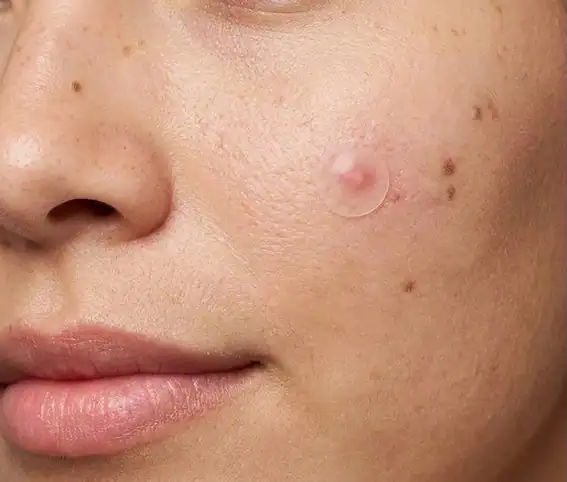
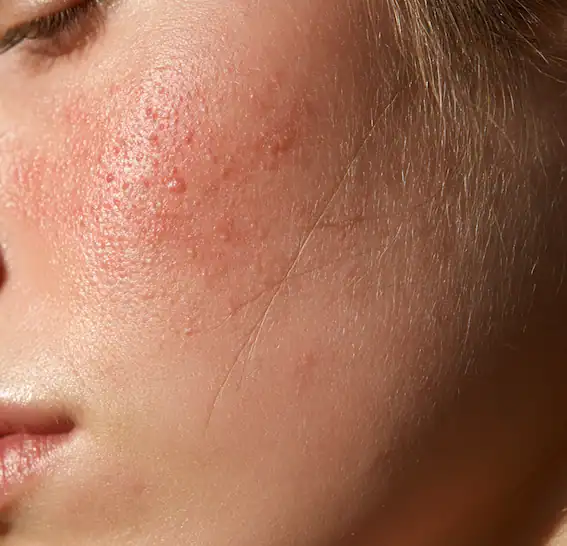
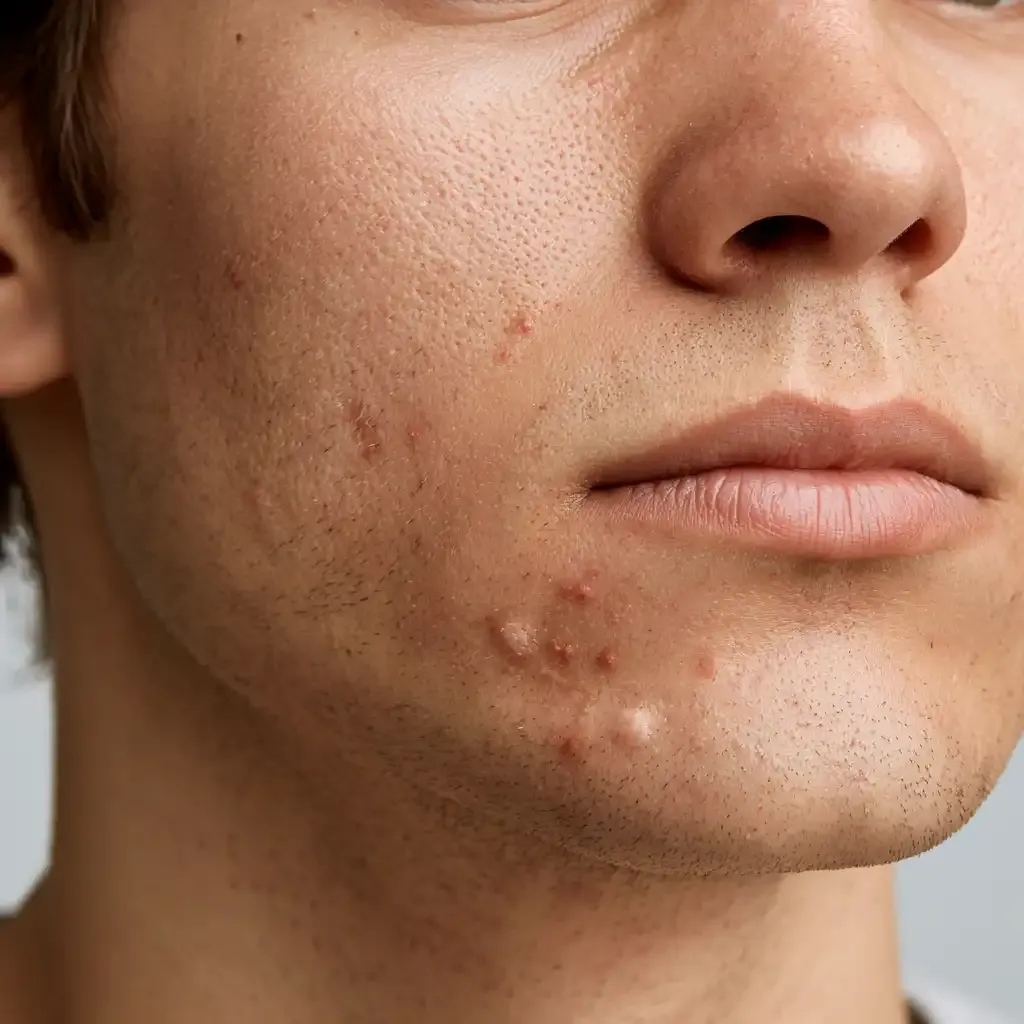
The defining sign of nodular acne is a firm bump you can feel under the skin before you can clearly see it, often sore to touch and slow to change. Unlike an ordinary pimple, a nodule has no obvious head, and squeezing it does nothing except worsen the inflammation and raise your scar risk. According to descriptions of acne severity, lesions can range from comedones through to large, painful, disfiguring cysts and nodules [4].
Signs consistent with acne include:
- Hard, deep bumps that last weeks rather than days
- A tender or throbbing bump around the jaw, cheeks, chest, or back
- A pore that stays inflamed even after surface spots settle
It is most often confused with cystic acne, boils, or an inflamed cyst, so a clinician's eye helps confirm which one you have and whether oral therapy might be warranted.
What Causes Nodular Acne
Every acne cause traces back to the same core process: a follicle blocked by oil and dead skin becomes colonised by bacteria and then deeply inflamed. According to acne research, the condition centres on the pilosebaceous unit, where excess sebum and altered follicular cells set off the inflammation that drives lesions [3]. When that inflammation runs deep, you get a nodule rather than a surface spot.
Hormonal shifts, genetics, and the skin microbiome all feed into the acne cause picture, and antibiotic-driven changes in bacteria can influence how stubborn cystic acne becomes [2]. A second acne cause worth naming is friction and occlusion from helmets, straps, or heavy skincare, which traps oil and inflames the pore. Diet and stress can worsen flares, but they do not create the underlying follicular problem a doctor needs to prescribe against.
The Types of Acne That Turn Nodular
Not all acne turns nodular, and knowing the forms helps you place your own skin on the spectrum. A single blocked pore produces a blackhead or whitehead, but once deep inflammation sets in, a nodule or a cyst forms instead. According to work on the comedone as the primary acne lesion, that early blockage is the switch point from which more severe forms develop [5].
The distinct forms include:
- Comedonal acne: blackheads and whiteheads, often eased by salicylic acid
- Inflammatory papules and pustules: the everyday red spot
- Cystic acne: soft, fluid-filled lesions prone to a scar
- Acne: firm, deep lumps that a doctor may prescribe oral therapy for
Nodular and cystic acne often overlap in the same person, and both sit well beyond what an over-the-counter routine or the best anti ageing cream australia shoppers reach for can address.
The Fastest Ways to Treat Nodular Breakouts
The quickest route to treat nodular breakouts is a doctor-led plan, because this type of acne rarely settles without prescription-strength medicine. According to treatment reviews, topical drugs have long been used successfully for acne, but deeper inflammatory disease usually needs a combination approach and, in severe cases, oral therapy [6]. Fixed-combination topicals can match the benefit of separate products while being simpler to use [7].
By treatment class, acne treatment for nodules usually spans prescription topical retinoids, topical anti-inflammatory agents, and, for resistant disease, oral therapy under a dermatologist. Mild helpers like salicylic acid support the routine but will not clear a nodule alone. To treat acne through Prescription Skin, you complete an online skin assessment, an Australian-registered doctor reviews it, and where clinically appropriate they build a custom prescription formula around your skin. These treatments are prescription-only in Australia, so they all depend on that doctor approval, and the doctor talks through the possible side effects and who each option is not suitable for before anything is prescribed. This is skincare in the medical sense, not a shelf product or anti wrinkle products marketing promise.
Practical Steps to Prevent Nodular Acne
You prevent nodular recurrence by staying on a maintenance plan long after the visible lumps settle, because stopping early is the most common reason acne returns. Consistent use of a prescribed topical keeps the pore clear and inflammation low, and realistic timelines matter: initial change often takes four to eight weeks, with fuller results over three to six months.
Practical steps to prevent nodular flares include:
- Keep using your maintenance acne treatment even once skin looks clear
- Reduce friction from straps, phones, and heavy occlusive layers
- Wear daily SPF to limit an acne scar darkening as it heals
- Book a review before you run out rather than stopping cold
Early, ongoing management is also the best defence against a permanent scar, and a dermatologist or doctor can adjust strength over time. Marketing lines about the best anti wrinkle cream australia sells have no bearing here; prevention is about steady inflammatory control, not anti-ageing claims. If nodules keep breaking through, that is a signal to escalate care.
When to See a Doctor About Nodular Breakouts
See a doctor about nodular breakouts as soon as you notice deep, painful lumps that do not respond to a normal routine, because early review protects against scarring. A stubborn nodule is very different from a passing pimple or a simple blackhead, and self-care that only clears dead skin from the surface will not reach it. According to acne management guidance, moderate to severe disease benefits from prescription treatment rather than continued over-the-counter attempts [1].
Warning signs that warrant medical review:
- Lumps that recur in the same spot or keep enlarging
- Any early scar, pigment mark, or open pore forming after a lesion heals
- Cystic acne spreading across the jaw, chest, or back
- Spots that leak, bleed, or become very inflamed
Prescription options are doctor-only in Australia, so a proper assessment is the safe path, and a dermatologist referral may follow for the most severe cases.
Summary
Acne is deep, inflammatory, and prone to scarring, so it usually needs prescription treatment rather than shop-bought products [1]. Prescription Skin runs an online skin assessment reviewed by Australian-registered doctors who can build a custom prescription formula where it is clinically appropriate [3].
Frequently asked questions
How do you get rid of nodular acne?
You get rid of acne with a doctor-led plan, since it rarely clears on its own. Treatment usually combines a prescription topical with, for resistant cases, oral therapy. A doctor decides the right mix after assessing how deep and widespread the lesions are.
What triggers nodular acne?
Acne is triggered when a follicle blocked by oil and dead skin becomes deeply inflamed. Hormones, genetics, friction from straps or helmets, and changes in skin bacteria can all worsen flares, but the underlying follicular blockage is the real driver.
Can a doctor prescribe treatment for it online?
Yes, a doctor can prescribe treatment online in Australia after a proper assessment. With Prescription Skin, you complete an online skin assessment, an Australian-registered doctor reviews it, and where clinically appropriate they issue a custom prescription formula.
What can be mistaken for it?
Acne is most often mistaken for cystic acne, boils, or an ordinary inflamed cyst. The lumps feel similar, so a clinician's review helps confirm which one you have and the right treatment.
How long until it goes away?
Acne takes time, so expect gradual improvement over weeks rather than days. Many people see early change in four to eight weeks on prescription treatment, with fuller results over three to six months of consistent use.
References
- Eichenfield DZ, Sprague J, Eichenfield LF. Management of Acne Vulgaris: A Review. JAMA. 2021. doi:10.1001/jama.2021.17633. PubMed ↩︎
- Xu H, Li H. Acne, the Skin Microbiome, and Antibiotic Treatment. American journal of clinical dermatology. 2019. doi:10.1007/s40257-018-00417-3. PubMed ↩︎
- Fox L, Csongradi C, Aucamp M, du Plessis J, Gerber M. Treatment Modalities for Acne. Molecules (Basel, Switzerland). 2016. doi:10.3390/molecules21081063. PubMed ↩︎
- Brahe C, Peters K. Fighting acne for the fighting forces. Cutis. 2020. doi:10.12788/cutis.0057. PubMed ↩︎
- Saurat JH. Strategic Targets in Acne: The Comedone Switch in Question. Dermatology (Basel, Switzerland). 2015. doi:10.1159/000382031. PubMed ↩︎
- Kosmadaki M, Katsambas A. Topical treatments for acne. Clinics in dermatology. 2016. doi:10.1016/j.clindermatol.2016.10.010. PubMed ↩︎
- Gold MH, Baldwin H, Lin T. Management of comedonal acne vulgaris with fixed-combination topical therapy. Journal of cosmetic dermatology. 2018. doi:10.1111/jocd.12497. PubMed ↩︎
Medically Reviewed Content
- Written by: Prescription Skin Editorial Team
- Medically Reviewed by: Dr Mitch Bishop - AHPRA Registered Practitioner (MED0002309948)
- Last Updated: July 2026
This content is for informational purposes only and does not constitute medical advice. Treatment is subject to consultation and approval by our Australian-registered doctors.
Part of our condition guide
Acne →