- Key takeaways
- Pigmentation, Dark Spots and Uneven Skin Tone Explained
- How to Spot a Genuine Pigmentation Treatment
- What Causes Pigmentation and Dark Spots to Form
- Treatment Options for Pigmentation, From Topicals to Clinic Procedures
- Top-Performing Skin Pigmentation Creams for an Even Complexion
- Preventing Pigmentation From Forming or Coming Back
- Where Pigmentation Shows Up on the Face and Body
- Signs of Sun Damage and Age Spots on Australian Skin
- Common Patterns of Patchy Skin and Skin Discolouration
- Summary
- Frequently asked questions
Skin pigmentation creams are topical treatments that fade dark patches by slowing melanin production, speeding up how quickly pigmented cells shed, or settling the inflammation that triggers pigment in the first place. Dark spots, melasma and patchy tone are among the most common concerns we see at Prescription Skin, and they attract more product claims than almost any other skin complaint.
According to Saade and colleagues, the wish for an even skin tone runs across every culture and region, which explains both the size of the market and how many creams are sold with very little behind them.[1] That same review tracked rising use of prescription lightening creams, and the safety picture matters as much as the results.
Pigment isn't one condition. Melasma driven by hormones behaves differently from freckling caused by years of Australian sun, and both behave differently from the brown marks left after a pimple settles. A cream that suits one presentation can irritate another, and irritation itself deepens pigment in medium and deeper complexions.
There's also a regulatory reality worth understanding before you shop. The most studied actives, prescription-strength hydroquinone and tretinoin among them, need a doctor's prescription in Australia. Misuse has consequences: clinicians have reported corneal and scleral damage in patients who applied skin-lightening creams around the eyes for one to three years.[2] Choosing well means knowing your diagnosis, your skin type, and which actives genuinely fade dark spots rather than just brighten temporarily.
Key takeaways
- Skin pigmentation creams work through three mechanisms: slowing melanin production, speeding the turnover of pigmented cells, or calming the inflammation that drives pigment in conditions like hyperpigmentation and melasma.[3]
- Hydroquinone remains the benchmark comparator in pigmentation research, and split-face trial work has tested niacinamide, arbutin, tranexamic acid and vitamin C combinations against 4% hydroquinone as alternatives.[3]
- In Australia hydroquinone above 2% and tretinoin are prescription-only, so no legitimate service supplies them without a doctor's assessment first.
- Unsupervised or long-term use of lightening creams carries real risks, including ocular surface damage reported in patients who used them near the eyes for years.[2]
- Expect 8 to 12 weeks of consistent use before judging a cream, and plan for maintenance plus daily SPF 50+ because results fade without it.
Pigmentation, Dark Spots and Uneven Skin Tone Explained
Dark spots and hyperpigmentation are flat areas of brown, grey or tan colour that form when melanocytes deposit more melanin than the surrounding skin. Hyperpigmentation is a routine presentation in aesthetic and medical practice, and it groups several different diagnoses that happen to look alike on the surface.[3] Depth matters too: pigment sitting in the epidermis responds far better to creams than pigment that has dropped into the dermis. Evidence is also thin for some types: a literature review of post-burn pigmentation found only 13 usable studies out of 201 articles screened.[4]
Here's how the main patterns differ in practice.
| Pattern | Typical trigger | Where it appears | Response to topicals |
|---|---|---|---|
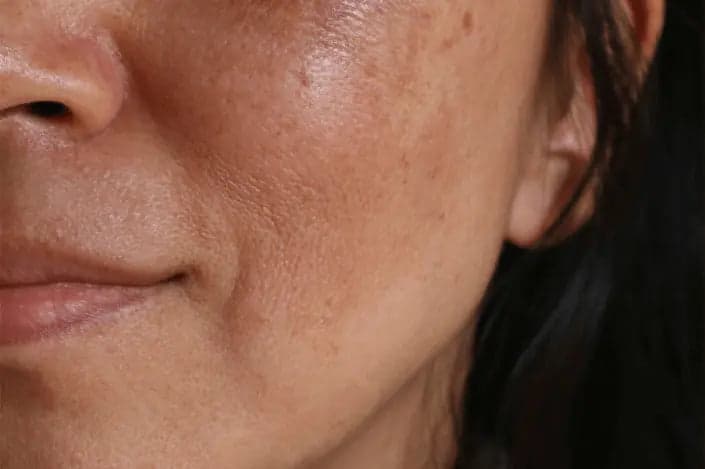
| Melasma | Hormones, UV and visible light | Cheeks, forehead, upper lip, symmetrical | Slow, relapses easily, needs light protection |
| Post-inflammatory marks | Acne, eczema, burns, trauma[4] | Wherever the original lesion sat | Good, provided the inflammation is controlled |
| Sun-induced spots | Cumulative UV exposure | Face, hands, forearms, décolletage | Moderate, retinoids and exfoliation help |
| Irritant-driven darkening | Harsh actives, scrubbing, waxing | Treated or rubbed areas | Needs a pigmentation cream for sensitive skin and less irritation, not more |
Prescription lightening creams are used widely, and use has climbed over time.[1] Applying them without supervision is where problems start, including eye surface injury from creams used too close to the lids.[2]
How to Spot a Genuine Pigmentation Treatment
A genuine pigmentation treatment names its active ingredient, states the concentration, and has trial data behind that specific combination. Vague label wording about brightening complexes usually signals a token dose of something active.
According to Kalasho and colleagues, credible research on a cream for hyperpigmentation is run as a controlled comparison, often split-face against 4% hydroquinone, using ingredients such as tranexamic acid, vitamin C, arbutin and niacinamide.[3] Three classes carry real evidence: tyrosinase inhibitors including hydroquinone and azelaic acid, retinoids such as tretinoin, and antioxidants such as ascorbic acid.
Any site selling a strong pigmentation removal cream with no consultation deserves suspicion, since hydroquinone above 2% and tretinoin can't legally be supplied in Australia without a prescription. Unsupervised supply is also how patients end up with the complications described in the ophthalmology literature.[2]
At Prescription Skin the pathway is simple: you complete an online free skin assessment with photos, a doctor reviews it and makes a diagnosis, then a custom prescription formula follows only where it's clinically appropriate. Skin pigmentation creams are matched to the diagnosis, not to the loudest claim.
What Causes Pigmentation and Dark Spots to Form
Dark spots and hyperpigmentation form when melanocytes are stimulated to overproduce melanin and pass it into surrounding skin cells, where it stays until those cells shed or the pigment is broken down. Ultraviolet light is the dominant stimulus in Australia, but hormones, heat, visible light, friction and inflammation all push the same pathway.
According to Lupon and colleagues, pigmentation following burns and other skin trauma is a recognised and difficult complication, with limited high-quality evidence guiding treatment.[4] The same mechanism explains post-acne marks: each inflamed lesion deposits pigment, so a hyperpigmentation cream applied over untreated acne is always fighting fresh supply.
Hormonal drivers deserve their own mention. Pregnancy, the oral contraceptive pill and hormone therapy can all trigger melasma, and it often sits deeper and lasts longer than sun spots. Research on prescription lightening cream use shows how commonly people reach for topicals to correct it, which is also why supervision matters.[1]
Some triggers are self-inflicted. Scrubbing, over-exfoliating, waxing and stacking too many actives all cause irritation, and irritation darkens skin in medium and deeper tones. The best pigmentation cream is usually the one your skin can tolerate daily, because skin pigmentation creams only work with consistent use.
Photosensitising medications, including some antibiotics and diuretics, can also worsen pigment, so bring your full medication list to any assessment.
Treatment Options for Pigmentation, From Topicals to Clinic Procedures
Treatment for pigmentation falls into three classes: cosmetic topicals you can buy freely, prescription topicals dispensed after a doctor's assessment, and in-clinic procedures such as chemical peels and laser.
Cosmetic topicals include niacinamide, ascorbic acid, kojic acid, arbutin and low-strength hydroxy acids, and they suit mild unevenness and maintenance. Prescription topicals are medicines: hydroquinone above 2%, tretinoin, and combination formulas that add a mild corticosteroid. These are where the best cream for pigmentation usually sits for stubborn cases, and they need review rather than indefinite use.
Procedures sit alongside topicals rather than replacing them. Laser has a role in selected pigmentation presentations, and Majid and Imran reported long-term follow-up of Q-switched Nd:YAG depigmentation over four years, though relapse was part of the picture.[5] In melasma, energy devices can worsen pigment if skin isn't prepared with topicals first.
Top-Performing Skin Pigmentation Creams for an Even Complexion
The strongest-performing skin pigmentation creams for an even complexion are compounded prescription formulas combining hydroquinone with tretinoin and niacinamide, or 15 to 20% azelaic acid where hydroquinone isn't suitable. Split-face research has also tested multi-ingredient formulations using tranexamic acid, vitamin C, arbutin and niacinamide against 4% hydroquinone.[3]
A night cream for pigmentation is where most of the work happens, because tretinoin and hydroquinone both degrade in light and both increase sun sensitivity. Morning is for antioxidants such as ascorbic acid and sunscreen.
Potency isn't the whole story. Skin that's dry or reactive needs a bland cleanser and a moisturiser with hyaluronic acid alongside actives, or irritation stalls progress. Our comparison of hydroquinone 2% vs 4% covers strength selection.
Preventing Pigmentation From Forming or Coming Back
Preventing dark spots means reducing the stimulus that made melanocytes overactive, and in Australia that's overwhelmingly ultraviolet and visible light. Broad-spectrum SPF 50+ every morning, reapplied outdoors, protects whatever a treatment course has achieved.
Tinted sunscreens containing iron oxides add cover against visible light, which matters in melasma where daylight alone can trigger relapse. Hats, shade and avoiding peak UV do the rest, and the Australian UV index makes that a year-round habit rather than a summer one.
Maintenance is a step down, not a stop. After a hydroquinone course, most patients move to azelaic acid or niacinamide as a longer-term cream for pigmentation control, and a night cream containing a low-strength retinoid keeps turnover ticking over. Expect gradual fading across months, with some seasonal fluctuation. Our guide to the first 8 weeks on prescription skincare sets out realistic timelines.
Where Pigmentation Shows Up on the Face and Body
Pigmentation shows up most often on skin that gets the most light and the most friction: the cheeks, forehead, upper lip, jawline, neck, décolletage, the backs of the hands and the forearms.
Facial patterns tend to follow their cause. Melasma is usually symmetrical across the cheeks and upper lip, post-acne marks sit exactly where lesions were, and sun-driven spots scatter unevenly across the highest points of the face. Marks along the jawline and chin often trace back to hormonal acne, which is why treating the acne matters before choosing a pigmentation cream.
On the body, pigment commonly appears on the shoulders and upper back after acne, in skin folds where friction and heat combine, and on the shins after minor knocks or insect bites. A pigmentation cream best suited to the body usually needs to come in a larger volume with a lower irritation profile, since larger areas mean more total active absorbed.
Signs of Sun Damage and Age Spots on Australian Skin
Sun damage on Australian skin usually appears as a mix of flat brown spots, patchy redness and rough texture on the areas exposed daily.
Findings consistent with cumulative sun damage include:
- Flat tan or brown spots on the cheeks, nose, hands and forearms
- Scattered freckling that darkens each summer and fades slightly in winter
- Rough or scaly patches that catch on a towel
- Fine crinkling and loss of firmness, covered in our page on fine lines and wrinkles
- Broken capillaries and background redness, which can be confused with rosacea
These patterns are often mistaken for melasma, seborrhoeic keratoses or lentigines, and a cream to reduce skin pigmentation won't help a lesion that isn't pigment at all. Any spot that grows, bleeds, itches or has irregular borders needs an in-person skin check rather than a best guess with a pigmentation cream, given Australian melanoma rates.
Common Patterns of Patchy Skin and Skin Discolouration
Patchy skin and discolouration follow a handful of recognisable patterns, and identifying the pattern is what tells you which class of treatment will help.
Symmetrical brown patches across the cheeks and upper lip are typical of melasma. Scattered spots on light-exposed areas point to sun damage. Marks confined to old lesion sites suggest post-inflammatory hyperpigmentation. Grey-brown discolouration that appeared after months of continuous lightening cream use may reflect a reaction to the cream itself rather than the original pigment.
Loss of colour is a different problem entirely. Depigmenting conditions such as vitiligo are managed quite differently, sometimes with laser depigmentation in extensive disease.[5] A cream to reduce skin pigmentation has no role there. Where skin is reactive or flushing easily, a pigmentation cream for sensitive skin with azelaic acid or niacinamide is usually the safer starting point. Men's routines are covered in our men's skincare guide.
Summary
Fading pigment comes down to three things: knowing which pattern you have, matching the active ingredient class to it, and protecting the result with daily sun protection. Research confirms an even skin tone is a near-universal goal, and that trauma-related pigment remains one of the harder problems to treat well.[1][4] Prescription Skin works on a prescription skincare model: you complete an online skin assessment, an Australian-registered doctor reviews your photos and history, and a custom formula is prepared where it's clinically appropriate.
Frequently asked questions
What is the best cream for skin pigmentation?
The best cream for skin pigmentation is the one matched to your diagnosis, and for stubborn melasma that's usually a compounded formula containing hydroquinone, often with tretinoin. Controlled trials commonly use 4% hydroquinone as the comparator other formulations are measured against.[3] Tretinoin, and hydroquinone above 2%, need a doctor's prescription in Australia.
What is the best cream for post-acne marks?
For post-acne marks, a retinoid such as tretinoin plus niacinamide is usually the better choice, because it speeds turnover of pigmented cells while treating the acne still producing new marks. Pigment left after burns or deeper trauma responds less predictably, and the published evidence base for it is thin.[4]
Can a doctor prescribe treatment for skin pigmentation online?
Yes, an Australian-registered doctor can assess pigmentation and prescribe treatment online. At Prescription Skin you submit photos and a history through an online assessment, a doctor reviews it, and a custom prescription formula is prepared if it's suitable. Prescription ingredients are never supplied without that review.
How long should you use a pigmentation cream?
Treating skin pigmentation works best as a course rather than a permanent routine, typically 8 to 12 weeks of a prescription formula followed by a gentler maintenance cream. Azelaic acid and niacinamide are the usual step-down options, and strict SPF 50+ use is what keeps the improvement from reversing.
What is the best cream for dark pigmentation?
For dark, deep-set pigmentation, combination prescription creams that pair a melanin blocker with a retinoid outperform single-ingredient products, since they act on two steps of the same pathway. Split-face research has tested multi-active alternatives including tranexamic acid, arbutin and vitamin C against hydroquinone.[3]
What fades hyperpigmentation quickly?
Nothing fades hyperpigmentation quickly, and expecting speed is the most common reason people give up too early. Surface pigment usually starts lifting at 4 to 8 weeks, with fuller results at 12 to 24 weeks. Chasing faster results with harsher products tends to cause irritation, which deepens pigment instead. More detail sits in our frequently asked questions.
References
- Saade DS, Maymone MBC, De La Garza H, Secemsky EA, Kennedy KF, Vashi NA. Trends in Use of Prescription Skin Lightening Creams. International journal of environmental research and public health. 2021. doi:10.3390/ijerph18115650. PubMed ↩︎
- Hollick EJ, Igwe C, Papamichael E, Gore DM, Angunawela RI, Philippidou M. Corneal and Scleral Problems Caused by Skin-Lightening Creams. Cornea. 2019. doi:10.1097/ICO.0000000000002027. PubMed ↩︎
- Kalasho BD, Minokadeh A, Zhang-Nunes S, Zoumalan RA, Shemirani NL, Waldman AR. Evaluating the Safety and Efficacy of a Topical Formulation Containing Epidermal Growth Factor, Tranexamic Acid, Vitamin C, Arbutin, Niacinamide and Other Ingredients as Hydroquinone 4% Alternatives to Improve Hyperpigmentation: A Prospective, Randomized, Controlled Split Face Study. Journal of cosmetic science. 2020. PMID:33022197. PubMed ↩︎
- Lupon E, Laloze J, Chaput B, Girard P, Cetrulo CL, Lantieri LA. Treatment of hyperpigmentation after burn: A literature review. Burns : journal of the International Society for Burn Injuries. 2022. doi:10.1016/j.burns.2022.04.017. PubMed ↩︎
- Majid I, Imran S. Depigmentation with Q-switched Nd:YAG laser in universal vitiligo: a long-term follow-up study of 4 years. Lasers in medical science. 2017. doi:10.1007/s10103-017-2183-0. PubMed ↩︎
Medically Reviewed Content
- Written by: Prescription Skin Editorial Team
- Medically Reviewed by: Dr Mitch Bishop - AHPRA Registered Practitioner (MED0002309948)
- Last Updated: September 2026
This content is for informational purposes only and does not constitute medical advice. Treatment is subject to consultation and approval by our Australian-registered doctors.
Part of our condition guide
Hyperpigmentation →