- Key takeaways
- Medical Conditions That Can Cause Dry Skin
- The Main Factors Behind Dry Skin Symptoms
- Weather, Hot Water, Harsh Soap and Ageing as Moisture Strippers
- What Causes Dry Skin?
- Treatment Options for Dry, Irritated Skin
- Protective Daily Habits That Prevent Dry Skin
- How Prescription Skin's Doctors Review Your Skin First
- Ashy Skin: How Dryness Shows on Darker Skin Tones
- Summary
- Frequently asked questions
Dry skin is skin that can't hold enough water in its outer layer, so it feels tight, looks dull and may crack or flake. For most people, what causes dry skin is a mix of habits that strip natural oils, like long hot showers and foaming cleansers, plus age, genetics, dry Australian air and medicines. Sometimes dryness points to eczema, thyroid disease or a side effect of prescription skincare such as tretinoin. Knowing what causes dry skin in your case matters, because each type of dryness is treated differently.
Key takeaways
- Dry skin (xerosis) happens when the outer layer of the skin can't hold onto water as fast as it's lost, usually because its protective lipid layer has been worn down.
- Hot showers, harsh cleansers, dry air, air-conditioning and ageing are the most common triggers. Eczema, an underactive thyroid, some other medical conditions and certain medicines can also play a part.
- Prescription treatments such as tretinoin and oral isotretinoin often cause dryness. A doctor can usually manage this by adjusting the strength or how often you apply it, so you don't have to stop treatment.
- See a doctor if itch wakes you at night, cracks bleed, patches weep, or dryness hasn't improved after two to three weeks of gentle care.
Medical Conditions That Can Cause Dry Skin
Several medical conditions cause dry skin by disrupting the skin barrier from within, through inflammation, hormones, genetics or medicines rather than anything you wash with. If the patches are sharply defined, sit within a rash or leave you with itchy skin that won't settle, an underlying condition is often part of what causes dry skin. According to a systematic review, people with atopic dermatitis who used emollients lost significantly less water through their skin after two and four weeks than those who didn't [1].
Most are common, chronic problems that flare and settle rather than clearing for good.
| Condition | How it looks | Other clues | Who manages it |
|---|---|---|---|
| Atopic eczema | Rough patches with intense itching in elbow and knee creases | Starts in childhood; asthma or hay fever in the family | GP, then a dermatologist if severe |
| Ichthyosis vulgaris | Fine flakiness in a fish-scale pattern on the shins | Inherited, often alongside eczema | GP |
| Underactive thyroid | Generalised dry, coarse skin | Tiredness, feeling cold, hair thinning | GP, with a blood test |
| High blood sugar | Dry skin on the lower legs and feet | Thirst, frequent urination, slow-healing cuts | GP, with a blood test |
| Rosacea | Dry, stinging facial skin with redness | Flushing with heat, alcohol or spicy food | GP or doctor-led prescription skincare |
| Medicine side effects | Widespread dry skin and cracked lips | Starts after a new medicine such as oral isotretinoin | The doctor who prescribed it |
Dry, coarse skin that appears suddenly in adulthood is worth a blood test before another cream.
The Main Factors Behind Dry Skin Symptoms
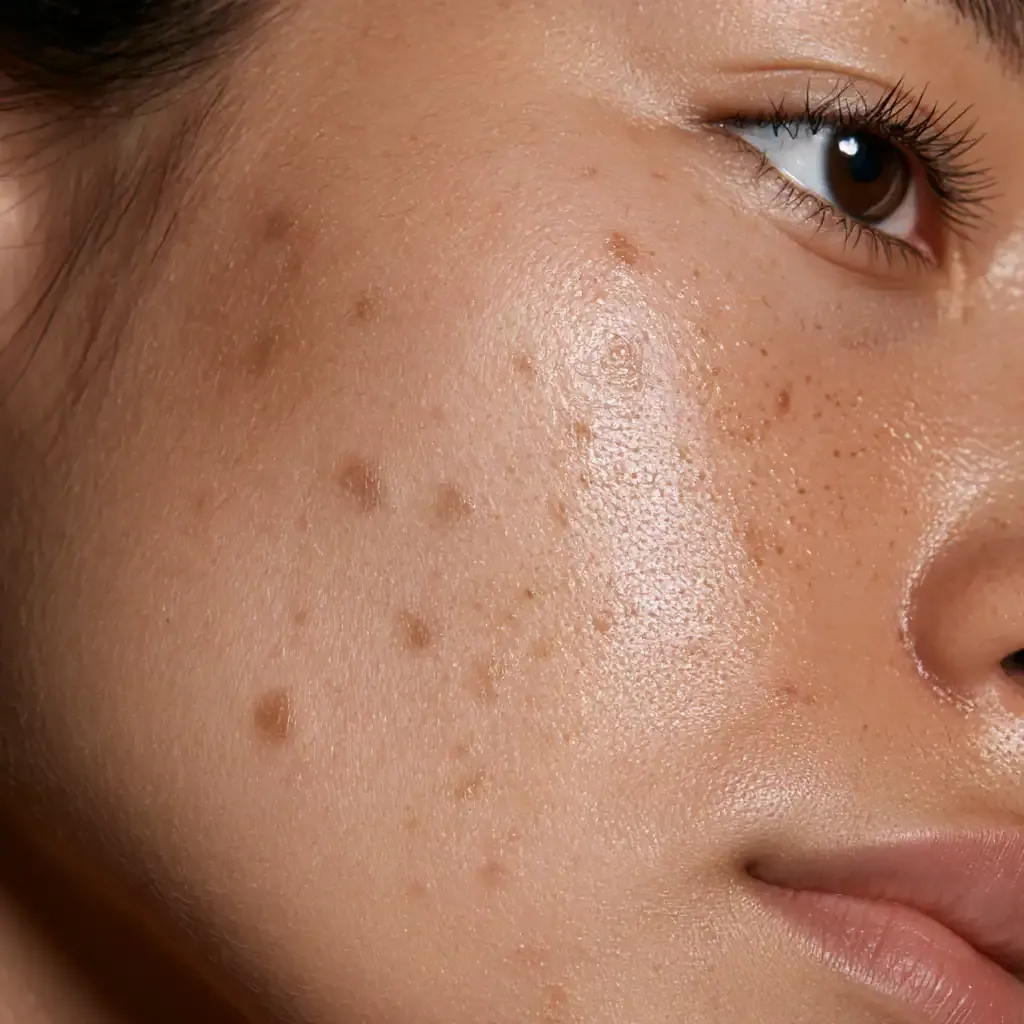
Dry skin feels tight and rough and looks dull or finely scaly. Where it appears is a useful clue to what causes dry skin in a particular person. Tightness that eases once you moisturise is consistent with simple xerosis. Patches that keep returning in the same spots suggest something more.
- Tightness after showering, mainly on the face, shins and hands
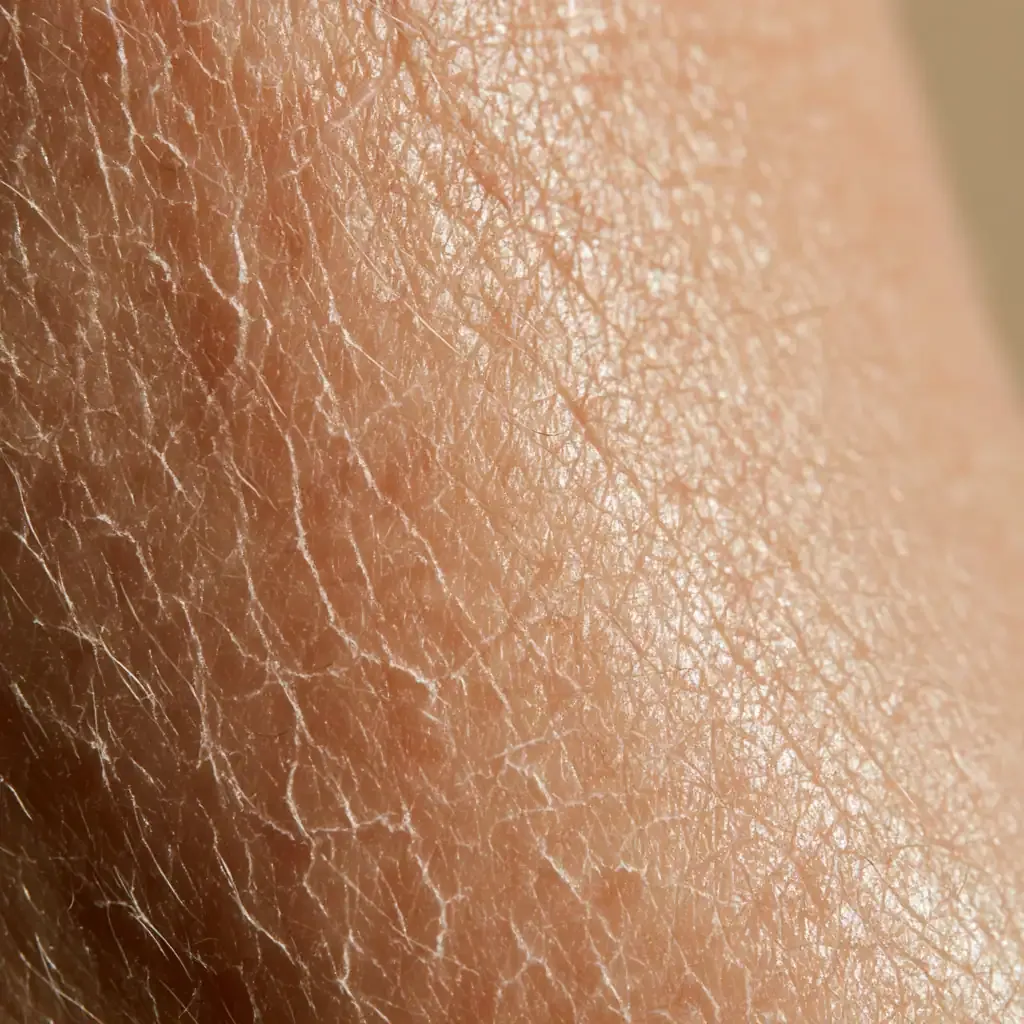
- Fine white flakes or a sandpaper texture on the lower legs, forearms and hands
- Itch that's worse at night or after hot water
- Fine cracks, sometimes a crazy-paving pattern on older adults' shins
- A grey, dull cast that shows as ashiness on darker skin tones
Dehydrated skin is a common look-alike. It's short on water rather than oil, so it can feel tight yet look oily, and it often responds better to hydrating ingredients than heavier creams. According to a meta-analysis of emollient trials in atopic skin, regular moisturising reduces water loss through the skin [1], so restoring hydration means holding water in, not just adding it.
Eczema, contact dermatitis and fungal infections are the conditions most often mistaken for dryness. If your skin stings whenever you apply skincare, that overlaps with the signs of a Damaged Skin Barrier: Signs, Causes and How to Heal It.
Weather, Hot Water, Harsh Soap and Ageing as Moisture Strippers
Weather, hot water, harsh soap and ageing are the four most common things that strip moisture from otherwise healthy skin. Dry air lets moisture evaporate from the outer skin layer faster, which is why winter, ducted heating and long flights leave skin tight. Hot water and foaming cleansers dissolve the natural lipids that hold moisture in, so a long, steaming shower followed by soap is a reliable recipe for itchy shins.
Frequent hand washing and wet work, common in nursing, hairdressing and cleaning, are a big part of what causes dry skin on the hands. According to a German occupational skin guideline, people who do wet work do best with a combination of protective creams, mild cleansers and regular skincare products [2]. Ageing also slows oil production and barrier repair, so skin holds less moisture from middle age onwards. Hormonal skin changes around menopause can speed this up.
What Causes Dry Skin?
Dry skin is caused mainly by damage to the lipid layer between skin cells, so the skin loses water faster than the body can replace it. Several causes often overlap. Sorting your own dry, flaky skin into one of the groups below is a useful first step in working out the cause in your case.
- Environmental causes: low humidity, cold wind, air-conditioning, chlorinated pools and sun damage. These usually cause even, all-over roughness on exposed skin that improves when conditions change.
- Lifestyle causes: long hot showers, soap and foaming body washes, scrubs, overusing exfoliating acids, and layering too many active skincare products at once. These are the easiest to fix and usually improve within a couple of weeks.
- Dry patches from a skin condition: well-defined, red or recurring patches are more consistent with eczema, psoriasis, contact dermatitis or a fungal infection, and moisturiser alone rarely clears them. A ring-shaped flaky patch with a raised edge can be tinea, a fungal infection that steroid creams can make worse.
- Medicine-related causes: the problem starts after you begin a new tablet or cream. Retinoids such as tretinoin speed up cell turnover, so flaky peeling around the nose and mouth is common in the first few weeks. The difference in strength is explained in Retinol vs Tretinoin: Which Should You Use?.
For most healthy adults, the main reason for dry skin is simply how they wash, because hot water and soap remove more lipid than most people expect. If your skin doesn't fit any of these groups, or seems to fit several, it's worth having a doctor take a look.
Treatment Options for Dry, Irritated Skin
Dry, irritated skin is treated by repairing the skin barrier first, then treating whatever condition is causing the dryness. According to a meta-analysis, regular emollients significantly reduced water loss through the skin in people with atopic dermatitis after two and four weeks of continuous use [1].
- Emollients and occlusives: a fragrance-free moisturiser with ceramides, glycerin or petrolatum, applied twice a day.
- Humectants: glycerin, hyaluronic acid and urea draw water into dehydrated skin. Urea and lactic acid also loosen flakiness.
- Anti-inflammatories: eczema and psoriasis flares often need a topical corticosteroid. Stronger corticosteroids, calcipotriol and pimecrolimus need a doctor's prescription in Australia.
- Treating the cause: better control of diabetes or thyroid disease often helps skin that creams alone couldn't fix, because in these cases the problem sits outside the skin.
For facial concerns, Prescription Skin follows a set pathway: an online skin analysis, a doctor's diagnosis and, where appropriate, a custom prescription formula. That formula might combine tretinoin, which is prescription-only, with niacinamide to support the barrier. If it causes irritation, the doctor adjusts the strength or how often you use it.
Protective Daily Habits That Prevent Dry Skin
Preventing dry skin comes down to washing more gently and moisturising every day, not just when your skin feels tight. The everyday factors that contribute most are long hot showers, harsh cleansers, dry indoor air, wet work and sun exposure, and each one has a simple fix:
- Keep showers to 5 to 10 minutes in warm, not hot, water.
- Swap soap for a soap-free wash and use it only where you need it.
- Pat dry and moisturise within about three minutes, while your skin is still slightly damp.
- Run a humidifier in winter or in air-conditioned bedrooms when indoor humidity drops.
- Wear gloves for dishes, cleaning and gardening.
- Drink to thirst. Staying hydrated helps if you're genuinely dehydrated, but extra water won't repair a stripped barrier.
- Use SPF 50+ daily, since long-term sun damage leaves skin thinner and drier.
According to a meta-analysis of emollient studies, measurable barrier improvements appear after two to four weeks of continuous use [1], so give any new routine about a month. A ceramide moisturiser is a sensible default for most people. Where people usually slip up is stopping, and dryness often creeps back within days of letting the routine lapse.
If a new product causes irritation or redness, stop using it and simplify your routine, since fragrances and preservatives commonly trigger contact allergies. Older adults may need to keep going for longer. Research shows atopic dermatitis in later life tends to become chronic, partly because of age-related inflammation [3], so a dry, inflamed rash that starts after 60 needs ongoing care and a review of current medicines.
How Prescription Skin's Doctors Review Your Skin First
Prescription Skin's doctors review your skin analysis and health history before suggesting any formula, because dry, dehydrated and inflamed skin can look alike but need different care. Dry skin feels tight and rough and usually settles with gentler washing and a cream to lock in moisture. Eczema is an inflammatory condition that tends to be itchy, red or darker than surrounding skin, and keeps flaring despite good moisturising because the skin struggles to retain moisture.
To tell them apart, the doctor asks which soaps and cleansers you use, how long you shower, whether asthma or hay fever runs in your family, what medicines you take, and whether itch disturbs your sleep. Skin that looks hydrated but stings with every product suggests a different problem. Working out what causes dry skin decides whether a prescription formula suits you at all.
If it looks like something outside that scope, the doctor will say so and suggest seeing your GP. Patients who start a formula can expect some dryness early on. During the first 8 weeks of treatment, the doctor often adjusts how you use it, such as waiting 15 minutes before moisturising or dropping to alternate nights.
Ashy Skin: How Dryness Shows on Darker Skin Tones
Ashy skin is dryness that shows as a grey or whitish cast on brown and Black skin, because fine scale scatters light against a deeper skin tone. It's most noticeable on the knees, elbows, shins and hands. The triggers are the same as what causes dry skin on any skin tone: hot water, harsh soaps, low humidity and a dehydrated outer layer.
Acne products are another common cause, since benzoyl peroxide and retinoids both dry the skin. According to a systematic review, CBD-containing hemp extracts show anti-inflammatory promise for acne, but the clinical evidence is still early [4]. Traditional Chinese formulas are thought to work partly by regulating sebum [5], so plant-based options aren't automatically gentler on dry skin. A doctor can weigh acne treatment against barrier care.
See a doctor or dermatologist if ashy patches turn lighter or darker than the surrounding skin, thicken, crack and bleed, get itchy enough to disturb your sleep, or haven't improved after two to three weeks of gentle care. Darker skin is also more likely to keep marks after scratching, so it's worth getting checked earlier.
Summary
Most of what causes dry skin comes down to a barrier that's losing water, whether from hot water, harsh cleansers, dry air, ageing, medicines or conditions like eczema. According to trial data, regular emollient use measurably improves that barrier within weeks [1]. Skin quality depends on more than hydration alone [6], so if what causes dry skin for you isn't obvious, a doctor's review is a sensible next step. At Prescription Skin, Australian-registered doctors assess your skin first and recommend a prescription skincare formula only where it's clinically appropriate.
You may also find these related guides helpful: Marionette Lines: Causes, Available Treatments and Habits and Rash: Causes, Treatment and Prevention.
Frequently asked questions
What could be causing dry, red patches on my face?
Dry, red patches on the face are most often caused by eczema, seborrhoeic eczema, rosacea or irritation from products you're applying. The seborrhoeic type usually sits beside the nose, in the eyebrows and along the hairline, with greasy, yellowish scale. Rosacea brings flushing across the cheeks and often stings when you try something new. If a patch is ring-shaped, spreading or hasn't settled within two weeks, have a doctor check it, because a fungal infection can look very similar.
Why does dry skin hurt?
Dry skin hurts because a weakened barrier lets irritants reach nerve endings more easily, so the skin stings, burns and feels tight. Very dry skin also becomes less flexible and can split into fine cracks called fissures, especially on fingertips, knuckles and heels. These cracks can be genuinely painful. If your face burns every time you apply a plain moisturiser, that points to eczema or a contact allergy rather than simple water loss, and a doctor should take a look.
Can dry skin be a symptom of something serious?
Dry skin is usually harmless, but it can sometimes signal an underlying problem such as an underactive thyroid, high blood sugar, kidney disease or iron deficiency. Widespread rough skin with fatigue, unexplained weight change, thirst or itch without a visible rash calls for a GP visit and blood tests. According to recent research, hidradenitis suppurativa, a different chronic inflammatory skin disease, is linked with higher all-cause mortality [7], so ongoing inflammation deserves a proper review. A dermatologist referral makes sense when symptoms are severe or aren't responding to treatment.
What do doctors prescribe for very dry skin?
Doctors usually start very dry skin on a heavy emollient and then treat whatever is behind it. Common options include:
- urea or lactic acid creams for thick scale
- topical corticosteroids for inflamed flares
- pimecrolimus for delicate areas like the eyelids
- calcipotriol for psoriasis
In Australia, low-strength hydrocortisone is available from a pharmacist, but stronger steroid creams, pimecrolimus and calcipotriol all need a doctor's prescription. If the problem comes from prescription skincare such as tretinoin, the first step is usually to lower the strength or apply it less often rather than stopping altogether.
What is the best thing to put on severely dry skin?
For severely dry skin, the most reliable choice is a thick, fragrance-free ointment or cream containing an occlusive such as petrolatum, applied to slightly damp skin within a few minutes of bathing. Ointments tend to sting less than lotions on cracked skin because they contain little or no alcohol and fewer preservatives. A urea cream softens rough heels or elbows, though it can sting on open cracks. Skip fragranced products and essential oils on broken skin, as they can trigger an allergic rash.
What organ affects dry skin?
The skin itself is the organ most directly involved, although the thyroid, kidneys and pancreas can all affect it. The main reason skin dries out is water escaping through a damaged outer layer, but an underactive thyroid slows oil and sweat production, and chronic kidney disease commonly leaves skin rough and scaly. Poorly controlled blood sugar, which involves the pancreas, also dries the skin and reduces blood flow to the feet. If you can't pin down what causes dry skin across your whole body, mention it to your GP.
References
- Yang Q, Zhang W. Effect of emollients on skin barrier function in patients with atopic dermatitis: a systematic review and meta-analysis. Acta dermatovenerologica Alpina, Pannonica, et Adriatica. 2026. PMID:42809766. PubMed ↩︎
- Gina M, Fartasch M, Bauer A, Drexler H, Elsner P, Geier J. S2k guideline occupational skin products: skin protection creams, skin cleansing and skin care products. Journal der Deutschen Dermatologischen Gesellschaft = Journal of the German Society of Dermatology : JDDG. 2026. doi:10.1111/ddg.70005x. PubMed ↩︎
- Wu N, Li Y, Wang X, Wu Y, Yin W. Inflammatory Aging-Driven Immune Axis Imbalance and the Mechanisms of Chronicity in Elderly Atopic Dermatitis: A Systematic Review and Meta-Analysis. Immunity, inflammation and disease. 2026. doi:10.1002/iid3.70528. PubMed ↩︎
- Komane B, Kaye T. CBD-Containing Hemp Extracts and Isolated CBD for Acne: A Systematic Review of Anti-Inflammatory Mechanisms, Clinical Signals and Sustainability. Molecules (Basel, Switzerland). 2026. doi:10.3390/molecules31122017. PubMed ↩︎
- Gong J, Zhang J, Li Y, Jiang H, Chen S, Cheng J. Traditional Chinese medicine in acne treatment: From classical formulas to bioactive phytoconstituents and mechanisms. Journal of ethnopharmacology. 2026. doi:10.1016/j.jep.2026.121786. PubMed ↩︎
- Humphrey S, McDaniel DH, Ogilvie P, Abbasi A, Manson Brown S, Cheng T. Assessment of Methods and Attributes Used to Characterize Skin Quality: A Systematic Literature Review. Dermatologic surgery : official publication for American Society for Dermatologic Surgery [et al.]. 2026. doi:10.1097/DSS.0000000000004968. PubMed ↩︎
- Peacker BL, Ly L, Hwang JC, Gravel-Pucillo K, Zheng C, Wheless LE. Multiomics analyses prioritize disease genes and pathways in hidradenitis suppurativa. The Journal of investigative dermatology. 2026. doi:10.1016/j.jid.2025.12.025. PubMed ↩︎
Medically Reviewed Content
- Written by: Prescription Skin Editorial Team
- Medically Reviewed by: Dr Mitch Bishop - AHPRA Registered Practitioner (MED0002309948)
- Last Updated: November 2026
This content is for informational purposes only and does not constitute medical advice. Treatment is subject to consultation and approval by our Australian-registered doctors.