- Key takeaways
- What Moisturiser and Sunscreen Each Do
- Benefits of Applying Skincare in the Right Order
- What to Apply Before You Head Out Each Day
- Choosing the Right Order for Your Skin Type
- Sunscreen Reactions and Sun Sensitivity
- How Layering Sunscreen and Hydration Works on Skin
- Summary
- Frequently asked questions
Moisturiser first, then sunscreen. That's the short answer to the sunscreen or moisturiser first question, and it holds for almost every routine, skin type and climate in Australia.
The reasoning is practical rather than mysterious. Sunscreen works by forming a continuous film across the surface of the skin, and anything spread on top of that film can thin it, streak it or move it around. A moisturiser, on the other hand, is designed to sink in, so it does its job underneath without getting in the way.
Where people come unstuck is the detail nobody mentions: how long to wait between layers, how much product actually counts as a full dose, and what changes when you're using a prescription active that already makes your skin twitchy in the sun. Those details matter far more than the order itself.
Worth knowing too: the advice circulating online isn't always sound. According to a systematic review of homemade sunscreen trends, strong and unverified claims about do-it-yourself sunscreen versus commercial products are widely shared on social media and may be shaping what people believe about photoprotection [1]. So before we get into layering, it's worth settling what each product is actually for, and that starts with the moisturiser-then-sunscreen order most dermatology routines assume.
Key takeaways
- Moisturiser goes on first, sunscreen last. Let the moisturiser settle for a couple of minutes so the sunscreen film can spread evenly.
- If your skin is oily or you're short on time, a moisturising sunscreen used as the single last step is a reasonable option, as long as you apply enough of it.
- Quantity matters more than order. Most people under-apply sunscreen, which drops the real-world SPF well below the number on the bottle.
- Prescription actives such as tretinoin and hydroquinone make skin more sun-sensitive, so daily SPF 50+ is part of the treatment, not an optional extra.
- Homemade or unverified sunscreen recipes circulating on social media have no reliable protection data and shouldn't replace a TGA-listed sunscreen [1].
What Moisturiser and Sunscreen Each Do
Moisturising supports the skin barrier by adding water and then reducing how quickly that water escapes. A moisturiser can be a light lotion, a cream or a gel, and its job is hydration and comfort, not sun protection. Even in newborn care, emollient use has been studied for exactly this reason, with low-certainty evidence suggesting better skin integrity when topical emollients are applied [2].
Sunscreen does something completely different. A chemical filter absorbs ultraviolet energy, while a physical sunscreen sits on the surface and scatters it. Neither hydrates the skin in any meaningful way, which is why a high SPF product is no substitute for a moisturiser. Research shows that unverified home-made alternatives make this confusion worse, since they carry no measured protection factor at all [1].
Here's how the two compare when you're deciding whether to reach for moisturiser first or sunscreen, or a combined sunscreen moisturiser.
| Feature | Moisturiser | Sunscreen |
|---|---|---|
| Main purpose | Adds water and limits water loss from the barrier [2] | Guards against UV damage |
| Where it sits | Absorbs into the upper layers as a moisturiser film | Forms a film on the surface after you apply sunscreen |
| Order in a routine | Before, as a lotion or cream | Last step every morning |
| Useful with actives | Buffers dryness from retinoids | Essential with melasma treatment |
The sunscreen or moisturiser first debate resolves quickly once you see it this way: a combined sunscreen and moisturiser product is a convenience, not a compromise, provided you apply a full layer.
Benefits of Applying Skincare in the Right Order
Getting the order right mainly protects the performance of your sunscreen. Thin, patchy films are the most common reason photoprotection underdelivers, and layering a lotion on top is one way to create them, so apply sunscreen after your moisturiser rather than before it.
Order also helps your actives behave. Applying a moisturiser before a hydroquinone cream or a retinoid isn't wrong, and for sensitive skin it's often deliberate, since the buffering layer slows absorption and reduces stinging. What you shouldn't do is apply them after sunscreen, because nothing rubbed over that film goes on evenly, and social media claims about improvised alternatives don't change that [1].
Evidence for sun protection itself is strong. Research on skin cancer chemoprevention has assessed eleven randomised controlled trials involving 7,355 adults looking at ways to reduce keratinocyte carcinomas and actinic keratoses [3], and European consensus guidelines list photoprotection among core prevention measures for cutaneous squamous cell carcinoma, a cancer accounting for around 20% of cutaneous malignancies in fair-skinned populations [4]. Whether a moisturiser with sunscreen built in beats a separate moisturiser plus a standalone sunscreen is far less studied, so use moisturiser then sunscreen, or a combined product, whichever you'll actually reach for daily. The sequence is the easy part; the habit is the hard part.
What to Apply Before You Head Out Each Day
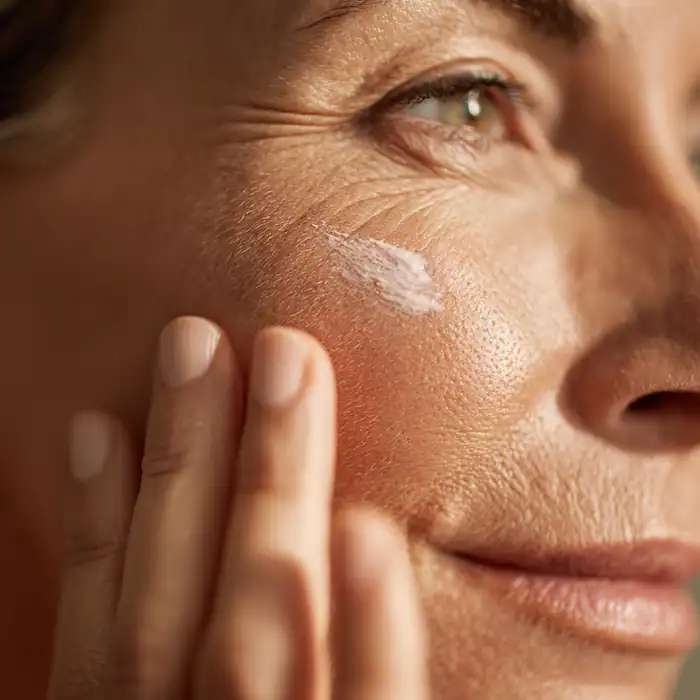
Every morning, in order: gentle cleanser, any prescribed serum, moisturiser, then sunscreen as the final step. That's the whole routine, and it takes about two minutes.
Practical numbers help. Apply before you leave, not in the car, and give your moisturiser a minute or two to settle so the film isn't disturbed. For the face, neck and ears you need roughly a teaspoon, and when you apply sunscreen outdoors you'll want to top it up every two hours, more often if you're swimming or sweating.
Mineral sunscreen suits reactive skin, while a lighter chemical formula tends to sit better under makeup. Either way, apply sunscreen last so nothing dilutes the moisturiser-plus-SPF stack, and don't skip the backs of the hands or the scalp part line, which people routinely miss. According to a review of sun safety in agricultural workers, which drew on 46 studies, outdoor workers still show major gaps in consistent protective practice [5], and unverified home-made products are a growing part of that gap [1]. If you're chasing the best anti-wrinkle cream Australia has to offer, remember that daily SPF does more for fine lines and skin texture than any cream. A moisturiser with sunscreen combined is fine; the order only matters when they're separate products, and a sunscreen with moisturiser built in simplifies things further.
Choosing the Right Order for Your Skin Type
Skin type changes the products, not really the sequence. Dry skin does best with a richer cream or lotion underneath; oily and acne-prone skin often does better skipping the extra layer and using a hydrating sunscreen with moisturiser properties as the single last step.
For sensitive or rosacea-prone skin, put moisturiser first and choose a mineral sunscreen, since zinc and titanium filters sting less than some chemical sunscreen actives. Deeper skin tones need visible light considered too, because pigmentation can be driven by wavelengths beyond UV; a systematic review of natural agents found preclinical evidence that certain compounds reduce visible-light-induced oxidative stress and pigmentation pathways [6], which is part of why tinted iron-oxide formulas are recommended in hyperpigmentation care.
Pregnancy is worth flagging. Topical sunscreen is considered fine, but several prescription pigment actives are not, so the sunscreen and moisturiser part of your routine may be all that continues; studies suggest improvised alternatives aren't a safe swap here either [1]. When you apply sunscreen over a moisturiser with SPF, you're not doubling the number on the bottle, so treat one of them as the real dose. If you're comparing anti-ageing creams, the question of order is settled, and a free skin assessment is where a doctor works out the rest.
Sunscreen Reactions and Sun Sensitivity
Most sunscreen reactions are irritation rather than true allergy, and they usually show up as stinging, redness or a mild rash within a day. Applying a bland moisturiser first, then sunscreen, often settles it because the barrier layer reduces direct contact.
Chemical sunscreen filters are the more common culprits for stinging and eye watering, so a mineral sunscreen or physical sunscreen with zinc oxide is the usual switch. If you're on a prescription active, expect more sensitivity than usual. Tretinoin, azelaic acid and hydroquinone all thin or alter the stratum corneum, which is why the tretinoin vs retinol distinction matters here: the prescription option is stronger and photosensitises more, so an SPF 50+ sunscreen becomes non-negotiable, and clinical evidence indicates unverified home-made products are the wrong answer for reactive skin [1].
Photosensitivity can also come from medicines you swallow. Some antibiotics, diuretics and retinoids amplify UV reactions, and a systematic review of sunbed use highlights how readily UV exposure triggers adverse photosensitivity responses [7]. Put moisturiser first as a buffer if things feel tight, and apply sunscreen once the surface stops feeling slippery. Reordering your moisturiser and sunscreen layers won't fix a genuine contact allergy, so that tweak has limits; if a reaction persists past a few days despite changing product, speak with a doctor. For irritation while treating acne, the fix is usually less active, not less sunscreen.
How Layering Sunscreen and Hydration Works on Skin
Layering works because moisturiser and sunscreen occupy different depths. A moisturiser draws water into the corneocytes and lipids of the barrier, while sunscreen stays on top as an optical layer, so sunscreen after moisturiser keeps that optical layer intact.
Disturb the film and you lose protection unevenly. Rubbing product over a set sunscreen creates gaps rather than a thinner but uniform coat, which is why you let the moisturiser sink in before applying sunscreen and don't reapply moisturiser mid-morning.
The type of sunscreen changes how forgiving the layering is. A chemical sunscreen needs to be spread as a continuous film to absorb UV, so a slippery moisturiser base can drag it into streaks; mineral filters are a little more visible when patchy, which is oddly useful feedback. Either way, apply a full dose of sunscreen, because an inadequate sunscreen layer fails whatever the order, and improvised formulations have no measured film at all [1].
Barrier condition matters as well. Skin microclimate research shows that moisture and temperature at the skin surface change how the tissue behaves and tolerates stress [8]. A hydrated barrier under a full moisturiser layer simply tolerates actives better, which is the practical logic behind every prescription formula routine we build, whether that includes niacinamide, hyaluronic acid or hydroquinone. For anti-ageing results, that combination beats a heavier moisturiser used on its own.
Summary
Apply moisturiser first, wait a minute or two, then finish with a generous layer of SPF 50+ every morning. Use enough, top it up outdoors, and expect extra sun sensitivity if you're using prescription actives [2][1]. At Prescription Skin, Australian-registered doctors review your online skin assessment and, where clinically appropriate, build a prescription formula that fits around daily SPF.
Frequently asked questions
What is the 3 minute rule for moisturiser?
The three minute rule means applying moisturiser within about three minutes of cleansing, while skin is still slightly damp. Damp skin holds water better, so the moisturiser traps it rather than sealing a dry surface. It's a barrier habit, not a strict clinical requirement, and a minute either way won't ruin anything.
What is the 3-finger rule for sunscreen?
The three-finger rule is a rough dosing guide: squeeze sunscreen along the length of your index, middle and ring fingers to get enough for the face, neck and ears. It works out to roughly a teaspoon, which is close to the amount used when SPF is tested in the lab.
Can a doctor help with my sunscreen routine?
Yes. A doctor can sort out when to apply sunscreen in your skincare routine, and it matters more once prescription actives are involved, because tretinoin and hydroquinone both increase sun sensitivity. On the common questions, apply moisturiser and sunscreen before makeup, never over it, so makeup goes on last; sunscreen also goes after serum, not before. Sunscreen works by absorbing or scattering UV to protect skin cells from DNA damage, and unverified home-made recipes have no measured protection [1].
What happens if I don't use moisturiser before sunscreen?
Nothing dangerous happens, but your skin may feel dry or tight, especially on prescription treatment. Sunscreen still protects you without a moisturiser underneath. If your skin is comfortable and you're using a hydrating formula, going straight to sunscreen is perfectly acceptable.
Can I put moisturiser on top of sunscreen?
Try not to. Moisturiser applied over sunscreen disturbs the protective film and creates uneven gaps in coverage. If your skin feels dry later in the day, use a hydrating mist or simply accept the dryness until your next reapplication, then moisturise that evening instead.
How long should I let my moisturiser absorb before sunscreen?
Wait about one to two minutes before you apply sunscreen during your skincare routine, which is long enough for most lotions and creams. You're waiting for the surface to stop feeling wet or slippery, not for full absorption, and heavier ointments may need three to five minutes. Rushing tends to streak the moisturiser and SPF rather than reduce strength. Related reading: prescription skincare during pregnancy and first 8 weeks on prescription skincare.
References
- Kaftan G, Panillo M, Maxon L, Esposito E. The Rise in Homemade Sunscreen Trends and Future Impacts on Skin Cancer Risk: Systematic Review. JMIR dermatology. 2026. doi:10.2196/84694. PubMed ↩︎
- Basu S, Singh P, Priyadarshi M, Chaurasia S, Basu S. Topical application of emollients to maintain skin integrity in preterm neonates: a systematic review and meta-analysis. European journal of pediatrics. 2026. doi:10.1007/s00431-026-07144-6. PubMed ↩︎
- Susanto A, Morgan E, Lindsay D, Collins LG. Chemoprevention of keratinocyte carcinomas and actinic keratoses in adults who were immunocompetent: a systematic review. Clinical and experimental dermatology. 2026. doi:10.1093/ced/llag073. PubMed ↩︎
- Stratigos AJ, Dessinioti C, Garbe C, Lebbe C, Amaral T, Bataille V. European consensus-based interdisciplinary guideline for invasive cutaneous squamous cell carcinoma. Part 1: Diagnostics and prevention - Update 2026. European journal of cancer (Oxford, England : 1990). 2026. doi:10.1016/j.ejca.2026.116763. PubMed ↩︎
- Moeckel C, Kist M, Anderson R, Chang E, Lengerich EJ, Billingsley EM. Skin Cancer Prevention in Agricultural Workers: A Review of Sun Safety Practices and Intervention Strategies (2013-2024). Journal of agromedicine. 2026. doi:10.1080/1059924X.2026.2642973. PubMed ↩︎
- Rodríguez-Luna A, Zamarrón A, García-Muñoz C, Hernández-Rodríguez JC, Lim HW, González S. Natural Agents for Preventing Skin Damage Induced by Visible Light: A Systematic Review of Preclinical and Clinical Evidence. Photodermatology, photoimmunology & photomedicine. 2026. doi:10.1111/phpp.70113. PubMed ↩︎
- MacLaurin JM, Rutter KJ, Rhodes LE. Community sunbed use and photosensitivity reactions: a systematic review. Photochemical & photobiological sciences : Official journal of the European Photochemistry Association and the European Society for Photobiology. 2026. doi:10.1007/s43630-026-00928-7. PubMed ↩︎
- Latimer SL, Ou SF, Huang TY, Kuruppu NR, Lee BO, Chaboyer WP. Skin microclimate as an indirect risk factor for pressure injuries: a prognostic factor systematic review and framework synthesis. Journal of wound care. 2026. doi:10.12968/jowc.2024.0155. PubMed ↩︎
Medically Reviewed Content
- Written by: Prescription Skin Editorial Team
- Medically Reviewed by: Dr Mitch Bishop - AHPRA Registered Practitioner (MED0002309948)
- Last Updated: September 2026
This content is for informational purposes only and does not constitute medical advice. Treatment is subject to consultation and approval by our Australian-registered doctors.