- Key takeaways
- What Compounded Skincare Is And How It Differs
- Benefits Of Individually Compounded Skin Formulas
- How A Compounded Formula Is Made And Works
- How To Apply A Compounded Formula Each Day
- Skin Types And Concerns Suited To Compounding
- Prescription-Only Skincare And Regulation In Australia
- Inside Our Melbourne Compounding Pharmacy
- Compounding And Delivery Of Your Prescription
- Safety, Side Effects And Irritation Risks
- Summary
- Frequently asked questions
Compounded skincare is a topical medicine mixed by a pharmacy for one named patient, following a prescription that specifies which active ingredients go in and at what strength. Instead of buying a finished tube from a shelf, you get a single base containing the combination a doctor has chosen after looking at your skin. That's the whole idea behind the compounded skincare Australian patients are being offered online: one bottle doing the work of two or three separate products, at strengths that suit the problem in front of the doctor.
The actives involved are the reason a prescription is needed. Tretinoin and prescription-strength hydroquinone sit behind a script here, so you can't order them directly and a pharmacy can't compound them without a doctor's authorisation. Supporting ingredients such as niacinamide or hyaluronic acid are freely available on their own, but they're often built into the same base to buffer irritation.
Compounding is not a magic category, and it isn't right for everyone. It suits stubborn concerns that haven't shifted with over-the-counter routines, and it tends to be used for acne, melasma, hyperpigmentation and early fine lines and skin texture change. Compounded skincare is less appropriate if your skin barrier is already inflamed, if you're pregnant or breastfeeding, or if the diagnosis isn't clear yet. What follows is the practical detail: how these formulas are made, how they're used, who they suit, and where the local rules sit.
Key takeaways
- Compounded skincare in Australia means a pharmacy makes a topical medicine to a doctor's written specification, combining active ingredients like tretinoin, hydroquinone, azelaic acid and niacinamide at chosen strengths in one base.
- Compounding is used in dermatology to give patients a treatment combination that isn't available as an off-the-shelf product [1].
- Actives such as tretinoin and hydroquinone above 2% are prescription-only here, so a doctor has to assess you first and decide whether a compounded formula is clinically appropriate.
- Compounded formulas have no long shelf life and no batch-registered TGA product listing, so they're dispensed for one named patient and replaced regularly.
- Retinoids and hydroquinone are not suitable in pregnancy or breastfeeding, and irritation in the first six weeks is common rather than a sign of failure.
What Compounded Skincare Is And How It Differs
The difference between a compounded formula and a retail product comes down to who decides the recipe. A retail product is manufactured to a fixed formula for a broad market and carries a registered listing, while a compounded formula prepared by an Australian pharmacy is written by a doctor and mixed for a single patient, which is why it's dispensed rather than sold. Compounding also lets a doctor reach concerns with no registered topical option at all, which is why it turns up in niche dermatology work such as topical statins for porokeratosis [2].
| Feature | Over-the-counter product | Compounded prescription formula |
|---|---|---|
| Who sets the strength | The manufacturer, for a general market | A doctor, after assessing your skin |
| Available actives | Niacinamide, salicylic acid, retinol, vitamin C | Adds prescription actives such as tretinoin and hydroquinone |
| Access | Bought directly | Requires a consultation and a script |
| Shelf life | Long, with preservative systems tested for retail | Shorter, dated at the pharmacy, replaced regularly |
| Monitoring | None | Review with a doctor, strength adjusted over time |
Neither column is automatically better. Plenty of people do well on retail actives, and a compounded formula is worth considering when those actives have been used properly and the skin still hasn't responded.
Benefits Of Individually Compounded Skin Formulas
The clearest benefit of compounding is combination: several actives in one base, at strengths a doctor picks, which usually means fewer steps and better adherence. According to Shabeeb, compounding topical medications gives dermatologists a way to prescribe customised treatment based on the individual needs of a patient rather than the options a manufacturer happens to offer [1].
Be realistic about the strength of that evidence. The individual actives, particularly retinoids and hydroquinone, have solid trial data behind them; specific bespoke blends generally don't, because each one is made for one person and never trialled as a product. Research on compounded vehicles shows formulation choice matters too, with foams gaining popularity partly because patients tolerate and use them more readily [3]. Compounding also lets doctors use a dose that no manufacturer sells, as with low-dose naltrexone in inflammatory skin disease [4]. So the fair claim for the compounded skincare Australian doctors prescribe is better dosing control and simpler routines, not superior results by default.
How A Compounded Formula Is Made And Works
A compounded formula works because each active in it does a defined job in the skin, and the base carries them all to the same place at once. Tretinoin binds retinoic acid receptors in the epidermis, speeding up cell turnover and loosening the plugs that block follicles, which is why it helps both acne and texture. Hydroquinone reduces pigment production by inhibiting tyrosinase, the enzyme melanocytes need to make melanin, so it's used for melasma and post-inflammatory marks.
Azelaic acid does double duty, easing inflammation and dampening pigment transfer, which makes it useful in rosacea and in darker skin tones. Niacinamide supports barrier lipids and reduces redness, so it's often added to make the stronger actives tolerable. Topical delivery also keeps the dose local, which is the same logic behind topical rather than systemic drug use elsewhere in dermatology [5].
The pharmacy side is chemistry, not cooking. Concentration, pH and preservative choice all affect whether an active stays stable in the jar, a problem well documented in compounded formulations generally [6]. Compounded skincare is therefore made in small, dated batches rather than stockpiled.
How To Apply A Compounded Formula Each Day
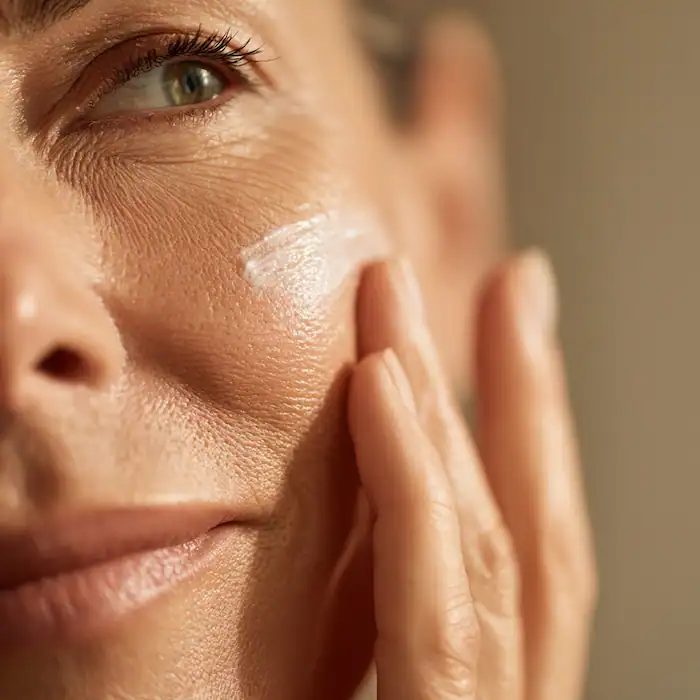
Apply a compounded formula at night, on clean dry skin, using a pea-sized amount for the whole face. Start one or two nights a week for the first fortnight, then build to alternate nights, and only go nightly once you've had a couple of weeks without flaking or stinging. Going faster than that is the single most common reason people abandon treatment.
Sandwich the formula with a plain moisturiser if you're sensitive: moisturiser, wait ten minutes, formula, then moisturiser again. Keep the rest of your routine boring while you settle in, and park scrubs, at-home peels and any extra retinol skincare product until your skin is stable. Sunscreen every morning is non-negotiable, particularly with hydroquinone or tretinoin on board, because both make you more sun-sensitive and UV undoes pigment work quickly. Our first 8 weeks on prescription skincare guide sets out what each stage usually feels like.
Skin Types And Concerns Suited To Compounding
Compounding suits people with a clear diagnosis and a concern that hasn't responded to a well-used over-the-counter routine. That's typically persistent acne, melasma, post-inflammatory hyperpigmentation, and early lines with rough texture. Oily and resilient skin usually tolerates higher strengths; dry, eczema-prone or very reactive skin needs lower strengths, a richer base and slower build-up.
Some situations mean no, or not yet. Retinoids and hydroquinone aren't used in pregnancy or breastfeeding, which we cover in prescription skincare during pregnancy. Active dermatitis, sunburn, recent laser or waxing all need to settle first. Widespread inflammatory disease is its own conversation, since psoriasis in particular carries systemic comorbidities that change the treatment plan [7]. In darker skin tones the caution runs the other way: irritation itself can trigger new pigmentation, so gentler actives such as azelaic acid and niacinamide often come before an aggressive one, and no skincare product should be pushed to the point of visible peeling.
Prescription-Only Skincare And Regulation In Australia
Prescription skincare is topical treatment containing an active ingredient that Australian law restricts to supply on a doctor's prescription. Tretinoin and hydroquinone above 2% both sit in that group, which is why a prescription-strength hydroquinone cream can't be bought over the counter here even though weaker brightening ingredients can.
The concerns these prescriptions treat are fairly narrow and well defined: acne and acne scarring, melasma and other pigmentation, rosacea, and photoageing changes such as fine lines and uneven texture. You can see the full list on our conditions we treat page. Concerns outside that group, like suspected skin cancer, cysts or undiagnosed rashes, need in-person examination instead.
Compounding pharmacies are regulated. Pharmacists are registered health practitioners working under state pharmacy legislation and professional practice standards, and compounded preparations must be made for a specific patient on a valid prescription rather than manufactured in bulk for general sale. That patient-specific requirement is the boundary that separates lawful compounding from unapproved manufacturing, and it's why a compounded formula carries a pharmacy label with your name and a use-by date instead of a registered product number.
The same boundary answers a question that comes up often: whether you can buy retatrutide from a compounding pharmacy in Australia. Retatrutide is an investigational weight-loss drug that hasn't been approved here, and compounding isn't a legitimate route around approval for a new injectable, so no reputable pharmacy should be supplying it. Skin actives are different because they're long-established medicines with an approved history of use.
Cost sits outside the PBS. Compounded skincare is generally a private expense, commonly tens of dollars per month once a bottle is spread over its supply period, with consultation fees on top. There's no single best skincare brand in Australia, and any page ranking one is selling something. What matters clinically is whether the actives match your diagnosis, which is what dermatology compounding is for [1], and whether the vehicle is one you'll keep using [3].
Inside Our Melbourne Compounding Pharmacy
A compounding pharmacy is a dispensary with a dedicated preparation area, calibrated scales, documented formulas and batch records for every bottle that leaves the bench. Actives are weighed to the milligram, blended into the chosen base, then labelled with the patient's name, the ingredients, the date made and an expiry. Nothing sits waiting for a buyer.
That process is also the honest answer to what people mean when they search for the best anti-ageing cream Australia has to offer. There isn't one, because the useful variable is which active and what strength, not which jar. "Prescription retinol" is another phrasing worth untangling: retinol itself is a cosmetic-strength ingredient sold freely, while the prescription version is tretinoin, a different molecule the skin doesn't have to convert. Careful compounding matters most for actives that degrade with light, air or the wrong pH [6], and the shortage of dermatologists is part of why this work is increasingly shared with other doctors.
Compounding And Delivery Of Your Prescription
Once a doctor writes the script, the pharmacy compounds the formula to that specification and posts it to you, so there's no queue at a shopfront and no substitution of ingredients. Each bottle is made as a set supply rather than a bulk stock item, which keeps the actives fresh and means the strength can be changed at review without wasting product.
Store it as the label says, usually away from heat and direct light, and don't decant it into another container. Because the bottle is dated, order the next one before you run out; stopping and restarting a retinoid resets your tolerance and you'll go through the adjustment phase again.
People often ask about tretinoin vs retinol when their formula arrives and looks unremarkable. Tretinoin acts directly, works at far lower concentrations, and needs a doctor's prescription here, while retinol needs conversion in the skin first. Our retinol vs tretinoin comparison covers where each one lands.
Safety, Side Effects And Irritation Risks
The main risk with a compounded formula is irritation, and it's common rather than rare in the first four to six weeks. Expect some dryness, flaking, mild stinging and a brief patch of purging with retinoids; expect it to settle if you drop back to fewer nights per week rather than stopping altogether. Persistent burning, spreading redness or swelling isn't adjustment, and that's a reason to stop and contact your doctor.
Hydroquinone carries its own cautions: prolonged uninterrupted use can cause paradoxical darkening, so it's cycled rather than used indefinitely, as we explain in hydroquinone 2% vs 4%. Retinoids and hydroquinone are contraindicated in pregnancy and breastfeeding. Tell your doctor about oral medicines too, since active inflammatory skin disease can alter how some drugs are metabolised [8]. Searching for the best anti-ageing cream won't get you past the core trade-off, because the actives with the strongest evidence are also the ones most likely to irritate, and dermatology has long used compounding to manage that balance [1].
Summary
Compounded skincare puts actives such as tretinoin, hydroquinone, azelaic acid and niacinamide into one pharmacy-made bottle at strengths a doctor chooses, which is a practical way to treat stubborn acne, pigmentation and texture change without stacking multiple products [1]. The evidence sits with the individual actives and the vehicle they're delivered in [3], not with any particular blend, and irritation and pregnancy restrictions are real limits. Prescription Skin works on the prescription skincare model: an online skin assessment reviewed by an Australian-registered doctor, and a compounded formula only where it's clinically appropriate for you.
Frequently asked questions
Can you buy retatrutide from a compounding pharmacy in Australia?
No, retatrutide isn't something a compounding pharmacy in Australia should be supplying, because it's an investigational drug that hasn't been approved for use here. Compounding is meant to adapt approved medicines for individual patients, not to substitute for regulatory approval of a new injectable. Skin actives like tretinoin sit in a different category as long-established prescription medicines.
Which skin care brand is the best in Australia?
There's no single best skincare brand in Australia, and any ranking you find is usually commercial rather than clinical. What predicts a result is whether the active ingredient matches your diagnosis, whether the strength suits your skin, and whether you keep using it. That's why doctors talk about actives and concentrations rather than brands.
Can a doctor prescribe compounded skincare online?
Yes, an Australian-registered doctor can assess your skin through a telehealth consultation and write a prescription for compounded skincare that an Australian pharmacy then prepares, where it's clinically appropriate. You do need a consultation first, and it comes before anything else: the doctor needs clear photos, a history of what you've already tried, and details of your medicines and pregnancy status. You can start with our free skin assessment.
Are compounding pharmacies regulated in Australia?
Yes. Compounding pharmacies operate under state pharmacy legislation and professional practice standards, and the pharmacists are registered health practitioners. The key legal condition is that a compounded preparation must be made for a specific patient against a valid prescription, not manufactured in bulk for general sale.
What are the disadvantages of a compounding pharmacy?
The trade-offs are a shorter shelf life, no batch-registered product listing, a higher out-of-pocket cost because these formulas aren't PBS-subsidised, and no trial data on your exact blend. You also can't grab a replacement off a shelf, so running out means a gap in treatment unless you reorder early.
Why don't some doctors like compounding pharmacies?
Most doctors have no problem with compounding when it's used for a clear clinical reason; the reservations are about specific practices, not the concept. Concerns centre on products marketed without evidence, unpredictable potency when formulation is done poorly, and compounded versions of drugs that already have an approved equivalent, which is why fields like hair loss now publish consensus dosing guidance [9]. Dermatology remains one of the specialties where compounding has a documented role [1]. Our frequently asked questions page covers the practical side.
References
- Shabeeb N. Compounding topicals in dermatology. Cutis. 2020. PMID:32603403. PubMed ↩︎
- Martini J, Buethe MG, Atzmony L. Topical statins in the treatment of porokeratosis: a systematic review. Clinical and experimental dermatology. 2026. doi:10.1093/ced/llag038. PubMed ↩︎
- Allen LV. Basics of Compounding: Compounding Foams. International journal of pharmaceutical compounding. 2023. PMID:37816182. PubMed ↩︎
- Zhou MH, Elston DM, Morrison BW, et al. Low-dose naltrexone for treatment of dermatologic conditions: A clinical review. Journal of the American Academy of Dermatology. 2026;94(1):200-207. doi:10.1016/j.jaad.2025.09.028. PubMed ↩︎
- Gutierrez Y, Pourali SP, Kucharik AH, Jones ME, Rajkumar JR, Armstrong AW. Topical opioid use in dermatologic disease: A systematic review. Dermatologic therapy. 2021. doi:10.1111/dth.15150. PubMed ↩︎
- Iribarren R, Cunha C, Kaymak H, et al. Preservatives and pH in low-dose atropine formulations for clinical trials. Acta Ophthalmologica. 2024;102(3):364-366. doi:10.1111/aos.16604. PubMed ↩︎
- Wi D, Wilson A, Satgé F, Murrell DF. Psoriasis and osteoporosis: a literature review. Clinical and experimental dermatology. 2022. doi:10.1111/ced.15174. PubMed ↩︎
- Sathe AG, Othman AA, Mohamed MF. Therapeutic Protein Drug Interaction Potential in Subjects With Psoriasis: An Assessment Based on Population Pharmacokinetic Analyses of Sensitive Cytochrome P450 Probe Substrates. Journal of Clinical Pharmacology. 2021;61(3):307-318. doi:10.1002/jcph.1744. PubMed ↩︎
- Akiska YM, Mirmirani P, Roseborough I, Mathes E, Bhutani T, Ambrosy A. Low-Dose Oral Minoxidil Initiation for Patients With Hair Loss: An International Modified Delphi Consensus Statement. JAMA dermatology. 2025. doi:10.1001/jamadermatol.2024.4593. PubMed ↩︎
Medically Reviewed Content
- Written by: Prescription Skin Editorial Team
- Medically Reviewed by: Dr Mitch Bishop - AHPRA Registered Practitioner (MED0002309948)
- Last Updated: September 2026
This content is for informational purposes only and does not constitute medical advice. Treatment is subject to consultation and approval by our Australian-registered doctors.