- Key takeaways
- How Can You Pop A Pimple Safely At Home?
- The Urge To Squeeze And Where It Comes From
- Preparing Your Skin And Tools Before An Extraction
- Blemishes That Are Actually Safe To Squeeze
- Aftercare For Skin Once A Blemish Has Been Drained
- Signs A Spot Is Not Ready For Extraction
- Doctor-Led Skin Care And Compounded Prescription Treatment
- Gentler Alternatives To Popping A Pimple
- Summary
- Frequently asked questions
How can you pop a pimple without making it worse? Honestly, most of the time the answer is that you shouldn't, but there is one narrow exception: a mature whitehead sitting right at the skin surface, drained gently with clean tools after a warm compress.
Everything else (the red lump, the sore nodule, the deep bump with nothing on top) does better left alone. Squeezing those pushes debris and bacteria sideways into the dermis, which turns a spot that would have settled in four days into a mark that lingers for months.
Below is the practical version: which spots qualify, how to prepare, what aftercare actually helps, and when a breakout pattern needs prescription acne treatment rather than another go at the mirror.
Key takeaways
- Only one type of spot is reasonable to drain at home: a small, superficial whitehead that has clearly come to a point and sits just under the surface.
- Red, deep, firm or tender lumps should be left alone, because squeezing pushes contents deeper and raises the risk of scarring and post-inflammatory pigmentation.
- Clean hands, a freshly cleansed face, and gentle side pressure with two cotton buds beat fingernails or a pin every time. Stop at the first sign of blood or clear fluid.
- Popping treats one spot; it does nothing for the underlying process, so recurring breakouts usually need a topical or oral treatment plan from a doctor.
- Actives such as tretinoin are prescription-only in Australia and need a consultation before they can be supplied.
How Can You Pop A Pimple Safely At Home?
Popping a pimple safely at home comes down to matching the technique to the lesion, and most home attempts fail because the spot was never suitable. A dermatologist or a doctor uses sterile equipment and can drain deeper lesions; at home, your only safe target is a surface whitehead, and stopping early is what keeps infection risk low.
| Approach | What it can do | Main limits |
|---|---|---|
| At-home squeeze | Drains one ripe whitehead | Skin trauma, marks, no effect on new spots |
| Over-the-counter actives | Salicylic acid helps clear pore blockages | Slow on inflammatory lesions |
| Prescription formula | Tretinoin, sometimes called prescription retinol, or azelaic acid for pigment and bumps | Needs a consultation; tretinoin is not for pregnancy |
| Pigment-focused prescription | Hydroquinone cream for stubborn post-spot marks | Time-limited courses, doctor supervised |
The Urge To Squeeze And Where It Comes From
The urge to squeeze is part relief-seeking habit and part visible-problem intolerance, and almost everyone with acne feels it. Pressure plus a sudden release feels productive, so the behaviour reinforces itself even when the skin looks worse afterwards.
According to the EuroGuiDerm acne guideline, acne is a chronic inflammatory condition that needs sustained treatment rather than lesion-by-lesion management [1]. Reviews of newer approaches, from botulinum toxin for scarring [2] to topical antibiotics used alone [3] and cannabidiol extracts [4], keep landing on the same point: control the inflammation, not the individual bump. A dermatologist will say the same thing, and it's why tretinoin cream in Australia is prescribed as an ongoing routine, not a spot fix. If lines rather than spots are your concern, choosing the best anti-wrinkle cream in Australia is covered in our anti wrinkle cream guide.
Preparing Your Skin And Tools Before An Extraction
Preparation is mostly about reducing the bacteria you introduce and softening the plug so less force is needed. Cleanse with lukewarm water, hold a warm damp flannel over the spot for three to five minutes, then wash your hands thoroughly and wrap two cotton buds in clean tissue.
Skip needles and metal extractors unless a doctor or dermatologist has shown you how to use them. Guideline authors stress that acne care depends on consistent topical treatment rather than mechanical intervention [1].
Blemishes That Are Actually Safe To Squeeze
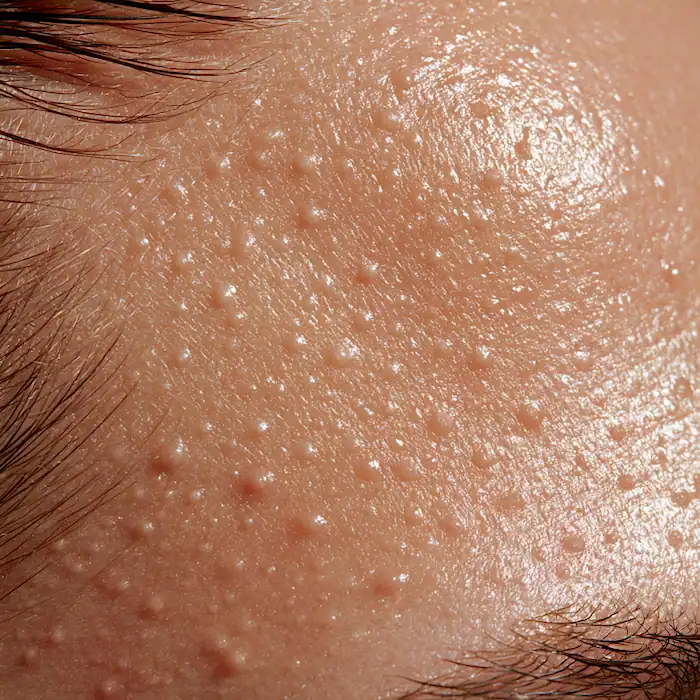
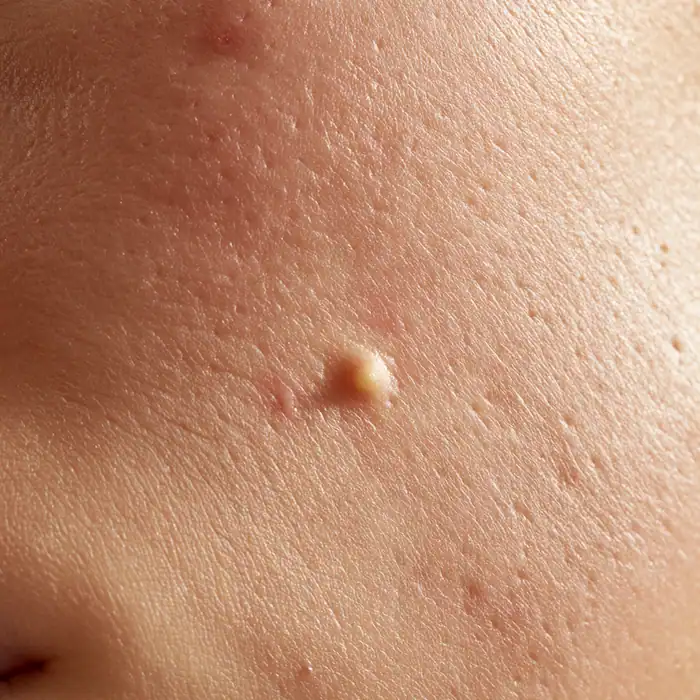
One lesion type is reasonably safe: a small superficial pustule with a visible white or yellow dome that sits flush with the skin. These contain sebum, keratin and immune cells rather than a deep pocket of bacteria, so gentle side pressure usually releases them in one go.
Nodules, cysts and blind bumps are off limits, and so is any spot on an area already inflamed and in need of rosacea treatment. Dermatology guidance for moderate to severe acne favours systemic therapy over manipulation [3][5]. For whiteheads specifically, see how to get rid of whiteheads.
Aftercare For Skin Once A Blemish Has Been Drained
Aftercare is simple: stop pressing the moment anything clear or bloody appears, then leave the area alone. Dab with a clean tissue, apply a thin smear of plain moisturiser or a hydrocolloid patch, and hold off on salicylic acid, benzoyl peroxide or any acid on that spot for twenty-four hours while the open pore closes.
Residual redness reflects inflammation, not infection, and settles over days to weeks. Placebo-arm data in acne trials show lesion counts fall measurably over twelve weeks even without active treatment, which is a useful reminder that patience does some of the work [6].
Signs A Spot Is Not Ready For Extraction
A spot that isn't ready feels firm, sits deep, and hurts when you press it. Findings consistent with an unready lesion include:
- No white or yellow head, just a dome of red or skin-coloured swelling
- Tenderness out of proportion to its size, common on the jaw, chin and back
- A hard, mobile lump under intact skin that never comes to a point
- Surrounding warmth or spreading redness, which needs a doctor rather than a squeeze
These are often confused with cysts, milia and epidermoid cysts. Forcing them damages the follicle wall, and post-acne scarring is far harder to treat than the original spot, often needing microneedling-based procedures to improve [7]. Let them heal, or read how to get rid of a blind pimple.
Doctor-Led Skin Care And Compounded Prescription Treatment
Acne treatment works best as a routine rather than a rescue, and that's where doctor-led care differs from asking how to pop pimples. Treatment is organised by class: topical retinoids such as tretinoin to normalise follicular shedding, azelaic acid for inflammation and residual pigment, niacinamide for tolerance, and oral antibiotics such as doxycycline reserved for moderate cases [5]. Guidelines caution against topical antibiotic monotherapy because the benefit is mild and resistance is real [3].
These actives are prescription-only in Australia. Prescription Skin runs a free skin assessment online, an Australian-registered doctor reviews your history and photos, and where it's clinically appropriate they'll issue a custom prescription skincare formula aimed at cyst-prone or scar-prone skin.
Gentler Alternatives To Popping A Pimple
Gentler options exist for almost every situation where you'd reach for your fingernails. A hydrocolloid patch absorbs surface fluid overnight, a short warm compress eases a tender cyst, and a thin dab of benzoyl peroxide or azelaic acid reduces the lesion without the scar risk that comes with squeezing [1].
Evidence for adjuncts is mixed. Tea tree oil shows modest benefit in pooled analysis [8], herbal formulations act on sebum and inflammation with variable trial quality [9], and cannabidiol remains early-stage [4]. None of them is a way to pop a pimple; they simply reduce how often you feel the need to. For ageing concerns, see our guide to choosing an anti ageing cream.
Summary
Prescription Skin's view is straightforward: drain only a ripe surface whitehead, leave deep or red lesions to settle, and treat the underlying acne rather than the individual spot [1][2]. If breakouts keep returning, an online assessment reviewed by an Australian-registered doctor can lead to a prescription formula where it suits your skin.
Frequently asked questions
How do you force a pimple to pop?
You shouldn't force a pimple to pop, because force is what causes scarring. A warm compress held for a few minutes twice a day will bring a superficial spot to a head on its own, and a hydrocolloid patch overnight often flattens it without any pressure at all.
Is it better to pop a pimple or let it heal?
Letting a pimple heal is better than popping it in almost every case. Skin repairs a closed lesion with less pigment change and less scarring than a squeezed one, and the only reasonable exception is a small whitehead already sitting at the surface.
How can I draw a pimple out?
Drawing a pimple out means softening the plug, not extracting it. Warm compresses, a hydrocolloid patch, and a thin layer of benzoyl peroxide or azelaic acid at night all encourage the contents to surface or resorb over a few days.
Can I pop a pimple if it's white?
You can drain a pimple if it's white, small and flush with the skin. Cleanse first, apply gentle sideways pressure with two tissue-wrapped cotton buds, and stop immediately if you see blood or clear fluid or if it resists.
What will draw out a pimple fast?
Nothing clears a pimple in minutes, but a hydrocolloid patch is the fastest realistic option overnight. Ice for redness and a dab of benzoyl peroxide help; for stubborn cases a doctor can inject a dilute corticosteroid to settle a single large lesion.
What is a pimple with a hard rock inside?
A pimple with a hard lump inside is usually a nodule or a closed cyst rather than a true pimple. These sit deep, never form a head, and respond to prescription treatment rather than squeezing, so get them reviewed if they keep recurring in the same spot.
References
- Nast A, Al Wattar BH, Beylot Barry M, Brüggemann H, Bukvić Mokos Z, Caruana DM. Update of the EuroGuiDerm evidence-based guideline for the treatment of acne-Short version. Journal of the European Academy of Dermatology and Venereology : JEADV. 2026. doi:10.1111/jdv.70331. PubMed ↩︎
- Igiede J, Sulejmani P, Vassiliev N, Cruz JB. Treating Acne Vulgaris and Scarring With Botulinum Toxin: A Systematic Review. Journal of drugs in dermatology : JDD. 2026. doi:10.36849/JDD.9562. PubMed ↩︎
- Lyu M, Fan W, Yang H, Luo X, Wang G, Zhu G. Topical Antibiotic Monotherapy Only Provides Mild Benefit for Patients with Acne Vulgaris: A Systematic Review and Network Meta-analysis. Clinical drug investigation. 2026. doi:10.1007/s40261-026-01553-z. PubMed ↩︎
- Komane B, Kaye T. CBD-Containing Hemp Extracts and Isolated CBD for Acne: A Systematic Review of Anti-Inflammatory Mechanisms, Clinical Signals and Sustainability. Molecules (Basel, Switzerland). 2026. doi:10.3390/molecules31122017. PubMed ↩︎
- Batool A, Abbas MS, Ali Akbar M, Murtaza M, Mahin FE, Ali U. Comparative efficacy and safety of oral azithromycin versus doxycycline in moderate-to-severe Acne vulgaris: a systematic review and meta-analysis. The Journal of dermatological treatment. 2026. doi:10.1080/09546634.2026.2648406. PubMed ↩︎
- Luo J, Yu J, Cai Z, Zhu H, Liu T, Zheng Q. Placebo response and its influencing factors in acne vulgaris: A model-based meta-analysis. British journal of clinical pharmacology. 2026. doi:10.1002/bcp.70468. PubMed ↩︎
- Albazee E, AlOtaibi A, Alsaffar H, Alraqum FF, Alkhatlan S, Almutawaa BN. Microneedling with Topical Insulin Versus Microneedling with Platelet-rich Plasma for Post-Acne Scars: A Systematic Review and Meta-Analysis with Trial Sequential Analysis. Aesthetic plastic surgery. 2026. doi:10.1007/s00266-026-06038-0. PubMed ↩︎
- Ye Y, Lim JJ, Huang Z, Chew FT. Efficacy and Safety of Melaleuca alternifolia (Tea Tree) Oil for Acne-A Systematic Review and Meta-Analysis. Phytotherapy research : PTR. 2026. doi:10.1002/ptr.70344. PubMed ↩︎
- Gong J, Zhang J, Li Y, Jiang H, Chen S, Cheng J. Traditional Chinese medicine in acne treatment: From classical formulas to bioactive phytoconstituents and mechanisms. Journal of ethnopharmacology. 2026. doi:10.1016/j.jep.2026.121786. PubMed ↩︎
Medically Reviewed Content
- Written by: Prescription Skin Editorial Team
- Medically Reviewed by: Dr Mitch Bishop - AHPRA Registered Practitioner (MED0002309948)
- Last Updated: September 2026
This content is for informational purposes only and does not constitute medical advice. Treatment is subject to consultation and approval by our Australian-registered doctors.
Part of our condition guide
Acne →