- Key takeaways
- How Pimple Patches Work on Blemishes
- Which Blemishes Suit a Hydrocolloid Patch
- What Causes Acne and Why Blemishes Form
- Types of Acne Patches Available in Australia
- What Plain and Medicated Patches Actually Do
- Common Mistakes When Applying Acne Stickers
- When a Breakout Needs a Doctor's Review
- Summary
- Frequently asked questions
Do pimple patches work? For one particular kind of spot, yes: a hydrocolloid dot sitting over an open or surfaced pustule absorbs fluid, keeps the area moist, and physically blocks your fingers, which is often the real benefit. That's a narrow job description, and it's worth knowing where the line sits before you buy a sheet of them.
Patches don't change oil production, they don't shift the bacteria that drive inflamed lesions, and they don't prevent tomorrow's breakout. Reviews of acne therapy still put the useful action in topical and oral treatments that alter sebum, keratin and inflammation over weeks, not in overnight dressings [1][2]. Guideline-based care for anything beyond the occasional pimple runs through retinoids, azelaic acid and benzoyl peroxide [3].
So when people ask whether pimple patches work, the honest answer is that they're a decent tool for one spot on one night, and a poor substitute for treating acne that keeps coming back.
You may also find these related guides helpful: first 8 weeks on prescription skincare and salicylic acid bha.
Key takeaways
- Hydrocolloid pimple patches work best on a single surface pustule or a spot that's already opened, where they absorb fluid and stop you picking.
- They don't reach deep, inflamed or cystic lesions, and they do nothing for the underlying causes of acne.
- Medicated versions add salicylic acid, tea tree oil or benzoyl peroxide, which can help mild spots but also cause stinging, dryness and occasional allergic reactions [4].
- Patches are cosmetic first aid, not treatment. European guideline care for persistent acne relies on topical retinoids, azelaic acid, benzoyl peroxide and, in some cases, oral medication [3].
- Spots that scar, recur monthly or sit deep under the skin deserve a doctor's review rather than another box of stickers.
How Pimple Patches Work on Blemishes
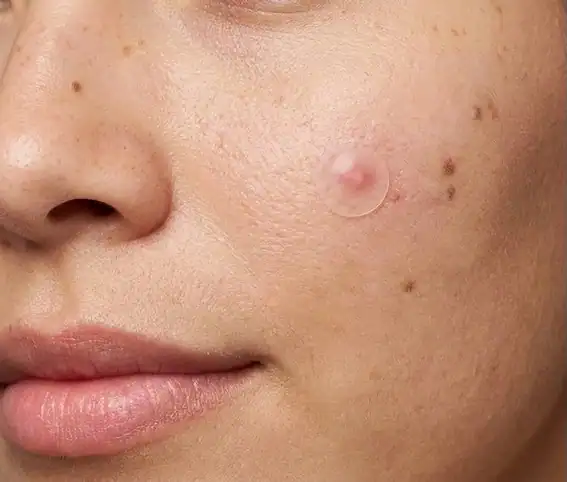
A pimple patch is a small adhesive dressing, usually hydrocolloid, that sticks over a blemish and pulls fluid out of the surface while keeping the skin underneath moist. You apply it to clean, dry skin at night, leave it six to eight hours, then peel it off. Medicated versions add an active ingredient such as salicylic acid, which is where most irritation and the occasional allergic reaction come from. Deep or cystic lesions sit too far below the surface for any patch to reach, and a dermatologist would treat those differently. Do pimple patches work for every skin type? Broadly yes for tolerance, though very sensitive or eczema-prone skin can react to the adhesive.
Do salicylic acid pimple patches work better than plain ones? Only marginally, and only on early, small spots. Do retinol patches work? Retinoids need consistent contact over weeks, so a few hours under a sticker isn't a fair test of the ingredient [2]. Neither format prevents a scar.
| Feature | Pimple patch (OTC) | Prescription topical treatment |
|---|---|---|
| Typical actives | Salicylic acid, tea tree oil, benzoyl peroxide, or none | Tretinoin, azelaic acid, niacinamide |
| What it targets | One surfaced blemish and the urge to squeeze it | Pore blockage, oil and inflammation across the area [3] |
| Time to effect | Overnight, cosmetic only | 4 to 12 weeks of daily use |
| Main downsides | Adhesive irritation, drying, no scar prevention | Peeling and sensitivity early on; needs doctor review |
| Fit in a routine | Occasional spot skincare | Ongoing nightly treatment |
Which Blemishes Suit a Hydrocolloid Patch
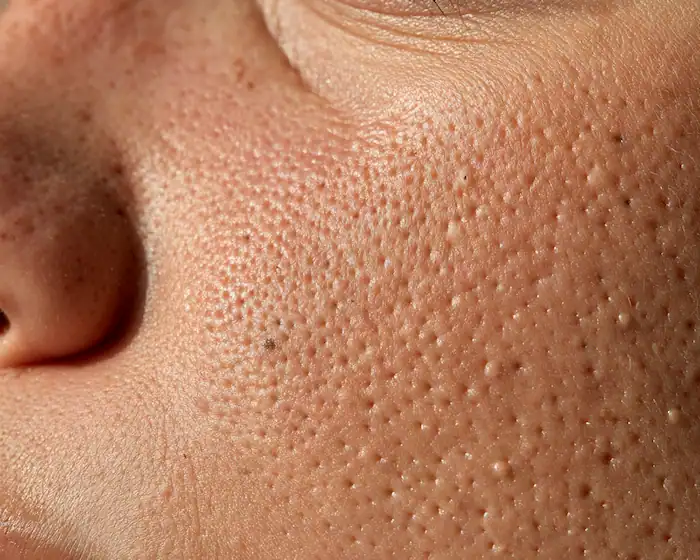
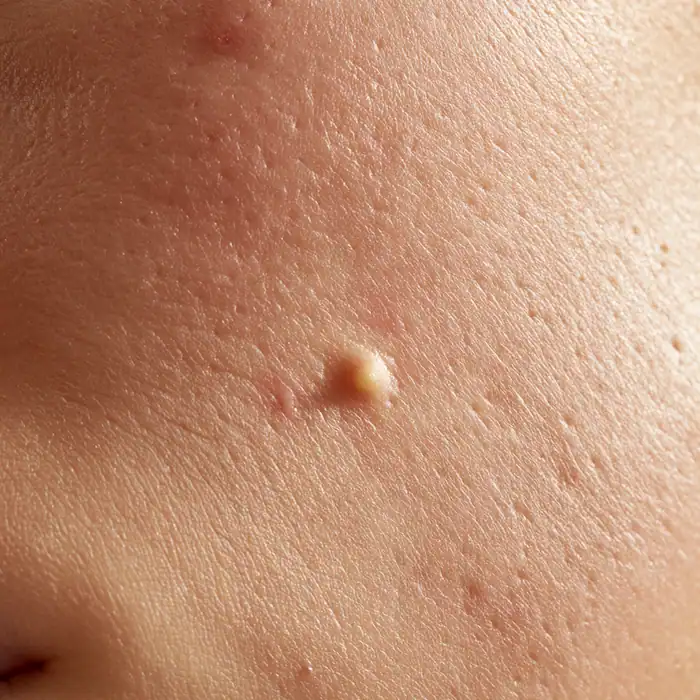
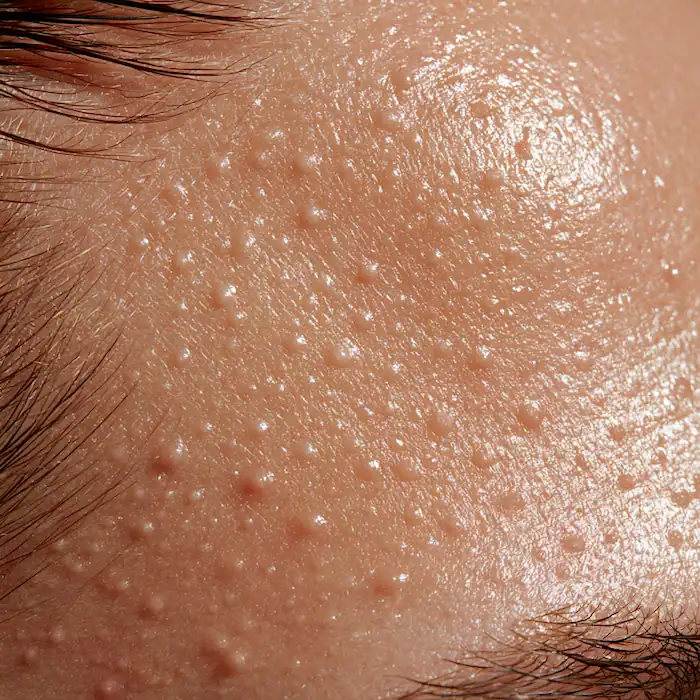
A hydrocolloid patch suits a superficial pustule or an already-broken blemish, because hydrocolloid was designed as a wound dressing and works by absorbing exudate. Closed comedones, blackheads and cystic nodules don't drain to the surface, so nothing gets absorbed and no active ingredient will penetrate far enough to matter.
Sensitive, rosacea-prone and eczema-prone skin can get adhesive irritation, and repeated peeling on darker skin tones risks post-inflammatory pigmentation. Do pimple patches work under makeup? A thin hydrocolloid dot can be covered, though most people do better wearing them overnight. Do retinol patches work against the bacteria behind inflamed spots? No, and a dermatologist or doctor is the better next step when a medicated patch becomes a nightly routine.
What Causes Acne and Why Blemishes Form
Acne forms when the pore lining sheds too many cells, oil output rises, and Cutibacterium acnes multiplies in that blocked follicle, triggering inflammation. According to the EuroGuiDerm acne guideline, effective treatment works on several of those steps at once rather than one [3]. That's why acne responds to sustained topical therapy and not to a dressing.
Hormonal shifts, occlusive products, friction from helmets or masks, and picking all worsen acne. Research on topical antibiotics shows even a real active ingredient used alone gives only mild benefit in acne vulgaris [1], and phototherapy reviews frame acne as a chronic inflammatory disease needing ongoing sebum and inflammation control [2]. Do salicylic acid patches work on that mechanism? Only at the surface.
Do pimple patches work for perioral dermatitis? No, that's a different rash entirely. Ask whether pimple patches work on hormonal acne and the answer is the same. Persistent acne, like fine lines, needs a treatment plan rather than a single product.
Types of Acne Patches Available in Australia
An acne patch sold in Australia falls into three real categories: plain hydrocolloid, a medicated acne patch carrying salicylic acid or tea tree oil, and a microdart acne patch with dissolving tips. Do acne patches work for all types of skin? Tolerance varies, and the microdart type causes the most stinging.
Plain hydrocolloid is the safest acne patch for sensitive skin. A salicylic acid variety adds mild exfoliation to a surfaced spot, and whether salicylic acid patches work on cystic lesions is a fair question with a flat answer: no. Tea tree oil versions have some trial support in acne, though the evidence base is modest and contact allergy is documented [4].
No acne patch is prescription-only here, which is part of the appeal. It also means an acne patch bought at the chemist is a cosmetic, not the guideline treatment that clears acne [3]. Reviews of acne therapy consistently place the durable benefit in sustained topical or oral treatment [1].
What Plain and Medicated Patches Actually Do
Hydrocolloid draws fluid from a spot into a soft gel, which flattens the bump and supports healing without letting a scab dry hard. Dirt and makeup have no role in the mechanism, so cleansing before you apply matters mainly for adhesion.
Medicated patches add a keratolytic. Salicylic acid loosens the plug at the pore opening, and salicylic delivery under an occlusive dressing does penetrate a little better than an open gel, which is also why irritation is more common. Benzoyl peroxide appears in some patches, so if you're asking whether pimple patches contain benzoyl peroxide, check the label and expect bleached pillowcases.
The cause of acne is multifactorial, and the step driven by acne-causing bacteria is barely touched by a few hours of contact [2]. A dermatologist or doctor treats that step with actives such as azelaic acid, the same way hydroquinone cream is used for pigment rather than a patch. That's real skincare treatment; a patch is first aid.
Common Mistakes When Applying Acne Stickers
The most common mistake is using a patch on skin that's still damp or moisturised, so it lifts within an hour. Apply to clean, dry skin at night, choose a patch slightly wider than the spot, and leave it until morning.
Second mistake: squeezing first. That deepens inflammation and raises the risk of a lasting mark. Third: nightly use of medicated stickers on the same area, which strips the skin barrier and leaves acne worse than before. Alternate plain hydrocolloid with a rest night, and don't stack salicylic acid patches over a retinoid you already use.
Fourth mistake is treating acne as an emergency instead of a chronic condition. Placebo arms in acne trials show lesion counts fall meaningfully over 12 weeks with no active drug at all [5], which is exactly why single-spot fixes feel more effective than they are. If what to do for pimples has become a weekly question, guideline treatment beats stickers [3]. What Australian patients often call prescription retinol is tretinoin, and it needs a doctor's prescription and a free skin assessment first.
When a Breakout Needs a Doctor's Review
Book a review when spots are deep, painful, cystic, leaving a scar, or clustering across the jaw and back rather than appearing one at a time. Severe acne treated late scars more, and dermatology practice reflects that urgency.
Also seek advice if a patch triggers an allergic reaction, spreading redness or persistent irritation, or if salicylic acid keeps drying your skin without clearing the pore. Do salicylic acid pimple patches work well enough to delay treatment? Not for moderate or severe disease. According to a systematic review of oral antibiotics in moderate-to-severe acne, doxycycline and azithromycin both have real but comparable roles [6], and severe cutaneous adverse reactions to systemic antibiotics, while rare, are documented [7]. Scar management has its own evidence base, including botulinum toxin [8] and fractional carbon dioxide laser with recombinant human epidermal growth factor [9]. Herbal approaches, including traditional Chinese medicine formulas, are studied but not guideline therapy [10].
Dirt isn't the problem, and no skincare active ingredient works on an unclear diagnosis. If what to do for pimples keeps changing weekly, a doctor can look at the conditions we treat and match an active ingredient to what's actually happening in your skin.
Summary
Pimple patches genuinely help one surfaced spot overnight, and they stop picking, but they don't treat the sebum, pore and inflammation cycle behind recurring breakouts [1][2]. At Prescription Skin, Australian-registered doctors assess your skin online and, where clinically appropriate, build a prescription formula around what's driving it.
Frequently asked questions
Why do Gen Z wear pimple patches in public?
Wearing patches in public reframes a spot as something you're actively managing rather than hiding. The dots are cheap, visible and a bit playful, and for many younger patients that's easier than layering concealer over inflamed skin.
Do I pop a pimple before a pimple patch?
No, don't pop it first. Squeezing pushes contents deeper, worsens inflammation and raises the chance of a mark that outlasts the pimple by months. Apply the patch over the intact spot and let it draw fluid from the surface instead.
Can a doctor tell me whether pimple patches suit my skin?
Yes, a doctor can tell you whether patches are a reasonable tool for your skin or a delay tactic. If your acne recurs monthly, is scarring, or sits deep under the surface, a doctor can assess it and prescribe treatment where that's clinically appropriate.
Do dermatologists actually recommend pimple patches?
Many skin doctors are comfortable with plain hydrocolloid for the occasional surfaced spot, mainly as a barrier against picking. They wouldn't offer it as acne treatment, because guideline care runs through retinoids, azelaic acid and benzoyl peroxide [3].
Do acne patches pull out pus?
They absorb fluid rather than pulling anything out. The white disc you see in the morning is hydrocolloid gel swollen with exudate from an already-open spot, not pus extracted from a sealed lesion, which no adhesive can do.
Can I put a pimple patch on a pimple that hasn't popped?
You can, and it's the better choice. On an unpopped spot the patch keeps the area moist, discourages touching and may flatten it slightly, though nothing meaningful will be drawn out until the lesion reaches the surface [2].
References
- Lyu M, Fan W, Yang H, Luo X, Wang G, Zhu G. Topical Antibiotic Monotherapy Only Provides Mild Benefit for Patients with Acne Vulgaris: A Systematic Review and Network Meta-analysis. Clinical drug investigation. 2026. doi:10.1007/s40261-026-01553-z. PubMed ↩︎
- Ren X, Ge L, Song Z. Phototherapy for Acne Vulgaris: Strategies and Clinical Applications in Sebum Modulation, Inflammation Control, and Scar Management. Photobiomodulation, photomedicine, and laser surgery. 2026. doi:10.1177/25785478261438102. PubMed ↩︎
- Nast A, Al Wattar BH, Beylot Barry M, Brüggemann H, Bukvić Mokos Z, Caruana DM. Update of the EuroGuiDerm evidence-based guideline for the treatment of acne-Short version. Journal of the European Academy of Dermatology and Venereology : JEADV. 2026. doi:10.1111/jdv.70331. PubMed ↩︎
- Ye Y, Lim JJ, Huang Z, Chew FT. Efficacy and Safety of Melaleuca alternifolia (Tea Tree) Oil for Acne-A Systematic Review and Meta-Analysis. Phytotherapy research : PTR. 2026. doi:10.1002/ptr.70344. PubMed ↩︎
- Luo J, Yu J, Cai Z, Zhu H, Liu T, Zheng Q. Placebo response and its influencing factors in acne vulgaris: A model-based meta-analysis. British journal of clinical pharmacology. 2026. doi:10.1002/bcp.70468. PubMed ↩︎
- Batool A, Abbas MS, Ali Akbar M, Murtaza M, Mahin FE, Ali U. Comparative efficacy and safety of oral azithromycin versus doxycycline in moderate-to-severe Acne vulgaris: a systematic review and meta-analysis. The Journal of dermatological treatment. 2026. doi:10.1080/09546634.2026.2648406. PubMed ↩︎
- Preclaro IAC, Wu PC, Go MC, Chung WH, Chen CB. Severe cutaneous adverse reactions associated with systemic antibiotics in acne vulgaris: a systematic review. The Journal of dermatological treatment. 2026. doi:10.1080/09546634.2026.2694922. PubMed ↩︎
- Igiede J, Sulejmani P, Vassiliev N, Cruz JB. Treating Acne Vulgaris and Scarring With Botulinum Toxin: A Systematic Review. Journal of drugs in dermatology : JDD. 2026. doi:10.36849/JDD.9562. PubMed ↩︎
- Zhou S, Guo C, Zhai J, Zhang Y. Efficacy and safety of recombinant human epidermal growth factor combined with fractional carbon dioxide laser for facial atrophic acne scars: a systematic review and meta-analysis of randomized trials. Lasers in medical science. 2026. doi:10.1007/s10103-026-04881-w. PubMed ↩︎
- Gong J, Zhang J, Li Y, Jiang H, Chen S, Cheng J. Traditional Chinese medicine in acne treatment: From classical formulas to bioactive phytoconstituents and mechanisms. Journal of ethnopharmacology. 2026. doi:10.1016/j.jep.2026.121786. PubMed ↩︎
Medically Reviewed Content
- Written by: Prescription Skin Editorial Team
- Medically Reviewed by: Dr Mitch Bishop - AHPRA Registered Practitioner (MED0002309948)
- Last Updated: September 2026
This content is for informational purposes only and does not constitute medical advice. Treatment is subject to consultation and approval by our Australian-registered doctors.