- Key takeaways
- What Fungal Acne Actually Is: Malassezia Folliculitis Explained
- How to Diagnose Malassezia Folliculitis From Its Symptoms
- What Causes Fungal Acne and Who Is Most at Risk
- How Bacterial Acne Develops in the Pore
- How to Prevent Fungal Acne Coming Back
- How Fungal Acne Is Treated
- When to See a Doctor About Persistent Folliculitis
- Summary
- Frequently asked questions
The name “fungal acne” is misleading: this is Malassezia folliculitis, not acne vulgaris.
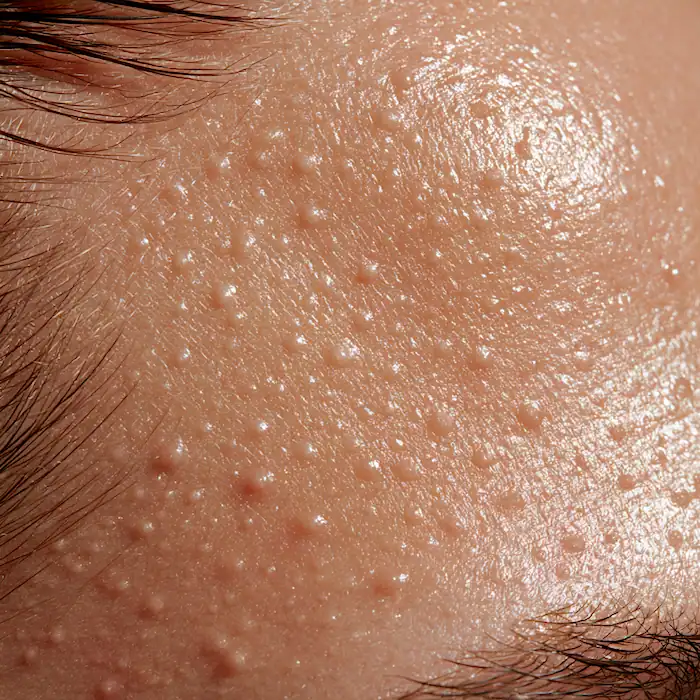
Fungal acne is a common nickname for malassezia folliculitis, a yeast-driven inflammation of the hair follicles that looks like acne but behaves nothing like it. The bumps are small, itchy and monotonously similar, and they tend to cluster where skin stays warm and damp: the forehead, hairline, chest, shoulders and upper back.
Plenty of people arrive at this diagnosis after months of frustration. They've used benzoyl peroxide, maybe a course of antibiotics, and the bumps either sat there or got angrier. That's a useful clue in itself, because ordinary acne is a disorder of the pilosebaceous unit driven by excess sebum, abnormal keratinisation and bacterial involvement [1], and it usually responds to treatments aimed at those mechanisms [2].
Getting the distinction right matters more than it sounds. According to Eichenfield and colleagues, acne vulgaris affects roughly 9% of people worldwide and around 85% of those aged 12 to 24 [2], so genuine acne is far more likely on the numbers. Fungal acne is the smaller group that gets missed, and it's the group whose treatment needs to change direction entirely. If you're unsure which camp you're in, our page on acne treatment sets out what ordinary acne looks like for comparison.
Key takeaways
- Fungal acne isn't acne at all. It's malassezia folliculitis, an overgrowth of yeast that normally lives on everyone's skin, and it sits inside the hair follicle rather than in a blocked, bacteria-driven pore.
- The tell is uniformity: crops of same-sized itchy bumps on the forehead, chest, shoulders and upper back, with no blackheads mixed through them.
- Standard acne treatment often makes it worse, because antibacterial products and oral antibiotics don't touch yeast and can shift the balance further in its favour.
- Heat, sweat, occlusive clothing and long courses of antibiotics are the usual triggers, which is why Australian summers and gym routines bring it on.
- Antifungal treatment usually clears it, but recurrence is common without maintenance, and persistent bumps deserve review by a doctor rather than another round of guesswork.
What Fungal Acne Actually Is: Malassezia Folliculitis Explained
Malassezia folliculitis is an inflammatory reaction to an overgrowth of malassezia yeast inside the hair follicle, and it produces a rash of uniform bumps that people understandably mistake for acne. Malassezia is a lipophilic yeast that lives on nearly all adult skin without causing trouble. Problems start when warmth, sweat, occlusion or a disturbed skin microbiome let it multiply beyond its usual numbers.
The follicle wall reacts to that load, and you get itchy papules and pustules rather than the mixed comedones of true acne. Sampling studies of acne patients have shown that bacterial and fungal populations on skin differ substantially depending on how you sample them [3], which is part of why a visual diagnosis alone can mislead. There's no reliable at-home fungal acne checker, and no app or online quiz can confirm malassezia folliculitis, so the practical answer to how you get rid of fungal acne starts with someone examining the pattern properly.
Here's how the two conditions separate in the clinic.
| Feature | Malassezia folliculitis (fungal acne) | Acne vulgaris |
|---|---|---|
| Underlying driver | Yeast overgrowth within the follicle | Sebum, keratin plugging and bacterial involvement in the pilosebaceous unit [1] |
| Lesion pattern | Uniform small papules and pustules, no comedones | Mixed comedones, papules, pustules and sometimes nodules [2] |
| Itch | Common and often the main complaint | Uncommon; soreness more than itch |
| Usual sites | Forehead, chest, shoulders, upper back | Face and trunk, jawline and cheeks prominent [2] |
| Response to benzoyl peroxide | Limited; antibacterial agents don't target yeast [4] | Reasonable first-line option for mild disease [4] |
One aside worth settling: pigment treatments such as hydroquinone cream have no role here. They fade marks left behind, they don't treat the bumps.
How to Diagnose Malassezia Folliculitis From Its Symptoms
Malassezia folliculitis announces itself through sameness: dozens of small, dome-shaped, often itchy bumps that all look like siblings. Findings consistent with the diagnosis include:
- Papules and pustules roughly 1 to 2 mm across, each centred on a hair follicle
- Itch that worsens after sweating, heat or occlusive clothing
- Involvement of the forehead and hairline, plus chest, shoulders and upper back
- An absence of blackheads and whiteheads between the bumps
- Flares after a course of oral antibiotics, or no improvement on one
None of that confirms a yeast overgrowth on its own. True acne is itself a chronic inflammatory disorder of the follicle and sebaceous gland [1], and the two can coexist on the same face. Look-alikes include closed comedones, bacterial folliculitis, perioral dermatitis and keratosis pilaris. A doctor can confirm the pattern and decide whether an antifungal is the right direction, or whether the problem is a low-grade bacterial infection wearing a similar disguise.
What Causes Fungal Acne and Who Is Most at Risk
Fungal acne develops when malassezia yeast, a normal skin resident, multiplies faster than the follicle can tolerate and triggers an inflammatory response. The fungus feeds on skin lipids, so anything that increases oil, warmth or moisture at the skin surface tips the balance. Occlusion does the rest by trapping sweat against the follicle opening.
The typical Australian picture is a humid summer, a gym session, then hours in a damp shirt. Other common contributors include prolonged oral or topical antibiotic courses, oral corticosteroids, immunosuppression, diabetes, and heavy occlusive sunscreens or oils worn under sports gear. According to Ahluwalia and colleagues, benzoyl peroxide measurably shifts the skin microbiome in acne patients [4], which is a useful reminder that anti-bacterial treatment doesn't leave the fungal side of the ecosystem untouched.
Young adults and teenagers with active sebaceous glands are over-represented, as are athletes, tradespeople working outdoors, and anyone recovering from a long antibiotic course. On the face, fungal acne tends to sit high on the forehead, while the chest and back carry the heavier load. Each pustule is a reaction to yeast rather than a bacterial infection, which is why a topical antifungal such as ketoconazole is the logical direction and why a dermatologist or doctor will usually change tack rather than escalate acne therapy.
If your breakouts follow a different map, the acne face map explains what other distributions tend to mean. Sweat-driven bumps along the neck are covered in more detail in our piece on neck acne.
How Bacterial Acne Develops in the Pore
Bacterial acne starts with a plugged pore, not with yeast. Sebum and shed keratinocytes block the follicle, the trapped oil creates a low-oxygen pocket, and Cutibacterium acnes proliferates inside it. Inflammation follows, producing the red papule or pustule people recognise as a pimple.
That mechanism explains the treatment split. Antibacterial and keratolytic agents, hormonal therapy and oral options such as spironolactone target sebum production and bacterial load [5], and none of them address a malassezia yeast overgrowth. An antifungal medication, whether topical or an oral antifungal, works on an entirely different organism, so using one for the other wastes months.
The overlap is real, though. Pityrosporum folliculitis frequently sits alongside genuine bacterial acne on the same chest or back, and treating only one leaves half the rash behind. Prescription retinoids such as tretinoin cream help the keratin plugging side of the problem but won't clear the yeast component. Our guide to retinol vs tretinoin explains the difference between the two.
How to Prevent Fungal Acne Coming Back
Preventing recurrence means managing the conditions that let pityrosporum multiply, because clearing an episode doesn't remove the yeast from your skin. Realistically, active treatment settles most cases over two to four weeks, and the bumps return within a few months if nothing else changes.
Practical measures that hold results:
- Shower and change out of damp clothing promptly after training or a hot day
- Use a light, non-occlusive moisturiser and sunscreen rather than heavy oils on the chest and back
- Keep intermittent antifungal maintenance going if your doctor has recommended it, often once or twice weekly
- Avoid repeat antibiotic courses for skin unless there's a clear bacterial reason
Any prevention strategy also needs an honest review of what else is on your face. Piling on acne treatment aimed at blackheads while a yeast overgrowth simmers in the follicle tends to produce irritation and no clearance. No online acne checker replaces a proper assessment, and if breakouts on your face keep returning despite sensible routine changes, a doctor or dermatologist should reconsider whether something else, including a low-grade bacterial infection, is driving it. Our notes on the first 8 weeks on prescription skincare cover what realistic progress looks like.
How Fungal Acne Is Treated
Treatment for malassezia folliculitis falls into three classes: topical antifungal agents, oral antifungal tablets for stubborn or widespread disease, and supportive topicals that calm inflammation and reduce follicular plugging. Ketoconazole is the most familiar antifungal used against this yeast, and in Australia the stronger formulations and most oral antifungals need a doctor's prescription. Antifungal creams for acne bought off the shelf are often underdosed for trunk involvement, which is a common reason people conclude the diagnosis was wrong.
Supportive actives matter too. Topical agents have a long record in follicular skin disease [6], and ingredients such as niacinamide, azelaic acid and salicylic acid help settle redness and keep the hair follicle clear while the yeast is treated. Where true acne coexists, tretinoin or hormonally directed therapy may also be appropriate [5].
At Prescription Skin, you complete an online free skin assessment with photos, an Australian-registered doctor reviews the pattern, and where it's clinically appropriate they prescribe a compounded formula built around your diagnosis. Nothing is dispensed without that review, and a doctor may recommend in-person examination instead if the presentation warrants it.
When to See a Doctor About Persistent Folliculitis
Persistent folliculitis needs medical review once six to eight weeks of sensible self-care has failed to shift it. Yeast-driven folliculitis is usually a nuisance rather than a danger, but a few features change the urgency.
Book a review if you notice:
- Spreading redness, warmth, pain or fever, which suggests bacterial involvement rather than simple folliculitis
- Deep, tender lumps or a cyst-like nodule that doesn't settle
- Scarring, pigment change or bleeding from the affected hair follicle areas
- Bumps that worsen on antibiotics, or recur immediately each time treatment stops
- New folliculitis alongside immunosuppression, diabetes or corticosteroid use
Repeated self-treatment with antifungal creams for acne is where most people lose time. Acne and folliculitis share overlapping pathways of inflammation, and current reviews stress that accurate diagnosis drives treatment choice [7]. A doctor can distinguish fungal acne from bacterial folliculitis, comedonal disease with blackheads, or something less common entirely. Conditions that mimic each other are worth reading about on our conditions we treat page.
Summary
Fungal acne is malassezia folliculitis, a yeast overgrowth in the follicle that mimics acne but needs antifungal treatment rather than antibacterial therapy [1]. Because true acne is far more common [2], getting the diagnosis right saves months. Prescription Skin works through an online assessment, doctor review, and a prescription formula where it suits your skin.
Frequently asked questions
How do I get rid of fungal acne?
Fungal acne usually clears with an antifungal, applied topically for localised patches or taken orally when the chest and back are widely involved. Stopping antibacterial acne products for the affected area helps, as does showering promptly after sweating. Most cases settle within two to four weeks of the right treatment.
How can you tell if acne is fungal?
Fungal acne looks uniform and itches, while bacterial acne varies in size and rarely itches. Crops of identical small bumps on the forehead, chest and shoulders with no blackheads between them point towards malassezia. Failure to improve on antibiotics is another strong clue.
Can a doctor prescribe treatment for fungal acne online?
Yes, an Australian-registered doctor can assess and prescribe for suspected fungal acne online where the presentation is clear from your photos and history. At Prescription Skin that happens through an online assessment followed by doctor review. If the rash needs hands-on examination, the doctor will say so rather than prescribe.
Why did I suddenly get fungal acne?
Sudden onset almost always follows a change in heat, sweat or medication. A humid stretch of weather, a new training routine, occlusive clothing, a course of antibiotics or oral steroids can all let malassezia multiply quickly. Skin microbiome shifts after antibacterial treatment are well documented [4].
What gets mistaken for fungal acne?
Fungal acne is most often mistaken for ordinary acne, bacterial folliculitis, closed comedones, keratosis pilaris and perioral dermatitis. Steroid-induced acneiform rashes look similar too. Since acne vulgaris itself involves the same follicular structures [1], telling them apart by eye alone is genuinely difficult.
Can you squeeze out fungal acne?
Squeezing a fungal acne bump won't empty it, because there's no keratin plug to express, only an inflamed follicle. You'll usually get more redness, a longer healing time and a risk of pigment change. Leave them alone and treat the underlying yeast instead [2].
References
- Xu H, Li H. Acne, the Skin Microbiome, and Antibiotic Treatment. American journal of clinical dermatology. 2019. doi:10.1007/s40257-018-00417-3. PubMed ↩︎
- Eichenfield DZ, Sprague J, Eichenfield LF. Management of Acne Vulgaris: A Review. JAMA. 2021. doi:10.1001/jama.2021.17633. PubMed ↩︎
- Xu DT, Chen Q, Yang JY, Yan GR, Zhang LL, Liu XJ. A noteworthy issue: microbiome data variation depending on sampling methods in skin microecology studies in acne vulgaris patients. Frontiers in immunology. 2025. doi:10.3389/fimmu.2025.1566786. PubMed ↩︎
- Ahluwalia J, Borok J, Haddock ES, Ahluwalia RS, Schwartz EW, Hosseini D. The microbiome in preadolescent acne: Assessment and prospective analysis of the influence of benzoyl peroxide. Pediatric dermatology. 2019. doi:10.1111/pde.13741. PubMed ↩︎
- AlEdani EM, Abo Zeid M, Khalefa K, Abbas AW, Aboali AA, Raslan HAS. Oral and topical spironolactone in acne treatment: A meta-analysis of effectiveness and safety. Naunyn-Schmiedeberg's archives of pharmacology. 2025. doi:10.1007/s00210-025-03840-6. PubMed ↩︎
- Kosmadaki M, Katsambas A. Topical treatments for acne. Clinics in Dermatology. 2017;35(2):173-178. doi:10.1016/j.clindermatol.2016.10.010. PubMed ↩︎
- Guleria P, Joshi S, Parmar S, Sharma T, Chaudhary A, Kumar P. Decoding Acne Vulgaris: Insights into Pathogenesis, Treatment Modalities, Diagnosis and Recent Advancements. Recent advances in inflammation & allergy drug discovery. 2025. doi:10.2174/0127722708312980240718093537. PubMed ↩︎
Medically Reviewed Content
- Written by: Prescription Skin Editorial Team
- Medically Reviewed by: Dr Mitch Bishop - AHPRA Registered Practitioner (MED0002309948)
- Last Updated: September 2026
This content is for informational purposes only and does not constitute medical advice. Treatment is subject to consultation and approval by our Australian-registered doctors.