- Key takeaways
- How Vaping Affects Your Body and Skin
- Signs Vaping Could Be Triggering Your Acne
- Does Vaping Cause Acne and Trigger Breakouts
- Common Types of Vaping-Related Acne
- Treatment Options for Vaping-Related Acne
- How to Prevent Acne Breakouts From Vaping
- When to See a Doctor About Vape-Related Acne
- Summary
- Frequently asked questions
Does vaping cause acne? The honest answer is that vaping isn't a proven direct cause, but it can plausibly make breakouts worse in people who are already prone to them. Acne is an inflammatory condition of the oil glands and hair follicles, and it affects roughly 9% of people worldwide, with most teenagers and young adults experiencing it at some point.[1] The disease itself is driven by clogged follicles, oil, bacteria, and inflammation.[2] So when patients ask whether vaping causes acne, what they're really asking is whether vaping nudges any of those underlying mechanisms.[3] This piece sets out what the evidence supports, what's still uncertain, and how it relates to managing acne sensibly.
Key takeaways
- Does vaping cause acne directly? No, vaping isn't a recognised direct cause, but the nicotine and drying habits around it can worsen breakouts in people already prone to them.
- Acne is an inflammatory disease of the oil glands and follicles, so anything that drives oil changes or clogged pores can tip a borderline complexion into active spots.[1]
- Some skin changes vapers notice look like ordinary acne but are sometimes irritation, perioral dermatitis, or premature ageing rather than true acne.
- Treatment follows the same evidence-based path as any acne: topical retinoids, azelaic acid, and other actives, matched to your skin by a doctor.[4]
- Cutting back or choosing to quit vaping, alongside a sensible routine, gives most people the best chance of settling things down.
How Vaping Affects Your Body and Skin
Vaping delivers nicotine and heated vape liquid that can affect circulation, hydration, and skin inflammation. Nicotine narrows small blood vessels and reduces oxygen delivery, one reason long-term smoking is linked with duller skin. Because acne is an inflammatory disorder of the follicle and oil gland, any habit raising that signal is relevant to whether vaping causes acne in a given person.[2] The table below compares vaping with cigarette smoking on the factors touching your skin.
| Factor | Cigarette smoking | E cigarette / vaping |
|---|---|---|
| Nicotine exposure | High | Variable, often high |
| Dehydration tendency | Yes | Yes |
| Inflammatory signal | Well established | Plausible, less studied |
| Skin benefit of stopping | Documented | Likely if you quit vaping |
A calm niacinamide-based skincare routine can support the barrier alongside any decision to cut back.[1]
Signs Vaping Could Be Triggering Your Acne
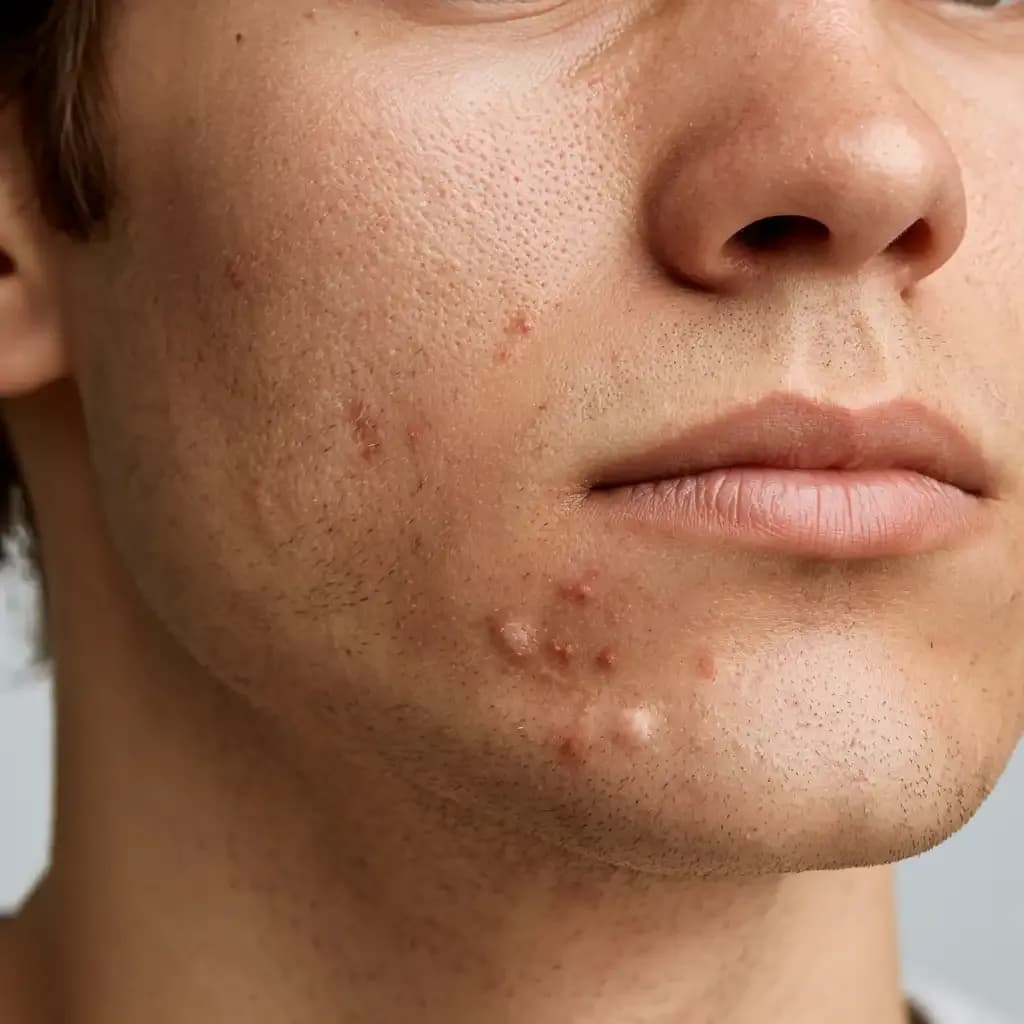
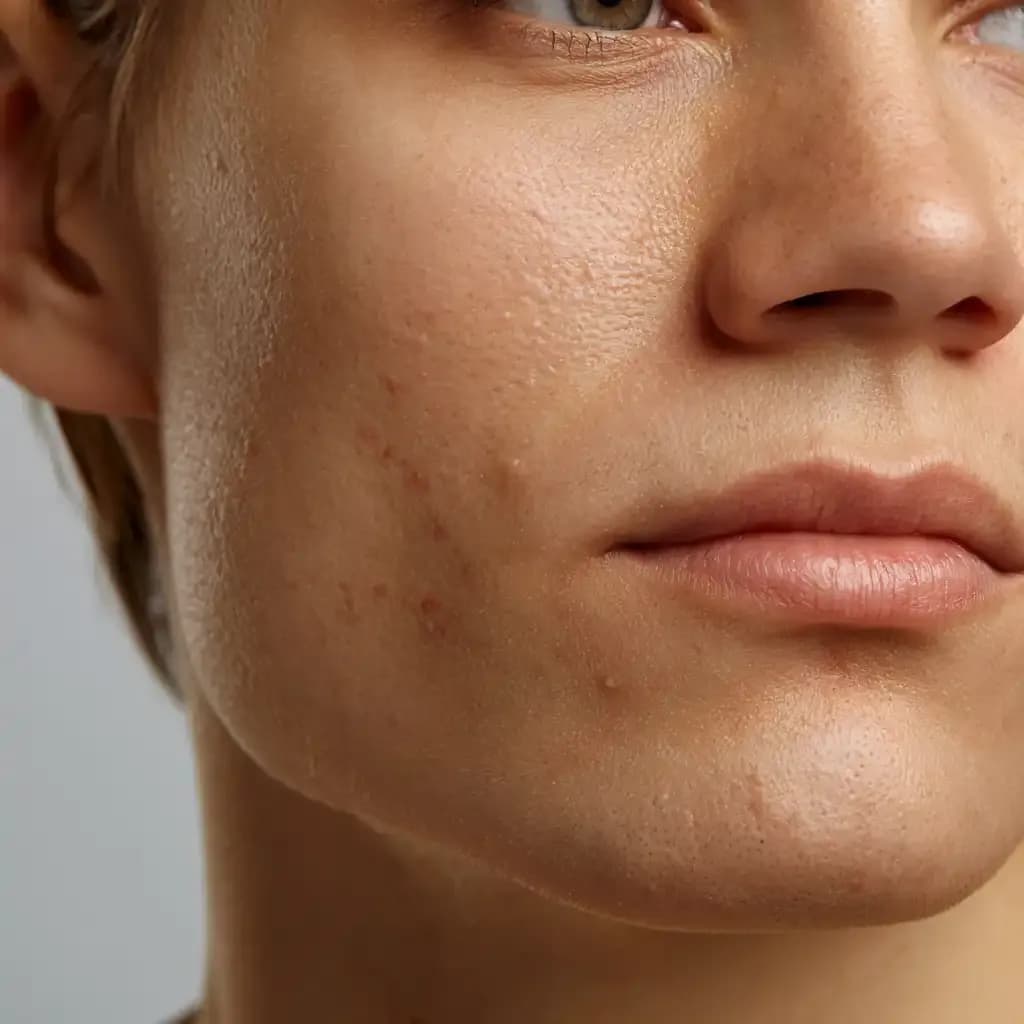
The clearest sign vaping causes acne for you is a change in your breakouts that lines up with when you started or increased vaping. Because acne is a chronic disorder of follicles and oil glands, flares tend to cluster where those glands are dense, particularly the lower face.[3] What you notice is usually consistent with, rather than proof of, a vaping link.[1]
- New or worsening spots on the lower face, jaw, and around the mouth
- Skin feeling tight or dry, prompting heavier moisturiser use
- Dull tone or early premature ageing in longer-term users, similar to what a heavy smoker shows
An e cigarette habit can leave the area around the lips irritated, sometimes confused with perioral dermatitis rather than true acne. Vapers and people who use vape liquid devices with sweet flavourings often notice residue around the mouthpiece, and e cigarette contain nicotine that may keep things simmering.[2] Sensible salicylic acid skincare can help while you work out the pattern.
Does Vaping Cause Acne and Trigger Breakouts
Vaping is best understood as a possible aggravator of breakouts rather than a standalone cause. Acne forms when follicles become blocked, sebum builds up, bacteria proliferate, and inflammation takes hold.[1] Nicotine and the heat from vape devices can dry the skin and add to irritation, and dehydrated skin sometimes responds by producing more oil. Comedone formation is the earliest step in this sequence, and anything disturbing the follicle lining can push it along.[5]
Dermatologists stay cautious: direct evidence that vaping flavour compounds or e-liquid cause skin breakouts is thin, and most of what we extrapolate comes from tobacco research.[3] So does vaping cause acne or make your skin age faster? It can plausibly contribute in susceptible people, but it rarely acts alone. Diet, hormones, and genetics still do most of the heavy lifting, and good hyperpigmentation-aware skincare won't fix an underlying habit feeding oil changes.[2]
Common Types of Vaping-Related Acne
Vaping-related acne falls into a few recognisable patterns rather than a single new condition. The underlying disease is still ordinary acne, an inflammatory disorder of the follicle.[3]
- Comedonal acne: blackheads and whiteheads from blocked follicles, sometimes worsened by dryness.
- Inflammatory papules: red, tender spots reflecting an active flare.[1]
- Perioral skin irritation: redness around the mouth from an e cigarette mouthpiece and flavour residue, which can mimic acne but often needs different care.
Telling these apart matters because wound healing and treatment differ. Heavy nicotine exposure may slow recovery, so skincare alone sometimes isn't enough, and choosing the wrong product can add irritation. If a vape cause acne pattern keeps recurring, a doctor's eye and a considered skincare plan help, and you can read more on how to get rid of whiteheads.[2]
Treatment Options for Vaping-Related Acne
Vaping-related acne is treated with the same evidence-based classes used for ordinary acne, matched to severity. Topical drugs have treated acne successfully for decades.[4] Retinoids such as retinoids like tretinoin and tazarotene normalise follicle turnover and reduce comedones, while azelaic acid calms inflammation and pigmentation.[2] Fixed-combination topicals can match the benefit of using actives separately.[6] A gentle humectant moisturiser counters the dryness and skin irritation following heavy nicotine use, whether the source is an e cigarette or an ordinary cigarette.[3]
In Australia, tretinoin and azelaic acid at treatment strengths are prescription-only, which is where doctor-led care matters. With Prescription Skin you complete an online assessment, an Australian-registered doctor reviews it, and where clinically appropriate they create a custom prescription formula. Doctors also flag which combinations cause acne breakout flares early so they can be adjusted.[1]
How to Prevent Acne Breakouts From Vaping
Prevention starts with reducing the trigger and supporting the barrier consistently over months, not days. Cutting back on or stopping the cigarette or vape habit removes one plausible driver of inflammation and dehydration that can contribute to acne.[3] The effect of vape exposure on skin is gradual, so give any change six to twelve weeks before judging it.[2]
- Cleanse twice daily and use a non-comedogenic moisturiser to offset nicotine-related dryness.
- Keep using prescribed actives consistently, since acne breakout control depends on regular application.
- Wear sunscreen daily, especially when your skincare product list includes a retinoid.
Realistic timelines help with the related goal of preventing scars, and our guide on acne scar treatment covers maintenance once active spots settle. Lifestyle factors matter too; diet has measurable effects on some acne breakout patterns.[7]
When to See a Doctor About Vape-Related Acne
See a doctor when acne is painful, scarring, widespread, or not improving after a couple of months of sensible care, whether or not you vape. Deep, tender cysts and nodules need medical review because they scar, and over-the-counter products rarely control them.[8] You should also seek help if a vape habit has left persistent redness or pustules around the mouth that don't behave like ordinary spots, since these may not be acne at all. A doctor can confirm whether your vape use is even the right explanation, rule out look-alike conditions, and decide if a vape cause is plausible before prescribing stronger treatment.[9] If your skin reacts severely to any product, with swelling or rash, stop the vape routine experiment and get reviewed promptly. People who vape heavily and notice fast-spreading changes should not wait, because what looks like a vape flare can occasionally be another condition.
Summary
Vaping isn't a proven direct cause of acne, but its nicotine and drying effects can plausibly worsen breakouts in prone skin.[1] Prescription Skin lets an Australian-registered doctor assess your skin online and, where appropriate, prescribe a custom formula matched to it.[2]
Frequently asked questions
Will quitting vaping help my acne?
Quitting vaping may help your acne, especially if breakouts started or worsened after you began. Removing the nicotine and drying effect removes one plausible aggravator, though acne has several drivers, so stopping alone won't always clear it. Pairing the change with proven treatment gives the best result.[1]
Why do vapes give me acne?
Vapes don't give everyone acne, but the relation between vaping and acne is that nicotine, heat, and dryness can worsen flares in follicles already prone to blocking.[2] If you're susceptible, that combination can tip borderline skin into active breakouts.
Can a doctor prescribe treatment for does vaping cause acne online?
Yes, an Australian-registered doctor can assess your acne online through Prescription Skin and, where clinically appropriate, prescribe a custom formula. You complete an assessment, a doctor reviews it, and prescription-only actives are supplied only after that approval.
Can vaping make lupus worse?
Vaping can worsen inflammation, and inflammation is relevant in lupus, so caution is sensible. Vaping isn't a proven trigger for lupus flares specifically, but anyone with an autoimmune condition should discuss it with their treating doctor before assuming it's harmless.
What does nicotine acne look like?
Nicotine-related acne tends to look like ordinary acne: comedones and red spots, often on the lower face and around the mouth.[3] There's no unique appearance, which is why the timing relative to your habit is the more useful clue. Vaping may also hasten the skin ageing process, so older users sometimes see duller tone and finer lines alongside spots. Other effects on skin health include barrier dryness and slower wound healing, and you can repair skin that's been damaged by these habits over time by cutting back, rebuilding the barrier with a moisturiser, and using proven actives consistently.[10]
So, What is Vaping?
Vaping is inhaling an aerosol produced by heating e-liquid, which usually contains nicotine, flavour compounds, and a carrier such as propylene glycol. It's marketed as an alternative to cigarettes but still delivers nicotine to the body.
References
- Eichenfield DZ, Sprague J, Eichenfield LF. Management of Acne Vulgaris: A Review. JAMA. 2021. doi:10.1001/jama.2021.17633. PubMed ↩︎
- Fox L, Csongradi C, Aucamp M, du Plessis J, Gerber M. Treatment Modalities for Acne. Molecules (Basel, Switzerland). 2016. doi:10.3390/molecules21081063. PubMed ↩︎
- Xu H, Li H. Acne, the Skin Microbiome, and Antibiotic Treatment. American journal of clinical dermatology. 2019. doi:10.1007/s40257-018-00417-3. PubMed ↩︎
- Kosmadaki M, Katsambas A. Topical treatments for acne. Clinics in dermatology. 2016. doi:10.1016/j.clindermatol.2016.10.010. PubMed ↩︎
- Baek JH, Ahn SM, Choi KM, Jung MK, Shin MK, Koh JS. Analysis of comedone, sebum and porphyrin on the face and body for comedogenicity assay. Skin research and technology : official journal of International Society for Bioengineering and the Skin (ISBS) [and] International Society for Digital Imaging of Skin (ISDIS) [and] International Society for Skin Imaging (ISSI). 2015. doi:10.1111/srt.12244. PubMed ↩︎
- Gold MH, Baldwin H, Lin T. Management of comedonal acne vulgaris with fixed-combination topical therapy. Journal of cosmetic dermatology. 2018. doi:10.1111/jocd.12497. PubMed ↩︎
- Sompochpruetikul K, Khongcharoensombat T, Chongpison Y, Rittirongwattana W, Asawanonda P, Noppakun N. Whey protein and male acne: A double-blind, randomized controlled trial. The Journal of dermatology. 2024. doi:10.1111/1346-8138.17109. PubMed ↩︎
- Brahe C, Peters K. Fighting acne for the fighting forces. Cutis. 2020. doi:10.12788/cutis.0057. PubMed ↩︎
- López-Estebaranz JL, Herranz-Pinto P, Dréno B, el grupo de dermatólogos expertos en acné. Consensus-Based Acne Classification System and Treatment Algorithm for Spain. Actas dermo-sifiliograficas. 2016. doi:10.1016/j.ad.2016.10.001. PubMed ↩︎
- Saurat JH. Strategic Targets in Acne: The Comedone Switch in Question. Dermatology (Basel, Switzerland). 2015. doi:10.1159/000382031. PubMed ↩︎
Medically Reviewed Content
- Written by: Prescription Skin Editorial Team
- Medically Reviewed by: Dr Mitch Bishop - AHPRA Registered Practitioner (MED0002309948)
- Last Updated: June 2026
This content is for informational purposes only and does not constitute medical advice. Treatment is subject to consultation and approval by our Australian-registered doctors.
Part of our condition guide
Acne→