- Key takeaways
- How Hormonal Fluctuations Trigger Skin Breakouts
- How They Compare
- Perioral Acne Explained: Causes, Symptoms and Treatment
- The Common Triggers That Cause Acne Around the Mouth
- Different Types of Blemishes Near the Mouth
- In-Clinic Acne Treatment Options for Perioral Breakouts
- Practical Ways to Prevent Future Mouth Breakouts
- When to See a Doctor About Perioral Spots
- How Diet Influences Breakouts Around the Mouth
- Summary
- Frequently asked questions
Acne around mouth means blocked, inflamed follicles clustered on the chin, the area between the lips and nose, and along the jawline. It behaves like acne anywhere else on the face: oil, dead skin cells, and bacteria collect in a pore, the wall becomes inflamed, and a spot forms. Acne is an inflammatory condition of the pilosebaceous unit that mostly affects the face and trunk, and it touches roughly 9% of people worldwide, with the highest rates in adolescence and young adulthood.[1]
This region is busy. It moves constantly, sits near the lips, and gets touched, wiped, and covered with food, balms, and masks more than most of the face. Because the disease involves the same oil glands and follicles found across the skin, the same triggers and treatments apply here.[2][3] If you want the bigger picture, our acne hub covers the condition in full.
You may also find this related guide helpful: 15 ways to reduce and treat acne scarring.
Key takeaways
- Acne around the mouth is usually ordinary acne involving blocked oil glands and follicles, often driven by hormonal shifts, friction, and skincare or lip products that block pores.
- It can be confused with perioral dermatitis, a separate rash that needs a different approach, so getting the diagnosis right matters before you treat.
- Topical treatments like retinoids, azelaic acid and niacinamide have good evidence behind them, and some are prescription-only in Australia.
- An online skin assessment lets an Australian-registered doctor diagnose the problem and, where clinically appropriate, prescribe a custom formula.
- See a doctor if spots are painful, spreading, scarring, or not settling with sensible care over a few weeks.
How Hormonal Fluctuations Trigger Skin Breakouts
Hormonal shifts increase oil production, which feeds the blocked follicles behind acne around mouth. Androgens stimulate the sebaceous glands, and when sebum rises, pores clog more easily and inflammation follows.[1] The chin and jaw are classic spots for a hormonal breakout, which is why some people notice flares before a period or during times of stress.
How They Compare
The table below sets out common hormonal drivers and a practical response, including where skincare helps and where it does not.
| Hormonal driver | What happens to skin | Practical response |
|---|---|---|
| Menstrual cycle | Pre-period oil surge, chin flares | Steady routine; consider prescription retinoids |
| Stress (cortisol) | More inflammation and oil | Sleep, gentle skincare, don't over-scrub |
| PCOS / androgen excess | Persistent jaw and chin acne | Doctor review for hormonal options |
Perioral Acne Explained: Causes, Symptoms and Treatment
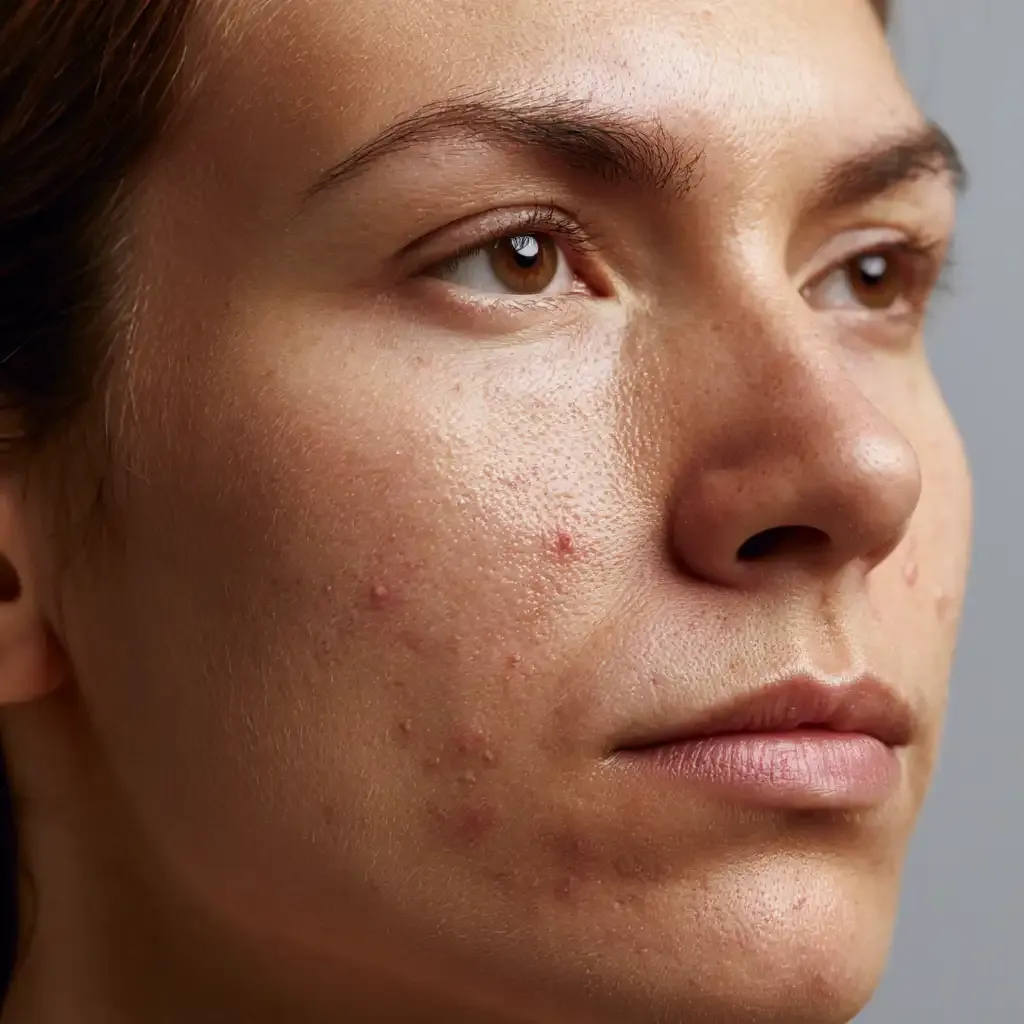
Perioral acne is acne that forms in the area surrounding the mouth, where blocked pores, oil, and bacteria produce papules, pustules, or comedones.[2] It shows up on the chin, along the upper lip, and toward the corners of the mouth, and it can affect teenagers and adults alike.
The mechanism is the same chronic process that drives acne elsewhere: a follicle clogs, oil builds behind the blockage, and bacteria contribute to inflammation.[3] A hormone-driven rise in sebum makes the pore more likely to block, which is why this part of the face flares so readily.[1] One caveat worth knowing: a red, scaly, sometimes itchy rash in the same zone may be perioral dermatitis, not acne, and that needs a different plan.
The Common Triggers That Cause Acne Around the Mouth
Acne around mouth is driven by a mix of internal biology and external habits that block follicles in a high-contact area. The underlying mechanism is consistent: excess oil, sticky dead skin cells, and bacteria collect in the pore, and the follicle wall inflames.[2]
So why do you break out around your mouth? Perioral acne tends to settle here because everyday things load this zone with friction and occlusion. Lip balms, heavy makeup, and rich creams can block pores along the lip line. Friction from phones, masks, sports gear, and resting your hand on your chin adds mechanical irritation that triggers a breakout, and food residue or toothpaste left on the skin can play a part too.
Hormones drive the deeper pattern. Pre-period flares and androgen-related conditions push oil higher and make a breakout more likely.[1] Diet is a modest factor for some people rather than a universal cause of mouth.[3]
The most useful lifestyle tips to prevent acne around the mouth are simple: wipe the area after eating, keep your phone clean, swap to non-comedogenic balms, and resist picking. These steps reduce the friction and occlusion that feed the problem.[2]
Different Types of Blemishes Near the Mouth
Blemishes near the mouth come in a few forms, and telling them apart helps you treat the right thing. Blackheads and whiteheads are comedones, where dead skin cells and oil trap inside the pore. A red, tender bump is an inflamed papule, and a pimple with a white tip is a pustule. A persistent ring of small red bumps with mild scaling is more likely perioral dermatitis, which a doctor or dermatologist can distinguish on examination. Matching your skincare to the actual lesion type makes a real difference.
In-Clinic Acne Treatment Options for Perioral Breakouts
Acne treatment around the mouth is organised by class: topical retinoids to normalise pore lining, antimicrobials to reduce bacteria, and anti-inflammatory agents like azelaic acid.[4] Fixed combination formulas that pair a retinoid with another active are well supported for this kind of breakout.[5] Tretinoin is prescription-only in Australia, and azelaic acid and niacinamide are commonly built into a custom formula. With Prescription Skin, you complete an online skin assessment, an Australian-registered doctor reviews it and makes a diagnosis, and where clinically appropriate they prescribe a custom formula. A dermatologist may be needed for severe or scarring acne. Our retinol vs tretinoin piece explains the pimple-clearing actives.
Practical Ways to Prevent Future Mouth Breakouts
Preventing a repeat breakout comes down to keeping the pore clear and the area low-friction. Wipe your face after eating, clean your phone, and switch to non-comedogenic balms so you stop trapping oil along the lip line. If you use benzoyl peroxide, apply it sparingly, since it can dry and irritate this delicate zone and shouldn't be combined with every active. Comedone formation on the chin tracks closely with other facial zones, so consistent care matters across the whole face, not just the spot you can see.[6] Give any routine eight to twelve weeks before judging it, and keep the pimple-prevention steps going once skin settles.
When to See a Doctor About Perioral Spots
See a doctor if perioral spots are painful, scarring, spreading toward the lip, or not improving after several weeks of sensible care. Cysts, nodules, and a rash that stings or won't clear also warrant review, since these can need prescription medication rather than off-the-shelf products. A doctor can also tell acne from perioral dermatitis, which changes the plan completely. Persistent jaw and chin acne in adults sometimes points to a hormonal cause worth investigating, and comedones that keep filling the same pore are a sign to get a proper assessment.[6]
How Diet Influences Breakouts Around the Mouth
Diet has a modest, individual effect on a breakout rather than being the single cause. For some people, high-glycaemic foods and dairy nudge hormone and oil levels in a direction that helps acne form, and a randomised trial linked whey protein with more acne in young men.[7] Food residue left on the face can clog a pore, and bacteria thrive where oil pools. Clear skin is more about the overall picture, since comedone development on the chin tracks with the rest of the face.[6] Cutting one food rarely fixes acne on its own, so treat the cause directly.[8]
Summary
Acne around the mouth is ordinary acne in a high-contact zone, driven by oil, blocked follicles, hormones, and friction, and it responds to evidence-based actives.[1][2] Prescription Skin's model lets an Australian-registered doctor assess your skin online and, where appropriate, prescribe a custom formula as the next step.
Frequently asked questions
What does acne around your mouth mean?
Acne around your mouth usually means blocked, inflamed follicles in a high-contact area, driven by oil, hormones, and friction from balms, phones, and food residue. It behaves like acne elsewhere on the face. A red, scaly rash in the same spot can instead be perioral dermatitis, which needs different treatment.
What does cortisol acne look like?
Cortisol acne usually appears as inflamed red papules and pustules along the chin and jaw during stressful periods, when oil production rises. It isn't a separate medical diagnosis, just stress-related acne flaring in the usual hormone-sensitive zones.
Can a doctor prescribe treatment for acne around mouth online?
Yes, an Australian-registered doctor can review an online skin assessment, make a diagnosis, and where clinically appropriate prescribe treatment for acne around the mouth. Prescription-only actives like tretinoin are only issued after that consultation and doctor approval.
How do I stop pimples from growing around my mouth?
Stop pimples growing around your mouth by keeping the area clean and low-friction: wipe after eating, switch to non-comedogenic balms, avoid picking, and use evidence-based actives consistently. Treat early flares gently and don't over-scrub, which worsens inflammation.
What does a PCOS pimple look like?
A PCOS-related pimple typically appears as a deeper, tender bump along the jaw and chin, often persistent and recurring in the same areas. It reflects androgen-driven oil production, so it usually needs a doctor's assessment rather than topical products alone.
References
- Eichenfield DZ, Sprague J, Eichenfield LF. Management of Acne Vulgaris: A Review. JAMA. 2021. doi:10.1001/jama.2021.17633. PubMed ↩︎
- Fox L, Csongradi C, Aucamp M, du Plessis J, Gerber M. Treatment Modalities for Acne. Molecules (Basel, Switzerland). 2016. doi:10.3390/molecules21081063. PubMed ↩︎
- Xu H, Li H. Acne, the Skin Microbiome, and Antibiotic Treatment. American journal of clinical dermatology. 2019. doi:10.1007/s40257-018-00417-3. PubMed ↩︎
- Kosmadaki M, Katsambas A. Topical treatments for acne. Clinics in dermatology. 2016. doi:10.1016/j.clindermatol.2016.10.010. PubMed ↩︎
- Gold MH, Baldwin H, Lin T. Management of comedonal acne vulgaris with fixed-combination topical therapy. Journal of cosmetic dermatology. 2018. doi:10.1111/jocd.12497. PubMed ↩︎
- Baek JH, Ahn SM, Choi KM, Jung MK, Shin MK, Koh JS. Analysis of comedone, sebum and porphyrin on the face and body for comedogenicity assay. Skin research and technology : official journal of International Society for Bioengineering and the Skin (ISBS) [and] International Society for Digital Imaging of Skin (ISDIS) [and] International Society for Skin Imaging (ISSI). 2015. doi:10.1111/srt.12244. PubMed ↩︎
- Sompochpruetikul K, Khongcharoensombat T, Chongpison Y, Rittirongwattana W, Asawanonda P, Noppakun N. Whey protein and male acne: A double-blind, randomized controlled trial. The Journal of dermatology. 2024. doi:10.1111/1346-8138.17109. PubMed ↩︎
- Saurat JH. Strategic Targets in Acne: The Comedone Switch in Question. Dermatology (Basel, Switzerland). 2015. doi:10.1159/000382031. PubMed ↩︎
Medically Reviewed Content
- Written by: Prescription Skin Editorial Team
- Medically Reviewed by: Dr Mitch Bishop - AHPRA Registered Practitioner (MED0002309948)
- Last Updated: June 2026
This content is for informational purposes only and does not constitute medical advice. Treatment is subject to consultation and approval by our Australian-registered doctors.
Part of our condition guide
Acne →